A Critique of Modern Stoicism An ongoing stoicism critique: examining the promises of modern Stoic self-help, one claim at a time.
Modern Stoicism sells a simple bargain: stay unbending, and life cannot touch you. In this section we read the movement's popular advice closely — the morning routines, the resilience slogans, the productivity Stoicism of feeds and bestseller lists — and test each claim against the older philosophy it borrows from. Every dispatch below takes one piece of popular Stoic counsel and examines what it promises, what it quietly assumes, and whom it leaves out. This is not an argument against Stoicism itself; it is a critique of what the self-help industry has made of it.
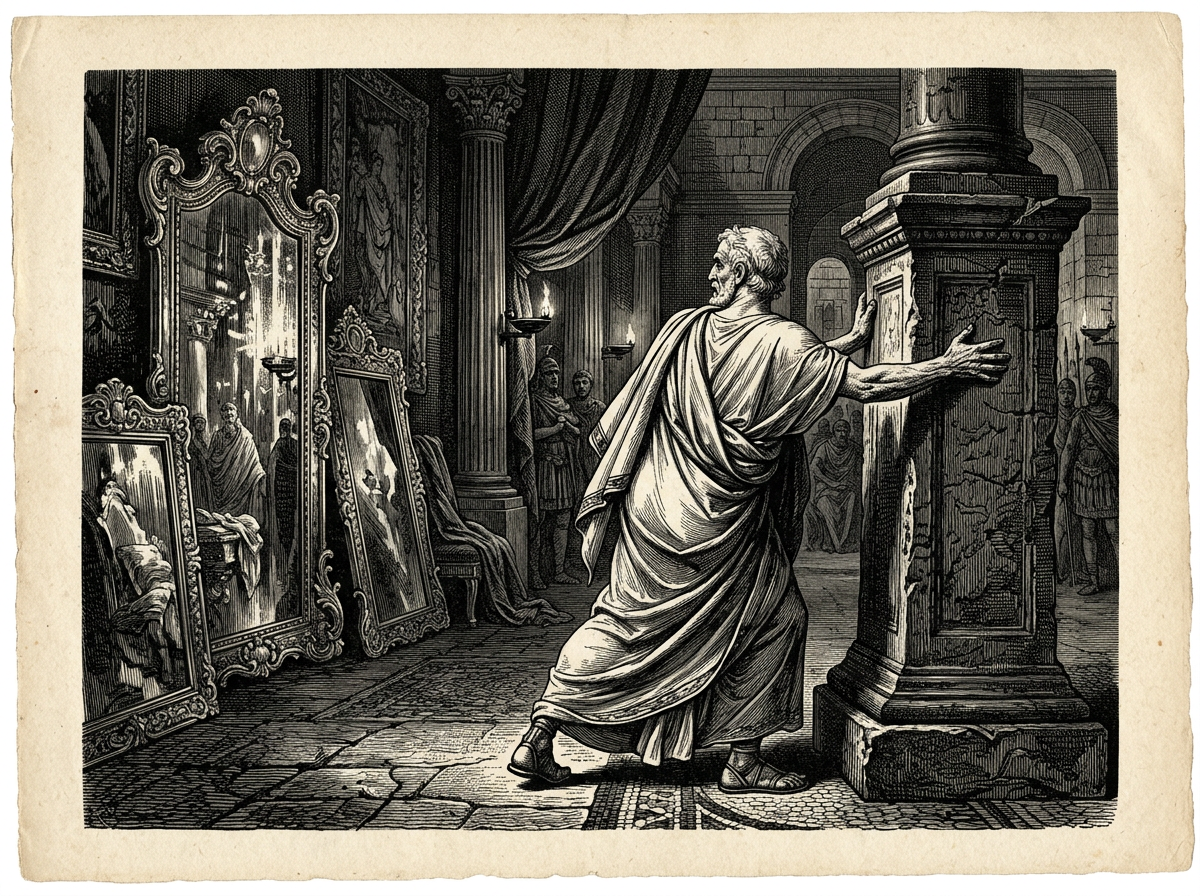
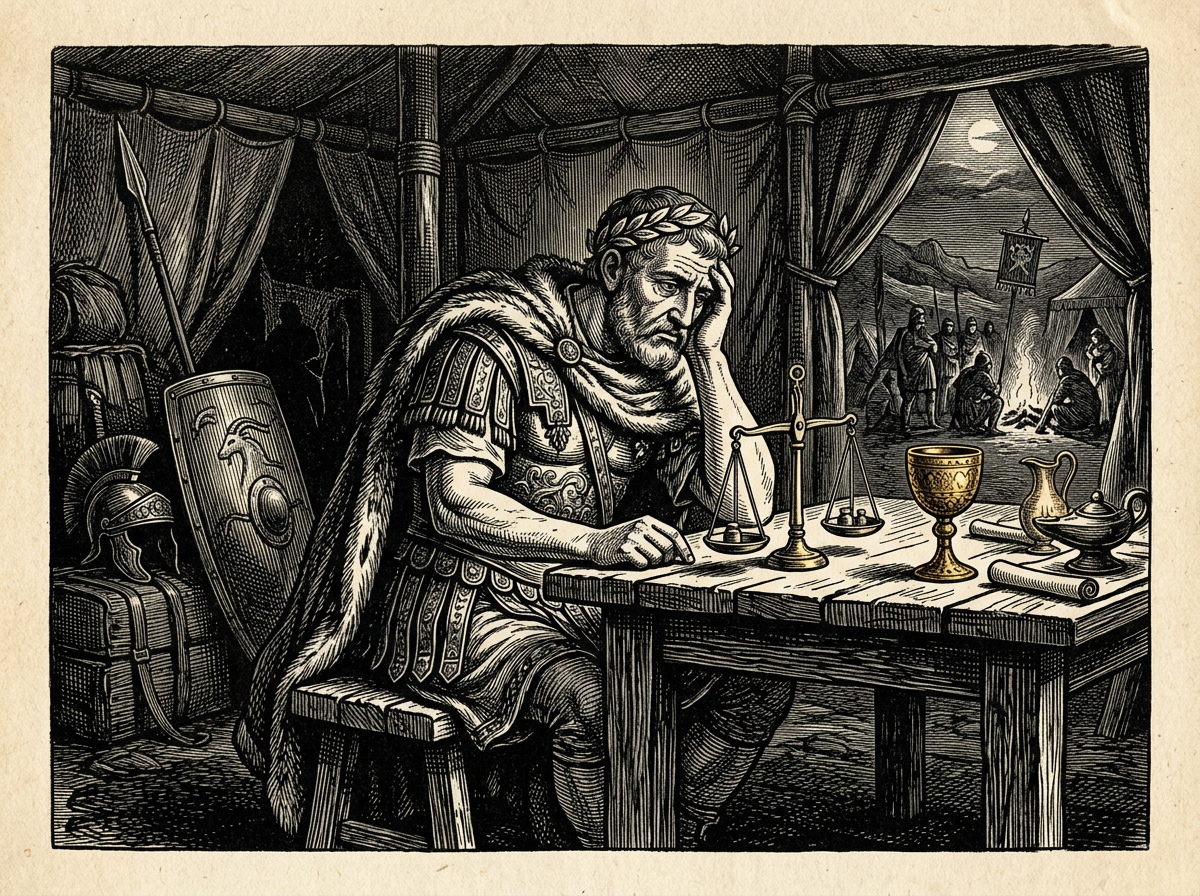
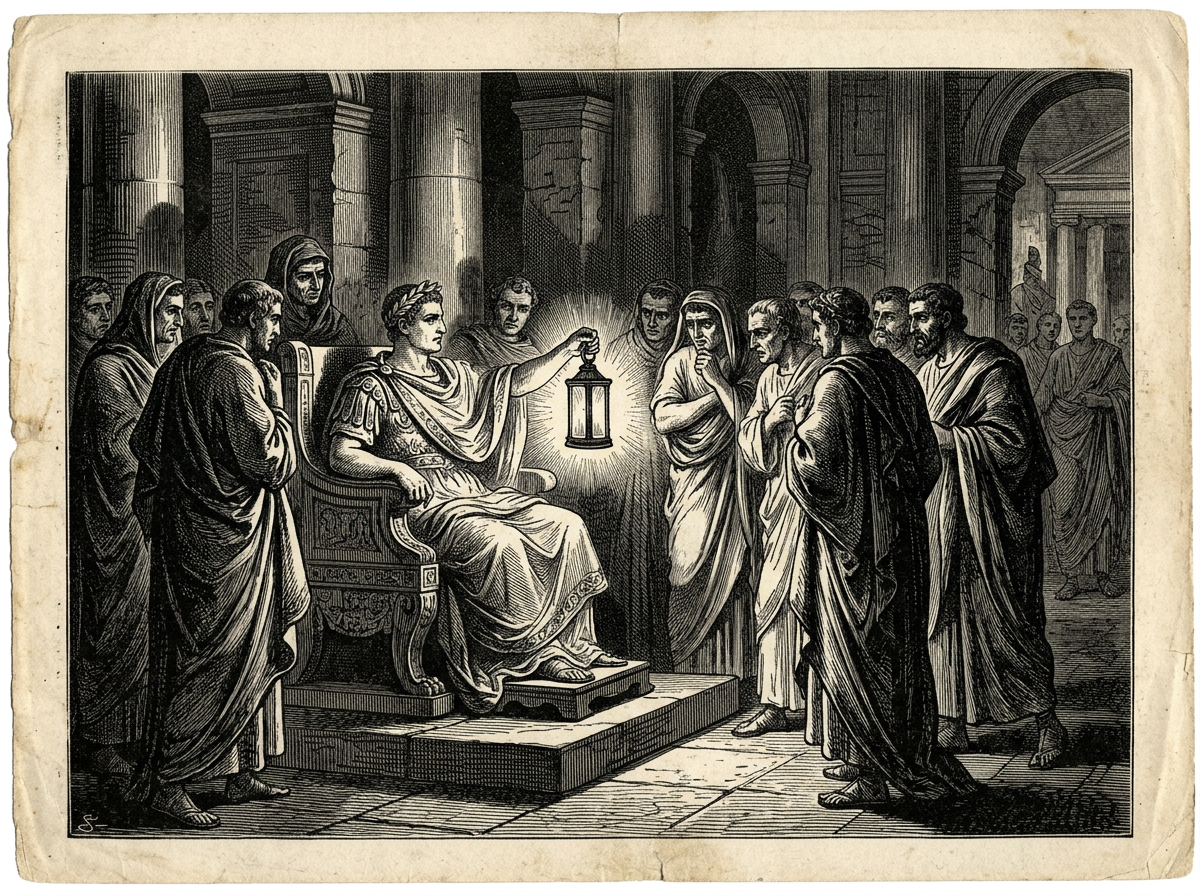
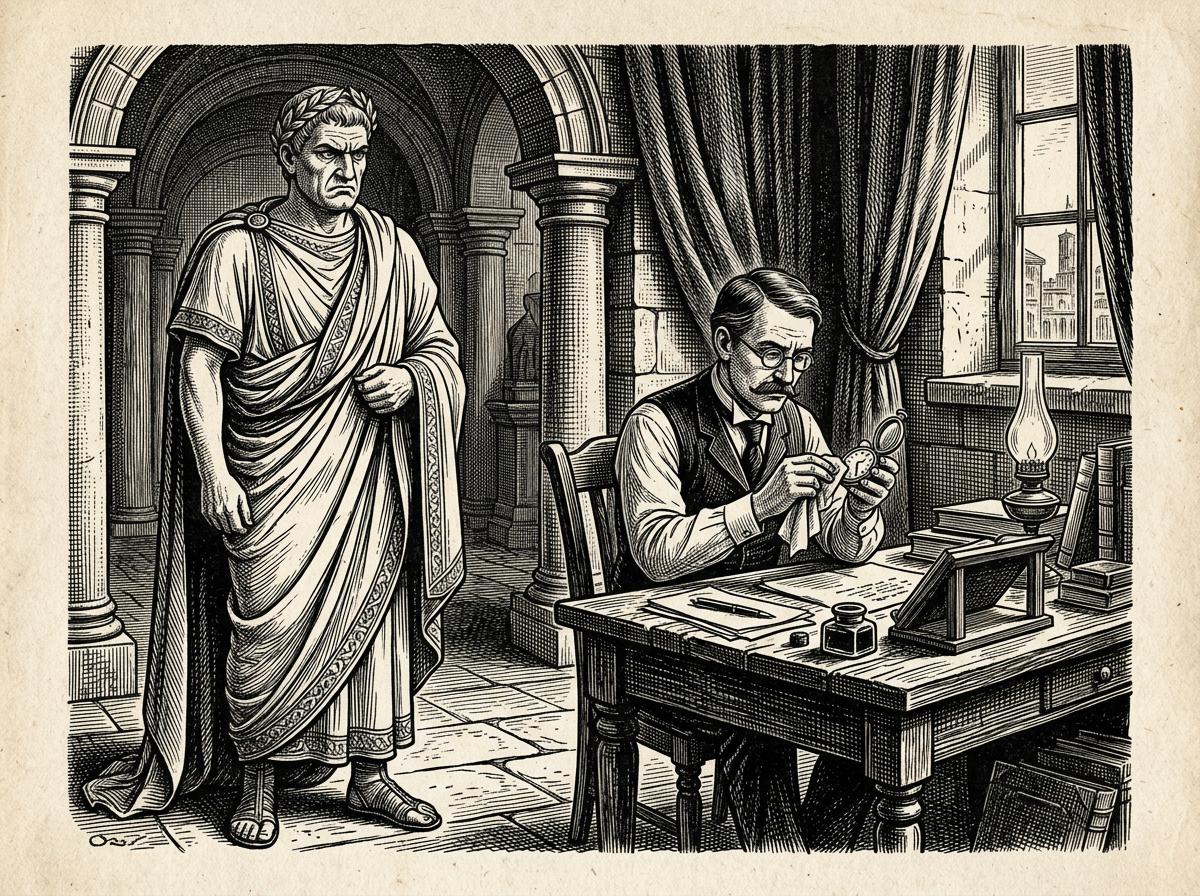
27th October: We Reap What We Sow | The Reduction of Tragic Blood Guilt into a Business Ethics Cautionary Tale
MORAL DILUTION: CORPORATE STOICISM
Modern self-help flattens Seneca's horror into corporate risk management. While modern self-help attempts to make ancient philosophy practical for workplace ethics, reducing Seneca's tragic warnings to simple risk management strips Stoicism of its true moral weight. The genuine lesson is that complicity in systemic corruption unleashes a ruinous cycle that inevitably destroys one's own character.
read dispatch →
Dispatch No. 01 — 27 Oct 2026 share story ↗
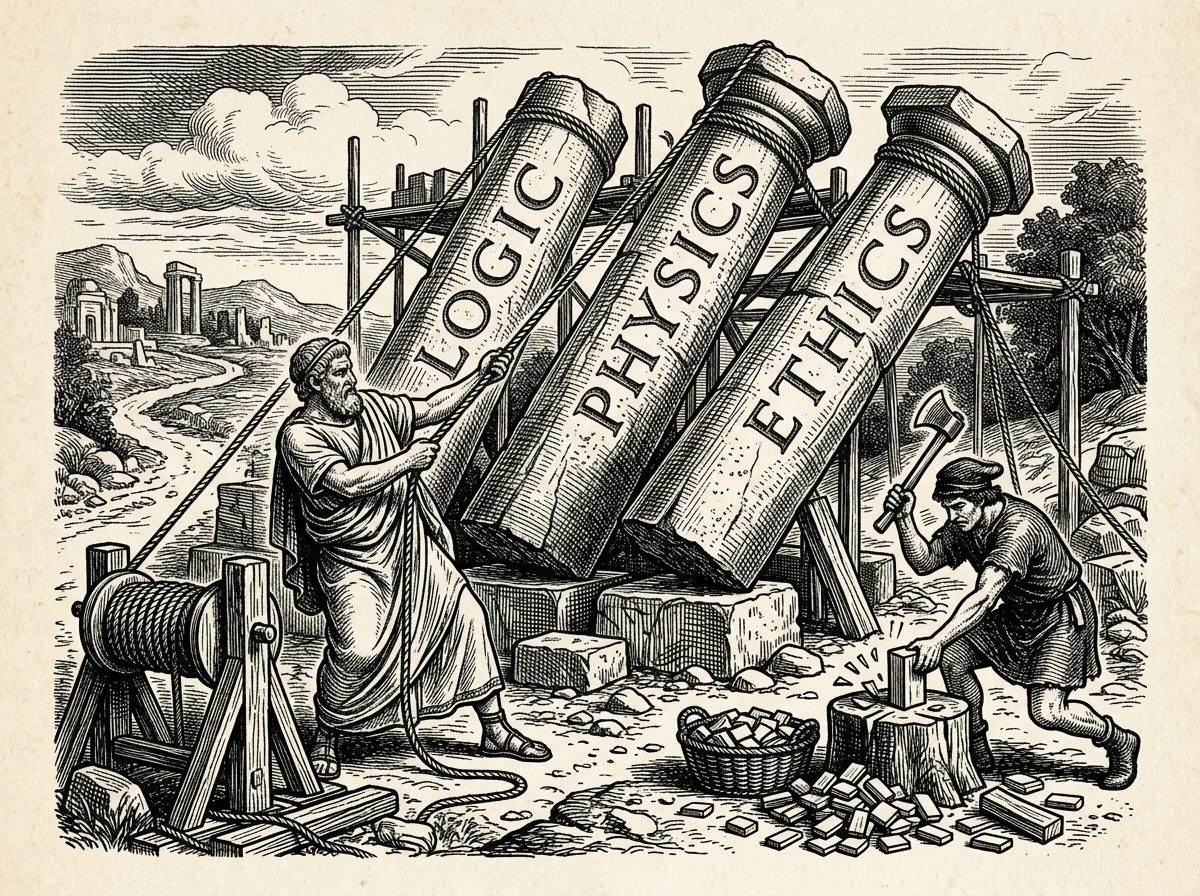
26th October: Three Parts, One Aim | The Flattening of Classical Philosophy into Instant Life-Hacks
INTELLECTUAL EROSION: MODERN STOICISM
Modern Stoicism dilutes Seneca’s vast blueprint into instant comfort. Seneca conceived philosophy as a rigorous, three-part intellectual armor designed to protect the mind from tyranny and self-deception over a lifetime of study. While modern self-help attempts to make ancient wisdom accessible, flattening this vast discipline into immediate feel-good advice strips away the logical and scientific rigor required for true mental defense.
read dispatch →
Dispatch No. 02 — 26 Oct 2026 share story ↗
25th October: Two Tasks | The Commodification of Radical Moral Agency into Modern Careerist Self-Actualization
ETHICAL DRIFT: BOURGEOIS OPTIMIZATION
Modern self-help turns Epictetus's radical freedom into careerist optimization. Modern self-help commentary degrades Epictetus's radical demand for inner moral autonomy into a cozy, careerist guide for personal self-actualization. By mistaking external professional fulfillment for true Stoic freedom, contemporary interpretations sanitize a rigorous discipline of mental mastery into a mere productivity hack.
read dispatch →
Dispatch No. 03 — 25 Oct 2026 share story ↗
24th October: The Fountain Of Goodness | The Trivialization of Moral Struggle into Passive Self-Discovery
KEY FLAW: DILUTED DISCIPLINE
True moral strength demands laborious excavation, not positive thinking. Modern self-help reduces Marcus Aurelius’s call for grueling spiritual labor into a comfortable exercise in passive self-soothing. Yet behind the softened rhetoric lies a vital truth that virtue must be actively excavated through daily effort rather than passively discovered.
read dispatch →
Dispatch No. 04 — 24 Oct 2026 share story ↗
23rd October: Show The Qualities You Were Made For | The Reduction of Sacred Nature into Consumer Choices
MORAL DILUTION : CONSUMER VIRTUE
Modern self-help turns moral duty into consumer choice Modern self-help reframes Marcus Aurelius's strict demand for moral duty as a flattering menu of personal choices to soothe modern insecurities. True Stoic discipline requires cultivating character quietly without seeking public admiration or treating virtue as a superficial branding exercise.
read dispatch →
Dispatch No. 05 — 23 Oct 2026 share story ↗
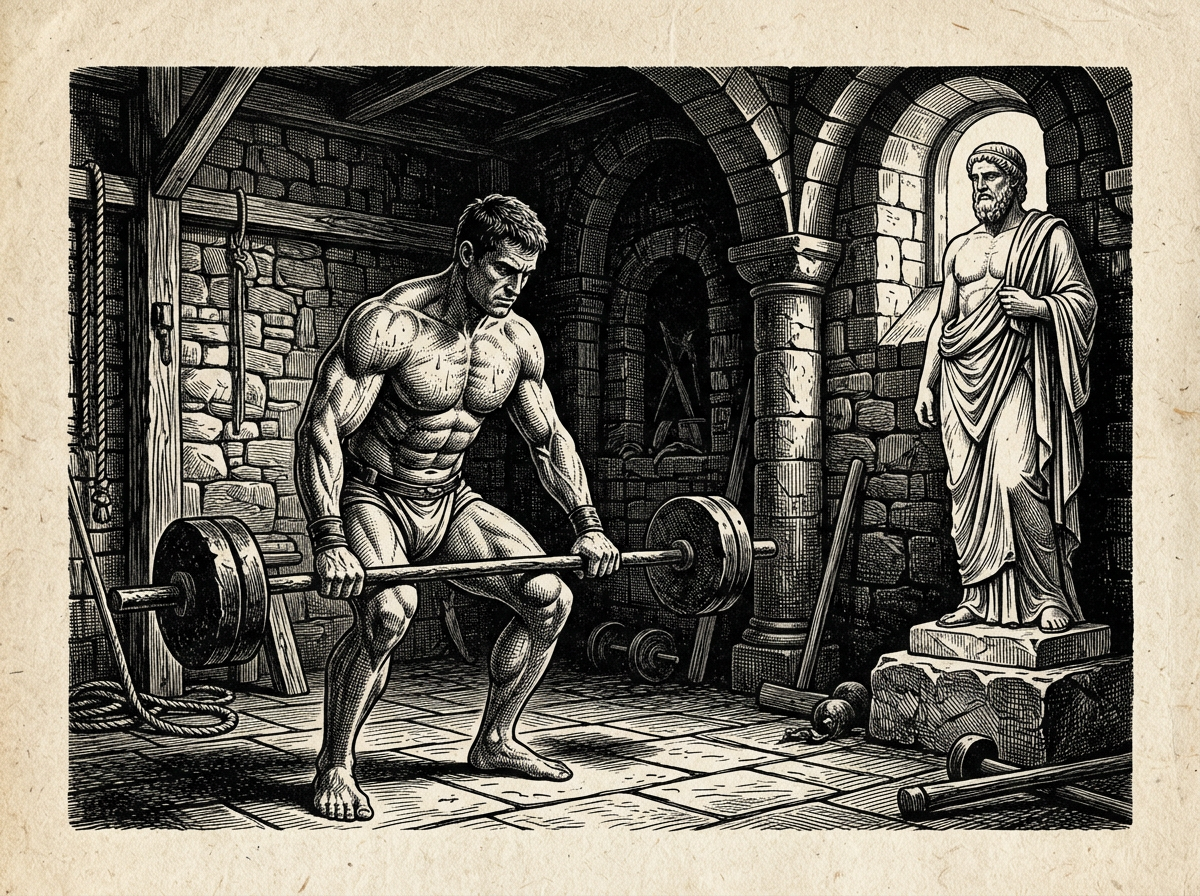
20th thick: It’s Easy To Get Better. But Better At What? | The Sanitization of Imperial Duty into Bourgeois Lifestyle Optimization
KEY PROBLEM: BOURGEOIS VANITY
Modern self-help degrades ancient civic duty into bourgeois lifestyle optimization. Modern Stoic commentary flattens Marcus Aurelius's uncompromising critique of personal vanity into comfortable lifestyle routines and superficial gym-habit advice. Reclaiming the passage requires recognizing that technical skill and personal achievements carry zero moral weight unless tethered to modesty and devotion to the common good.
read dispatch →
Dispatch No. 06 — 22 Oct 2026 share story ↗
20th October: Marks Of The Good Life | The Dilution of Categorical Virtue into Experiential Self-Discovery
MORAL DILUTION: THERAPEUTIC STOICISM
Virtue is an unyielding commitment, not a therapeutic journey While modern self-help softens Stoic principles into an open-ended quest for personal wellness, Marcus Aurelius demanded absolute submission to objective moral dogmas. True ethical discipline requires replacing vague self-discovery with unyielding standards of justice, courage, and self-control.
read dispatch →
Dispatch No. 07 — 20 Oct 2026 share story ↗
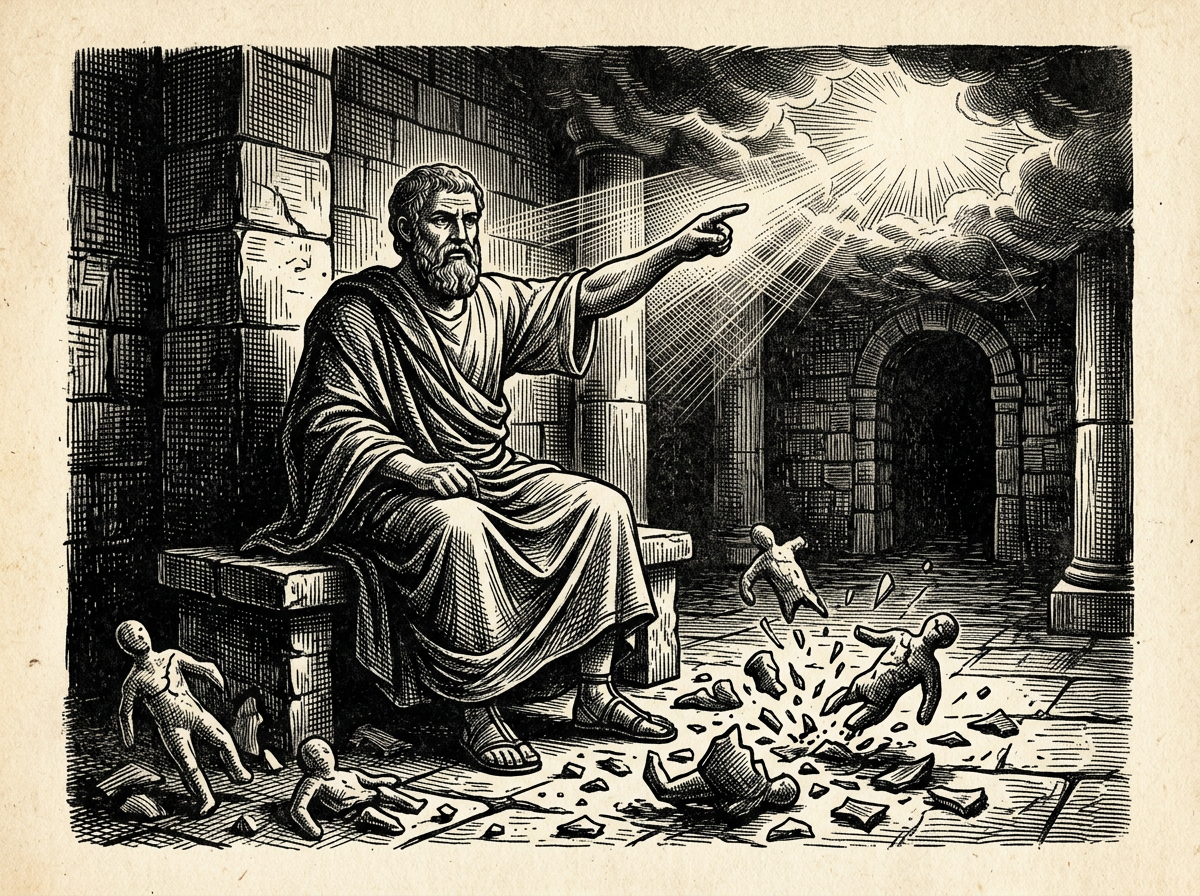
19th October: Good Habits Drive Out Bad Habits | The Reduction of Ascetic Soul-Training into Canine Behavioral Tricks
KEY PROBLEM: BEHAVIORAL TRICKS
True Stoicism requires spiritual warfare, not basic habit stacking. While modern interpretations soften Epictetus's rigorous askēsis into convenient habit-building hacks for workplace productivity, his original discipline was a ruthless moral campaign to liberate human willpower from external enslavement. Reclaiming this Stoic training requires trading comfortable behavioral redirects for an unyielding confrontation with our inner irrational desires.
read dispatch →
Dispatch No. 08 — 19 Oct 2026 share story ↗
15th October: Give People The Benefit Of The Doubt | The Dilution of Sovereign Mind Control into Polite Social Excuses
CORE ERROR: SANITIZED STOICISM
Do not mistake radical mental sovereignty for polite social tolerance. Modern self-help commentary degrades Marcus Aurelius’s radical call for absolute mental sovereignty into a soft lesson in social diplomacy. True Stoic discipline requires eliminating value judgments entirely, rather than inventing comfortable rationalizations for other people's bad behavior.
read dispatch →
Dispatch No. 09 — 17 Oct 2026 share story ↗
18th October: Frenemies | The Domestication of Moral Treason into Relatable Social Foibles
ETHICAL DILUTION: PERFORMATIVE GOODWILL
Modern self-help reduces severe moral warnings to relatable social quirks. Modern self-help commentary frequently dilutes Marcus Aurelius’s fierce condemnation of false friendship into a comforting normalization of petty hypocrisy. Rather than using ancient Stoicism to excuse two-faced behavior, we must reclaim its call for transparent, uncalculated integrity.
read dispatch →
Dispatch No. 10 — 16 Oct 2026 share story ↗
17th October: The Benefit Of Kindness | The Transactional Commodification of Duty into Mutual Social Profit
CHIEF DISTORTION: TRANSACTIONAL KINDNESS
Unconditional virtue is a duty, not a transactional life hack Modern self-help commentary frequently converts Seneca’s demanding call for uncredited, selfless duty into a comfortable strategy for personal optimization. True Stoic virtue requires performing good deeds for humanity without seeking recognition, treating kindness as an absolute moral obligation rather than a calculated investment.
read dispatch →
Dispatch No. 11 — 16 Oct 2026 share story ↗
16th October: Spread The Word | The Conversion of Moral Obligation into Benevolent Social Utility
CORE PROBLEM: DILUTED DISCIPLINE
Modern self-help dilutes Seneca’s stern medicine into gentle life coaching. Modern interpretations often flatten Seneca's rigorous mandate for deep cognitive re-education into superficial, feel-good advice sharing. True Stoic practice requires confronting the arduous work of scrubbing one's own moral errors before offering guidance to others.
read dispatch →
Dispatch No. 12 — 16 Oct 2026 share story ↗
14th October: Don’t Get Mad. Help | The Transformation of Biological Reality into Social Intervention
MORAL DRIFT: PUBLIC MEDDLING
Stoic radical acceptance is not a mandate to fix your neighbor. Modern self-help commentary twists Marcus Aurelius’s note on tolerating human flaws into a self-righteous permission slip for correcting others. Rather than weaponizing ancient wisdom into a crusade to fix your neighbor, true stoicism demands managing your own mind while accepting inevitable human imperfections.
read dispatch →
Dispatch No. 13 — 14 Oct 2026 share story ↗
13th October: Revenge Is A Dish Best Not Served | The Reduction of Cosmic Duty into Therapeutic Self-Soothing
PHILOSOPHICAL REDUCTION: THERAPEUTIC COMFORT
Why modern Stoicism turns cosmic duty into cheap emotional self-soothing While modern self-help reasonably reframes ancient Stoic warnings against revenge into accessible strategies for navigating petty workplace conflicts, it risks diluting a severe existential defense of rational humanity into mere aesthetic self-soothing. The essential truth worth retaining is that non-retaliation is not a tactic for social superiority, but an absolute boundary to protect your own moral integrity from being corrupted by others.
read dispatch →
Dispatch No. 14 — 13 Oct 2026 share story ↗
12th October: Always Love | The Commercialization of Reciprocal Affection into Social Investment
CORE ERROR: TRANSACTIONAL AFFECTION
Stop treating Seneca's advice on love like a social investment. Modern self-help commentary degrades Seneca’s call for selfless moral agency into a transactional strategy designed to extract social harmony and emotional returns. True Stoic affection requires practicing uncalculated goodwill entirely detached from external validation or reciprocal reward.
read dispatch →
Dispatch No. 15 — 12 Oct 2026 share story ↗
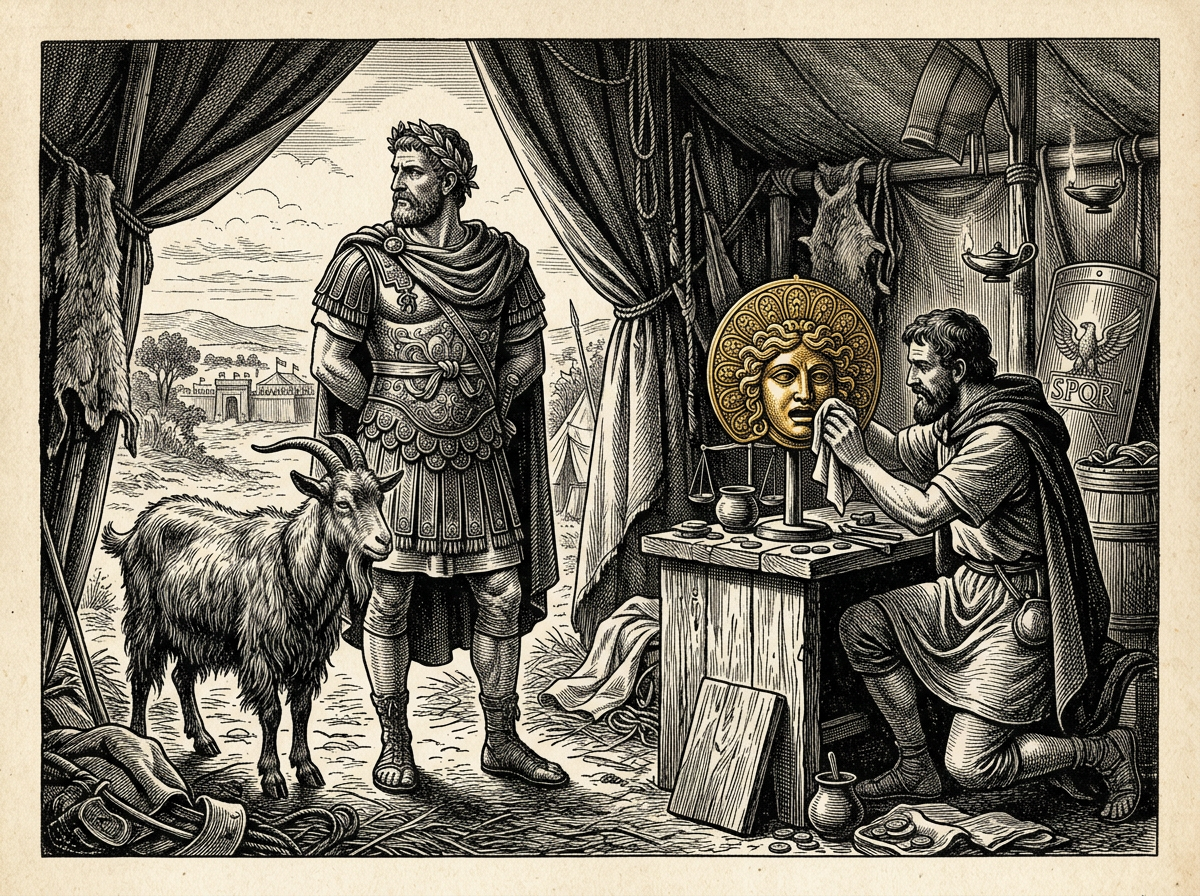
11th October: Honesty As Our Default | The Commercialization of Character into Personal Branding
MORAL REDUCTION: PERSONAL BRANDING
Real integrity smells like a goat, not a curated personal brand. While modern self-help reframes Stoic honesty as a strategic asset for building personal credibility, Marcus Aurelius originally demanded an uncalculated virtue so visceral it requires no public relations management. True character reveals itself not through deliberate aesthetic curation, but through an immediate, unavoidable moral presence that acts without seeking applause.
read dispatch →
Dispatch No. 16 — 11 Oct 2026 share story ↗
10th October: Reverence And Justice | The Misdirection of Cosmic Duty into Shallow Tranquility
ETHICAL DILUTION: INNER TRANQUILITY
Marcus Aurelius demanded existential duty, not modern self-help tranquility. Modern pop-Stoicism reduces Marcus Aurelius's urgent deathbed commands for cosmic piety and justice into a soft blueprint for personal tranquility. Fulfilling present moral duties requires surrendering unchangeable outcomes to fate rather than treating virtue as a mere instrument for personal comfort.
read dispatch →
Dispatch No. 17 — 10 Oct 2026 share story ↗
9th October: Set The Standards And Use Them | The Reduction of Epictetus's Logic to Personal Lifestyle Branding
CORE ERROR: IDENTITY CURATION
Stoicism is an objective scale, not a personal branding exercise While modern self-help usefully brings ancient philosophy into daily routines, it risks replacing Epictetus’s strict objective logic with self-absorbed identity curation. The enduring lesson of the text is to evaluate our impressions against universal rational standards rather than flattering self-images.
read dispatch →
Dispatch No. 18 — 09 Oct 2026 share story ↗
8th October: A Higher Pleasure | The Reduction of Sacred Integrity to Long-Lasting Dopamine
VIRTUE DEGRADATION: POP NEUROSCIENCE
Stop reducing ancient moral duty to a dopamine hack. While modern self-help often reframes Stoic virtue as a durable alternative to short-lived dopamine hits, Marcus Aurelius viewed moral integrity as an intrinsic human duty rather than a strategy for personal emotional satisfaction. True wisdom requires pursuing what is rational and just for its own sake, completely independent of any lingering mental reward or public recognition.
read dispatch →
Dispatch No. 19 — 08 Oct 2026 share story ↗
7th October: A Selfish Reason To Be Good | The Reduction of Soul-Rot into a Nauseated Stomach
CORE ERROR: SELFISH VIRTUE
Modern self-help turns moral integrity into a hack for anxiety management Popular interpretations of Stoicism reduce moral integrity to a self-serving tactic for avoiding guilt and physical discomfort. While appealing to immediate self-interest can temporarily deter bad behavior, true character requires protecting the rational mind for its own sake rather than dodging anxiety.
read dispatch →
Dispatch No. 20 — 07 Oct 2026 share story ↗
6th October: Looking Out For Each Other | The Reduction of Mutual Virtue into Self-Help Empathy Exercises
MAIN ERROR: THERAPEUTIC REDUCTION
Stop treating Stoic virtue as therapy for professional jealousy Modern self-help commentary degrades Seneca’s rigorous Stoic logic on shared moral growth into a trite psychological coping mechanism for handling petty envy. True virtue is not a zero-sum commodity requiring self-sacrifice, but a shared rational practice that elevates both friends simultaneously.
read dispatch →
Dispatch No. 21 — 06 Oct 2026 share story ↗
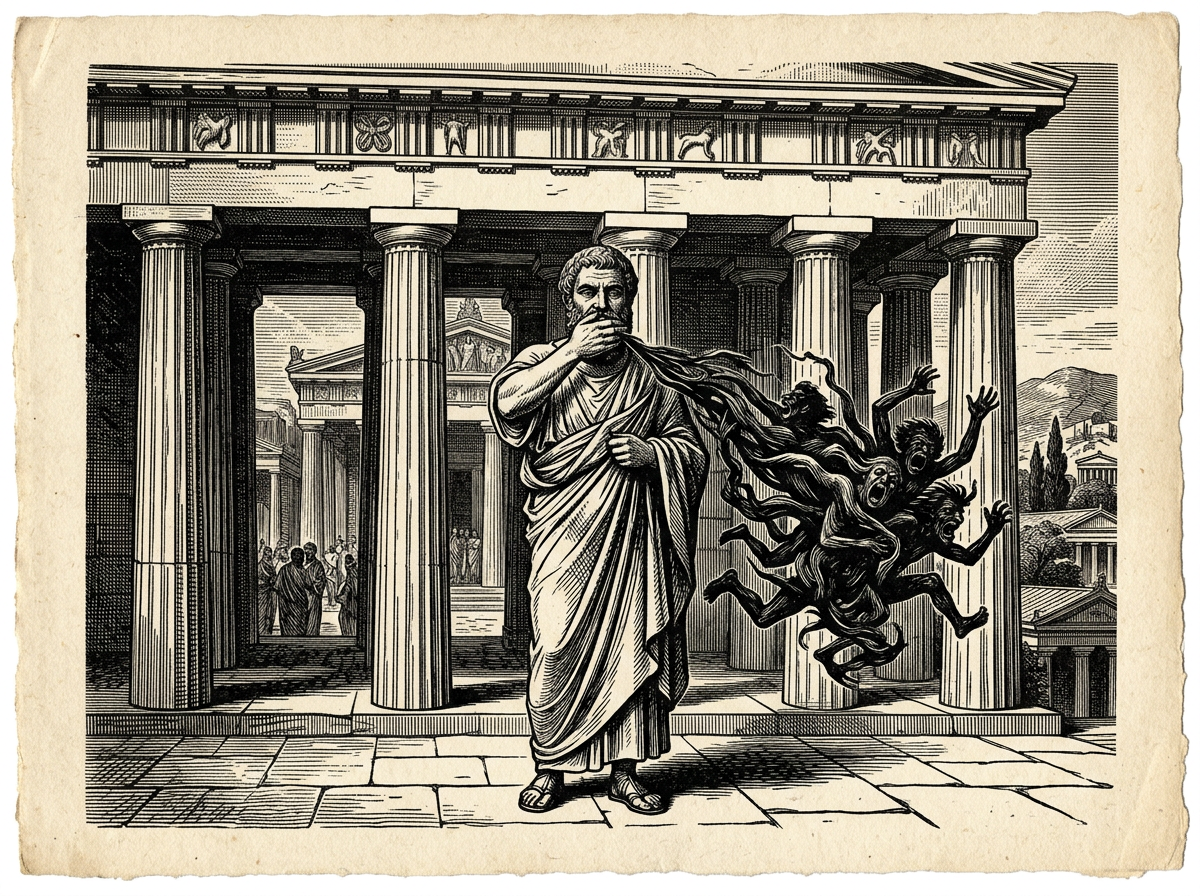
5th October: Words Can't Be Unsaid | The Trivialization of Moral Slip to Casual Regret
SHALLOW READING: RECKLESS SPEECH
Why modern Stoicism reduces moral discipline to mere social politeness Modern adaptations of Stoicism soften Zeno's rigorous standard by reframing verbal slips as mere social blunders rather than serious betrayals of one's moral character. By reducing an existential demand for absolute rational self-mastery to basic politeness, popular self-help dilutes the ancient discipline of speech into simple reputation management.
read dispatch →
Dispatch No. 22 — 05 Oct 2026 share story ↗
4th October: All For One, One For All | The Taming of Cosmic Duty into Social Consciousness
STOIC MISTRANSLATION: SOCIAL GUILT
Pop Stoicism trades cosmic endurance for easy moralizing Modern interpretations of Stoicism frequently dilute Marcus Aurelius's rigorous focus on internal rational resilience into fashionable lectures on civic virtue and corporate greed. True Stoic cosmic duty requires maintaining moral integrity through hardship, rather than reframing private discipline as a weapon for modern social critique.
read dispatch →
Dispatch No. 23 — 04 Oct 2026 share story ↗
3rd October: A Mantra Of Mutual Interdependence | The Reduction of Cosmic Order into Corporate Teamwork
CENTRAL ERROR: SENTIMENTAL REDUCTION
Stop turning Marcus Aurelius’s cosmic physics into corporate team synergy. Modern self-help commentary degrades Marcus Aurelius’s rigorous vision of cosmic interdependence into a toothless cliché about workplace collaboration. True Stoic physics demands that we accept life's brutal necessities and actively fulfill our rational duty within the whole, rather than seeking comfort in passive sentimentality.
read dispatch →
Dispatch No. 24 — 03 Oct 2026 share story ↗
2nd October: The Most Valuable Asset | The Commercialization of Inner Fortress into Portfolio Management
MORAL REFRAMING: ASSET MANAGEMENT
Virtue is a moral fortress, not a personal asset strategy Modern self-help vulgarizes Seneca's radical shield against Roman imperial tyranny into a comfortable risk-hedging tool for modern wealth and ego. True Stoic virtue requires acting out of absolute moral duty rather than calculating returns on spiritual investments.
read dispatch →
Dispatch No. 25 — 02 Oct 2026 share story ↗
1st October: Let Virtue Shine Bright | The Flattening of Duty into Sentimentality
CHIEF DEFECT: SENTIMENTAL STOICISM
Stoic duty is an unyielding mandate, not a cozy affirmation. Modern self-help commentary frequently flattens Marcus Aurelius’s grueling imperial duty into a cozy, forgiving affirmation that excuses moral passivity. True Stoicism demands that ethical standards remain unyielding until death, regardless of personal fatigue or cynicism.
read dispatch →
Dispatch No. 26 — 01 Oct 2026 share story ↗
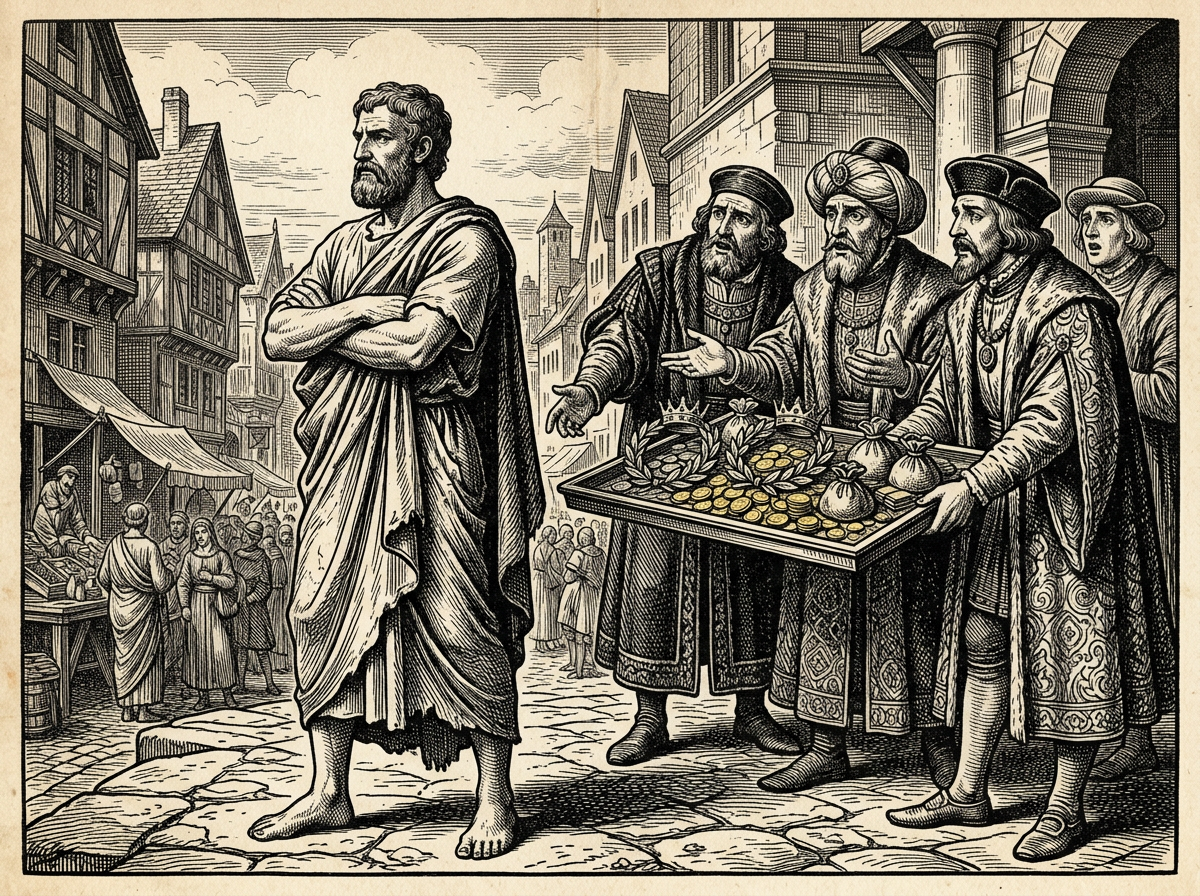
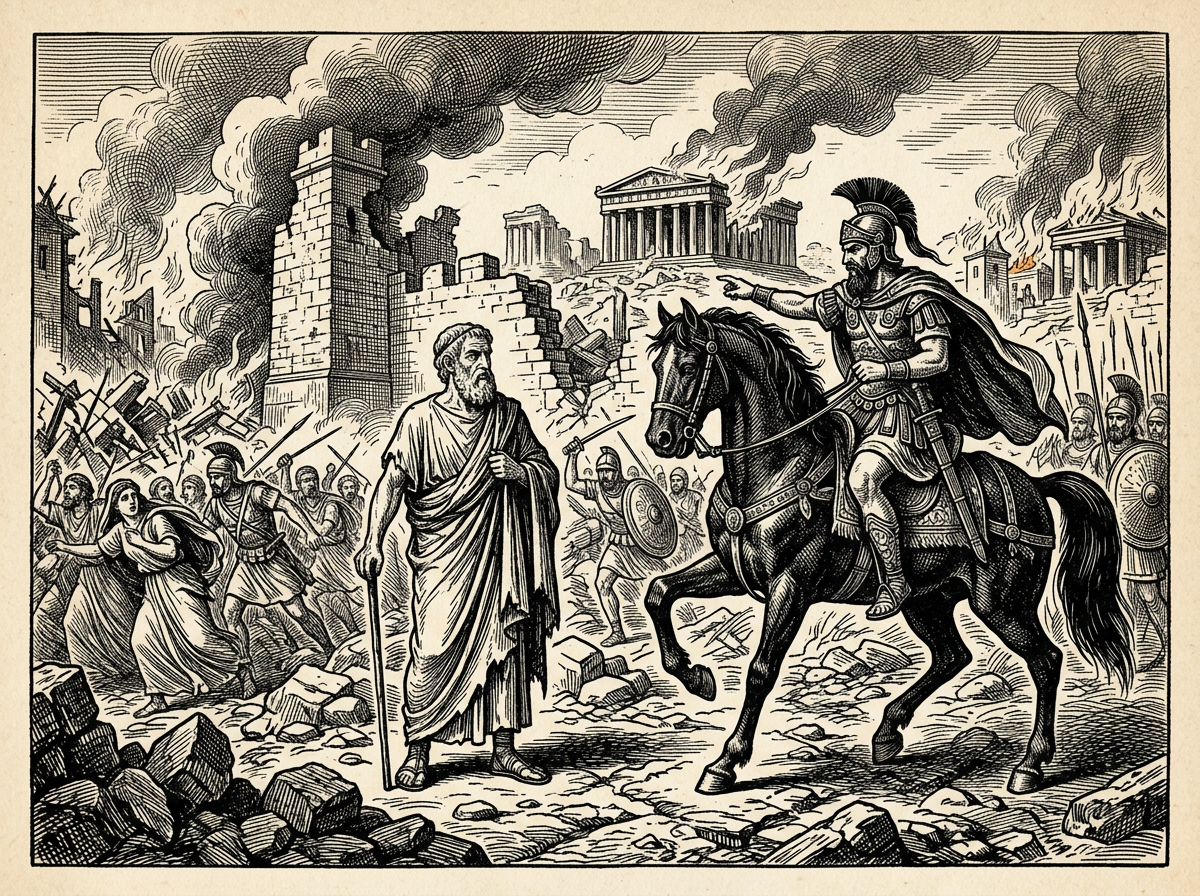
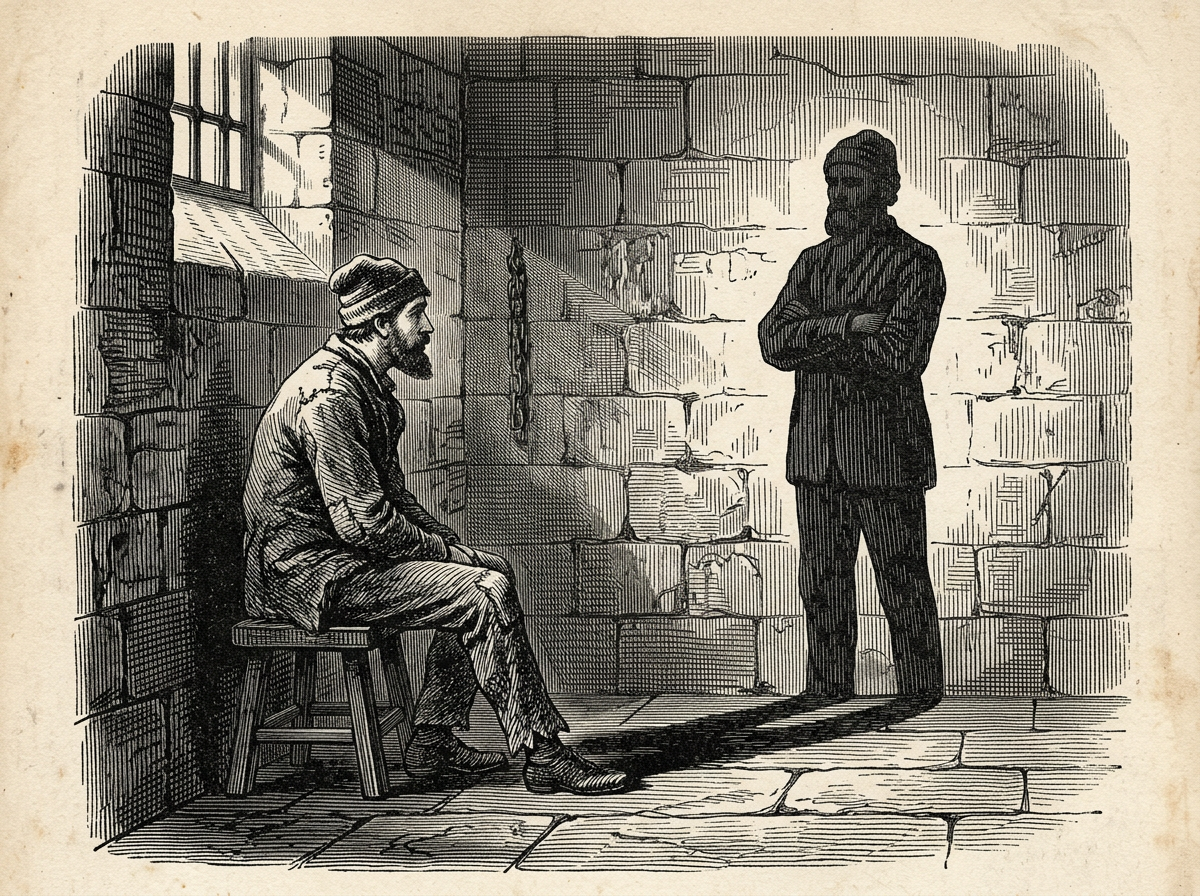
30th September: You Can’t Touch Me | The Commodification of Heroic Martyrdom into Psychological Escapism
CORE FALLACY: DELUSIONAL DENIAL
Modern Stoicism trades hard moral courage for cheap mental escape Modern self-help packaging degrades Zeno’s cold stance against tyranny into a cheap routine of psychological denial and escapism. True Stoic fortitude does not lie in pretending reality cannot touch us, but in maintaining unyielding moral conviction even when our physical body is destroyed.
read dispatch →
Dispatch No. 27 — 30 Sept 2026 share story ↗
29th September: Your Actual Needs Are Small | The Reduction of Cosmic Exile to Nostalgic Lifestyle Downsizing
EXISTENTIAL REDUCTION: BOURGEOIS NOSTALGIA
Don't reduce Seneca's political exile to cozy lifestyle downsizing Modern self-help commentary trivializes Seneca’s reflection on surviving brutal political exile by reframing it as routine financial advice and nostalgic lifestyle downsizing. To honor the Stoic tradition, we must distinguish between cozy middle-class budgeting and the radical internal autonomy required to endure total displacement.
read dispatch →
Dispatch No. 28 — 29 Sept 2026 share story ↗
28th September: You Hold The Trump Card | The Reduction of Cosmic Limitations to Egoic Self-Empowerment
MAIN ERROR: EGOIC REDUCTION
Modern self-help turns Epictetus’s humbling theology into a cheap life hack. Modern self-help adaptations strip Epictetus’s lectures of their tragic context and theological depth, turning a solemn lesson on physical powerlessness into a self-satisfied productivity tool. Reclaiming the philosopher's original focus on divine reason amidst fragile material reality reminds us that rational choice exists to endure fate rather than to conquer minor daily friction.
read dispatch →
Dispatch No. 29 — 28 Sept 2026 share story ↗
27th September: What Will Prosperity Reveal? | The Domesticated Transformation of Existential Panic into Wealth Management Anxiety
CRITICAL FLAW: TRIVIALIZED TRAUMA
Modern Stoicism turns existential trauma into wealth management anxiety. Modern popular Stoicism degrades Seneca's profound diagnosis of psychological trauma under political terror into mundane anxiety over wealth management. The genuine wisdom worth retaining is that no amount of external safety or material prosperity can heal an internally fractured mind.
read dispatch →
Dispatch No. 30 — 28 Sept 2026 share story ↗
26th September: What Time Off Is For | The Commercialization of Spiritual Contemplation into Bourgeois Vacation Etiquette
LIFESTYLE TRAP: BOURGEOIS LEISURE
How modern self-help turned Seneca's warnings into resort etiquette. Modern popular self-help reduces Seneca's urgent demand for rigorous mental and moral discipline during periods of retreat into mere lifestyle etiquette for affluent vacationers. By reclaiming Seneca's true concept of leisure, we must treat unstructured time not as an excuse for passive consumption, but as a crucial opportunity for deep self-examination.
read dispatch →
Dispatch No. 31 — 28 Sept 2026 share story ↗
25th September: The Vulnerability Of Dependence | The Domesticated Reduction of Moral Servitude to Minor Life-Hack Inconveniences
CHIEF DISTORTION: LIFESTYLE OPTIMIZATION
Cold showers cannot save you from self-imposed moral servitude Modern self-help reduces Seneca’s severe warning against soul-crushing moral servitude into a comfortable checklist of minor personal conveniences. True spiritual autonomy requires confronting destructive internal vices like greed and fear rather than merely enduring cold showers or temporary material downgrades.
read dispatch →
Dispatch No. 32 — 28 Sept 2026 share story ↗
24th September: It Could Happen To You | The Reduction of Cosmic Fate to a Trivial Karma Wheel
MAIN ERROR: DOMESTICATED FATE
Seneca’s severe confrontation with catastrophe is not a lesson in etiquette. Modern self-help commentary frequently flattens Seneca’s visceral rehearsal for total annihilation into mild observations on social humility and everyday setbacks. By substituting cozy karma for the terrifying volatility of fate, these pop-philosophical readings rob the practice of its true power to steel the mind against catastrophic loss.
read dispatch →
Dispatch No. 33 — 28 Sept 2026 share story ↗
23rd September: The Most Secure Fortress | The Fallacy of Reducing the Sacred Inner Citadel to Unconscious Habit Formation
CONCEPTUAL FLATTENING: HABIT LOOPS
The inner citadel requires conscious reason, not automated habits While modern self-help seeks to render Stoic virtue effortless through automated habits, Marcus Aurelius envisioned the inner citadel as a practice of hyper-conscious rational sovereignty. Reducing this spiritual refuge to a mechanical routine strips the philosophy of its power to preserve human dignity in times of existential crisis.
read dispatch →
Dispatch No. 34 — 28 Sept 2026 share story ↗
22nd September: No Pain, No Gain | The Reduction of Divine Crucible to Varsity Sports Meritocracy
CORE ERROR: COMMODIFIED SUFFERING
Stoicism is a forge for the soul, not a hustle manifesto Modern pop-Stoicism degrades Epictetus's severe theology of spiritual survival under tyranny into an opt-in pep talk for career ambition and athletic prestige. In doing so, it strips existential suffering of its cosmic gravity, replacing the endurance of the rational soul with shallow meritocratic flexing.
read dispatch →
Dispatch No. 35 — 28 Sept 2026 share story ↗
21st September: Maintain Composure, Maintain Control | The Domestication of Imperial Trauma into Minor Inconvenience Management
MORAL DILUTION: COSMIC HARMONY
Modern self-help shrinks imperial spiritual battles into basic inconvenience management. Modern self-help interpretations trivialize Marcus Aurelius's profound call for cosmic attunement by reducing it to a routine for managing minor suburban inconveniences. To reclaim the true weight of Stoic discipline, we must view daily disruptions not as mere annoyances to soothe, but as urgent cues to restore our internal moral alignment.
read dispatch →
Dispatch No. 36 — 21 Sept 2026 share story ↗
20th September: Life Isn’t a Dance | The Fetishization of Combat Dynamics to Sell Egoic Toughness
EGO DISTORTION: COMBAT FANTASY
Stoicism is a fortress for endurance, not a cage match Modern self-help commentary degrades Marcus Aurelius’s call for quiet internal resilience into a hyper-aggressive manifesto about conquering external rivals. True Stoic wisdom uses the wrestling metaphor not to advocate for personal dominance, but to cultivate a steady moral stance capable of absorbing life’s unpredictable blows.
read dispatch →
Dispatch No. 37 — 20 Sept 2026 share story ↗
19th September: Flexibility Of The Will | The Reduction of Cosmic Duty to Corporate Agility
MORAL DISTORTION: CORPORATE PIVOTING
How modern Stoicism reduced imperial humility to corporate flexibility. While Marcus Aurelius urged moral self-correction to tame imperial vanity, modern self-help dilutes his words into a routine workflow strategy for corporate agility. Reclaiming the Stoic emperor's true intent requires framing intellectual flexibility not as a tool for worldly success, but as a humbling act of moral freedom.
read dispatch →
Dispatch No. 38 — 19 Sept 2026 share story ↗
18th September: Dealing With Pain | The Trivialization of Physical Agony into Historical Hero Worship
CHIEF ERROR: HERO WORSHIP
Pain demands internal discipline, not comforting historical anecdotes Marcus Aurelius crafted a grueling internal protocol to insulate his rational mind from severe bodily agony. Modern popular commentaries trivialize this mental survival tool by substituting rigorous self-mastery with comforting historical anecdotes.
read dispatch →
Dispatch No. 39 — 18 Sept 2026 share story ↗
17th September: Dealing With Haters | The Reduction of Sacred Moral Rectitude to Social Media PR Management
CORE DISTORTION: EGO DEFENSE
Marcus Aurelius was an emperor, not your personal brand manager. While modern self-help degrades Stoic endurance into a transactional strategy for preserving personal peace, Marcus Aurelius originally demanded unyielding moral rectitude and unconditional benevolence toward opponents. True Stoicism requires active engagement with a flawed world rather than pathologizing critics to protect one's own ego.
read dispatch →
Dispatch No. 40 — 17 Sept 2026 share story ↗
16th September: Anyone Can Get Lucky, Not Everyone Can Persevere | The Fetishization of Meritocratic Hustle in Place of Existential Tragedy
CORE DISTORTION: CAREER HUSTLE
Stop turning Seneca's existential terror into a corporate pep talk Popular modern interpretations trivialize Seneca’s severe meditations on catastrophe by reducing existential survival to a formula for secular advancement. True Stoic endurance is not a branding strategy for professional success, but a noble discipline to preserve moral integrity when everything is lost.
read dispatch →
Dispatch No. 41 — 16 Sept 2026 share story ↗
15th September: A Garden Is Not For Show | The Fallacy of Turning Spiritual Incubation into Capitalist Productivity
SPIRITUAL RISK: PREMATURE EXPOSURE
Stop treating private moral growth as a branding strategy While modern self-help helpfully frames personal growth around daily utility, it flattens Epictetus's urgent warning by turning internal fortitude into a transactional asset. True character demands a long period of quiet incubation in the dark, entirely free from public performance or the demand for immediate productivity.
read dispatch →
Dispatch No. 42 — 15 Sept 2026 share story ↗
14th September: A Different Way To Pray | The Commodification of Spiritual Transformation into Self-Help Life Hacks
CORE PROBLEM: SANITIZED STOICISM
Marcus Aurelius demanded spiritual surrender, not consumerist self-soothing While modern pop-Stoicism helpfully redirects our focus from unmanageable external circumstances toward internal control, it risks flattening a terrifying confrontation with mortality into an instrument for routine stress management. The essential wisdom worth preserving lies not in optimizing daily productivity, but in training our desires to accept reality rather than demanding the universe bend to our preferences.
read dispatch →
Dispatch No. 43 — 14 Sept 2026 share story ↗
13th September: Protecting Our Inner Fortress From Fear | The Dilution of Spiritual Warfare into Psychological Comfort
CORE ERROR: DOMESTICATED STOICISM
Stoicism is an offensive against tyranny, not suburban stress management Modern self-help adaptations often reduce Epictetus's radical philosophy of moral agency into a passive toolkit for anxiety management. True Stoicism demands an aggressive internal offensive against false judgments rather than a timid retreat into emotional defense.
read dispatch →
Dispatch No. 44 — 12 Sept 2026 share story ↗
12th September: Be Down To Earth, Or Be Brought Down | The Taming of Stoic Pride Into Social Self-Preservation
ETHICAL REDUCTION: SOCIAL COMPLIANCE
Do not reduce Zeno’s warning against pride to timid social etiquette. Modern self-help rightly notes that dampening overt pride protects individuals from swift social ruin, offering a practical shield within delicate public hierarchies. Yet we carry forward Zeno's deeper grain only when humility is practiced not out of fear of public embarrassment, but as a ruthless clearing away of moral delusion.
read dispatch →
Dispatch No. 45 — 12 Sept 2026 share story ↗
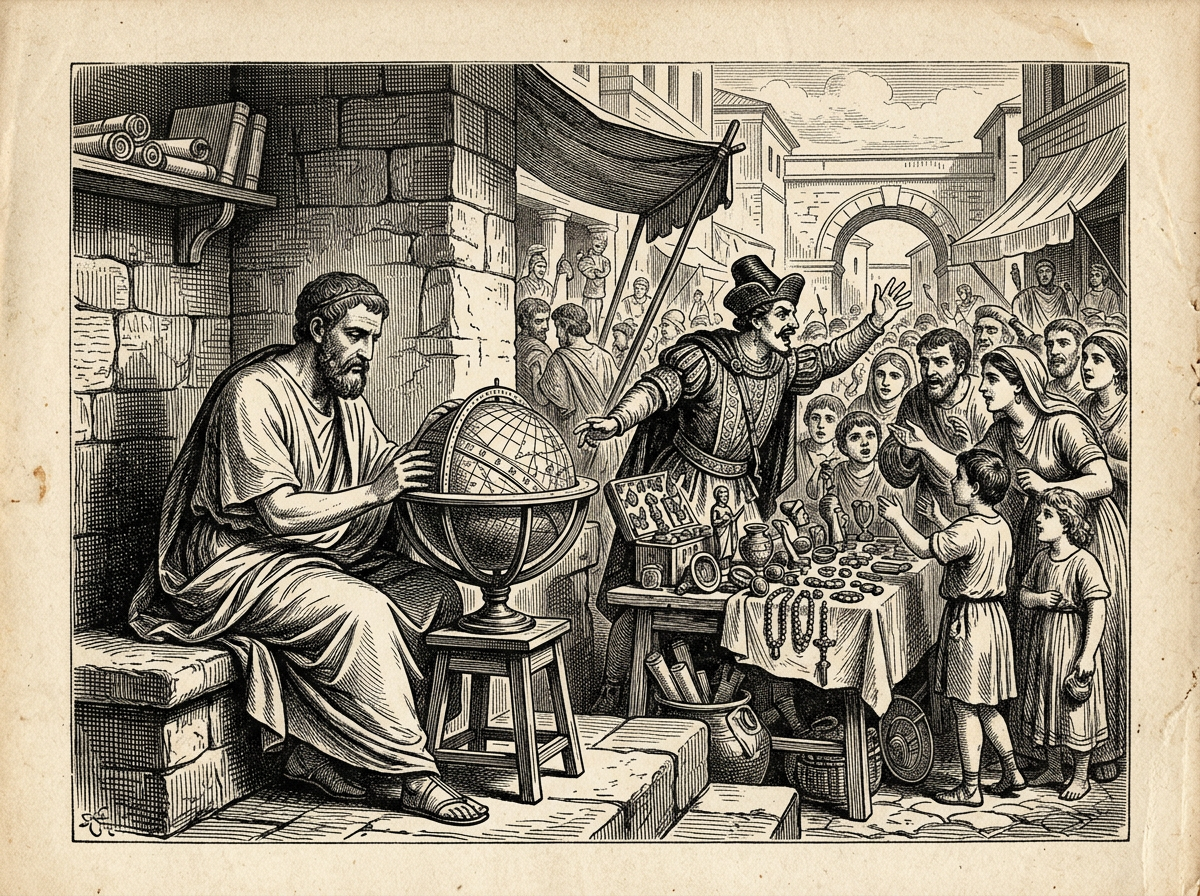
11th September: What Would Less Look Like? | The Commodification of Voluntary Poverty
CORE DISTORTION: WEALTH HEDGING
How pop-Stoicism turned radical asceticism into a cozy financial hedge While modern self-help dilutes Seneca’s calls for voluntary poverty into a comfortable financial insurance policy for suburban anxiety, the Roman philosopher originally demanded a far more radical death to material pride and toxic ambition. True Stoic discipline asks us not merely to hedge against potential economic swings, but to master our desires entirely so that physical fortune loses all power over the soul.
read dispatch →
Dispatch No. 46 — 12 Sept 2026 share story ↗
10th September - Preparing On The Sunny Day | Packaging Ascetic Spiritual Combat as a Cosplay Vacation for the Wealthy
CORE ERROR: PERFORMATIVE POVERTY
Seneca’s voluntary poverty was a trial, not a suburban game While modern self-help seeks to make ancient philosophy approachable by recasting hardship as a mild mental exercise, Seneca’s original practice demanded genuine physical deprivation to break one's psychological reliance on wealth. Stripping away comfortable simulations reveals the enduring truth that moral dignity can only be tested when real luxury is surrendered.
read dispatch →
Dispatch No. 47 — 10 Sept 2026 share story ↗
8th September: Do Not Be Deceived By Fortune | Rewriting Moral Exile as a Temporary Career Bump
CORE DISTORTION: EXECUTIVE RESILIENCE
How modern Stoicism turned radical exile into a corporate resilience hack While modern self-help dilutes Seneca's traumatic exile into a playbook for riding out career downturns, authentic Stoicism demands a far more radical surrender of external status. By mistaking spiritual detachment for a temporary strategy to regain power, contemporary commentators miss the core discipline of viewing worldly goods as temporary loans.
read dispatch →
Dispatch No. 48 — 08 Sept 2026 share story ↗
7th September: Our Hidden Power | Reducing Radical Cosmic Duty to a Toxic Positivity Hack
MORAL REDUCTION: TOXIC POSITIVITY
Stoicism is a call to moral duty, not shallow optimism While modern adaptations reduce Epictetus's teachings to a coping mechanism for daily stress, true Stoicism demands total moral accountability under any circumstance. Reclaiming the philosopher's original intent requires shifting our focus from self-soothing positivity to maintaining rational integrity amidst adversity.
read dispatch →
Dispatch No. 49 — 07 Sept 2026 share story ↗
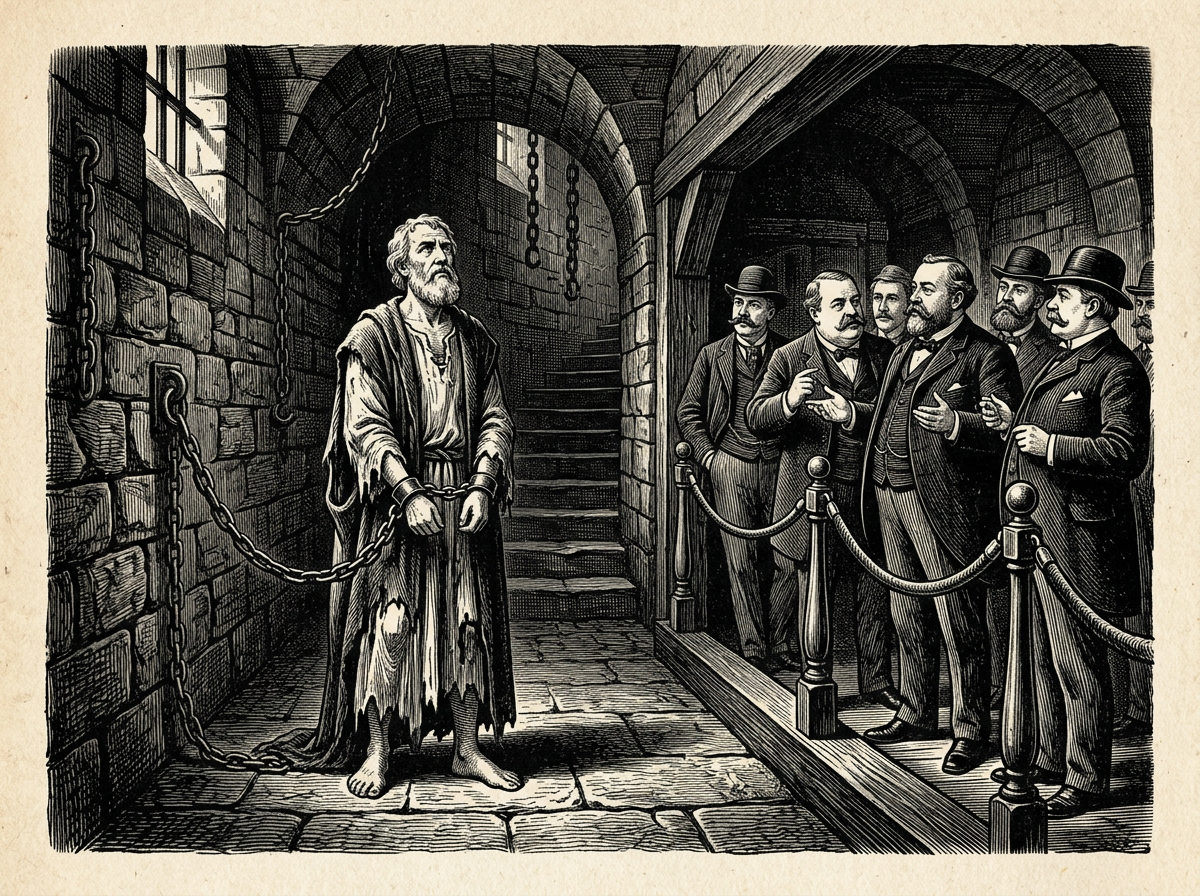
6th September: They Can Throw You in Chains, But . . . | Reducing Radical Moral Autonomy to a Hero-Complex Branding Strategy
MORAL DILUTION: HERO COMPLEX
How modern self-help dilutes radical Stoic autonomy into heroic ego Popular Stoic commentary trivializes Epictetus by turning profound moral detachment into an ego-driven tale of physical endurance. The authentic lesson lies in recognizing that while circumstance may bind the body, ultimate responsibility for one's rational integrity remains entirely unavoidable.
read dispatch →
Dispatch No. 50 — 06 Sept 2026 share story ↗
5th September: Focus On What Is Yours Alone | Trivializing Moral Freedom into Survival Tactics for Executive Success
CORE FLAW: COMMODIFIED RESILIENCE
Stop turning ancient moral freedom into a corporate productivity hack Modern popularizers of Stoicism flatten Epictetus's radical doctrine of internal moral freedom into a mere grit tactic for executive productivity and survival. By recasting a philosophy forged under physical slavery as boardroom management advice, self-help culture forgets that true freedom is an absolute state of soul rather than a tool for external success.
read dispatch →
Dispatch No. 51 — 05 Sept 2026 share story ↗
4th September - How Can You Know Whether You’ve Never Been Tested? | Turning Moral Combat into Corporate Self-Actualization
CORE ERROR: COZY STOICISM
Hardship is a test of virtue, not a corporate growth strategy. Modern self-help sanitizes Seneca’s brutal theology of existential trial into a comfortable narrative of career advancement and self-esteem. True Stoicism demands that we view hardship not as a stepping stone to professional success, but as an unyielding test of moral integrity.
read dispatch →
Dispatch No. 52 — 04 Sept 2026 share story ↗
3rd September - First, A Hard Winter Training | The Delusion of Endlessly Optimization
PRODUCTIVITY TRAP: HUSTLE CULTURE
Stoicism was meant to build character, not feed modern workaholism. Modern interpretations of Stoicism often distort ancient warnings against unearned ambition into toxic mandates for relentless productivity and optimization. Epictetus called for quiet, unglamorous character preparation rather than the endless, market-driven grind celebrated by contemporary self-help.
read dispatch →
Dispatch No. 53 — 03 Sept 2026 share story ↗
2nd September - The Philosopher’s School is a Hospital | Sanitizing Soul Surgery into a Spa Treatment
PHILOSOPHICAL ERROR: SELF OPTIMIZATION
Stop turning Epictetus’s brutal moral surgery into self-optimization. Modern interpretations of Stoicism often sanitize Epictetus's brutal diagnosis of moral corruption into a comfortable routine for personal achievement. True philosophical inquiry requires painful, confrontational self-examination rather than self-congratulatory wellness rituals designed to optimize performance.
read dispatch →
Dispatch No. 54 — 03 Sept 2026 share story ↗
1st September - A Strong Soul Is Better Than Good Luck | The Consumerist Myth of Resilience
COMMODIFIED VIRTUE: PERFORMANCE RESILIENCE
Stop reducing Seneca's radical moral virtue to a personal productivity hack Modern interpretations of Stoicism frequently degrade radical ancient claims of moral sovereignty into mere biohacks for personal stamina and career success. By reclaiming Seneca's original focus on virtue for its own sake, we restore philosophy as a discipline of absolute moral integrity rather than a self-optimization tool.
read dispatch →
Dispatch No. 55 — 03 Sept 2026 share story ↗
31st August-Consider Your Failings Too
MORAL DRIFT: EASY PARDON
Soft self-help turns Stoic moral rigor into easy self-pardon. Modern interpretations of Stoicism often reduce Marcus Aurelius’s call for rigorous self-examination into a comforting rationale for mutual self-justification. Rather than excusing misdeeds as harmless fatigue, authentic Stoic practice demands that we ruthlessly confront our own misplaced values before judging others.
read dispatch →
Dispatch No. 56 — 31 Aug 2026 share story ↗
30th August - When You Feel Lazy
KEY PROBLEM: COMMERCIALIZED STOICISM
Stoicism loses its soul when flattened into Silicon Valley productivity While practical self-help attempts to translate ancient Stoic discipline into actionable modern work habits, co-opting Seneca to justify corporate efficiency strips philosophy of its moral gravity. To salvage the insight, we must diagnose our inner reluctance not to boost output, but to ensure our daily efforts align with a genuinely virtuous life.
read dispatch →
Dispatch No. 57 — 29 Aug 2026 share story ↗
29th August - Want Nothing = Have Everything
CORE DISTORTION: RETAILED CONTENTMENT
Wanting less is spiritual discipline, not a shortcut to feeling rich. While modern self-help reduces Seneca’s call for detachment to a clever shortcut for feeling wealthy, true Stoicism demands a rigorous realignment of desires rather than a psychological trick. Strip away the commercialized comfort, and the enduring grain remains: genuine freedom comes from relinquishing the appetite for luxury rather than cleverly coping with its absence.
read dispatch →
Dispatch No. 58 — 29 Aug 2026 share story ↗
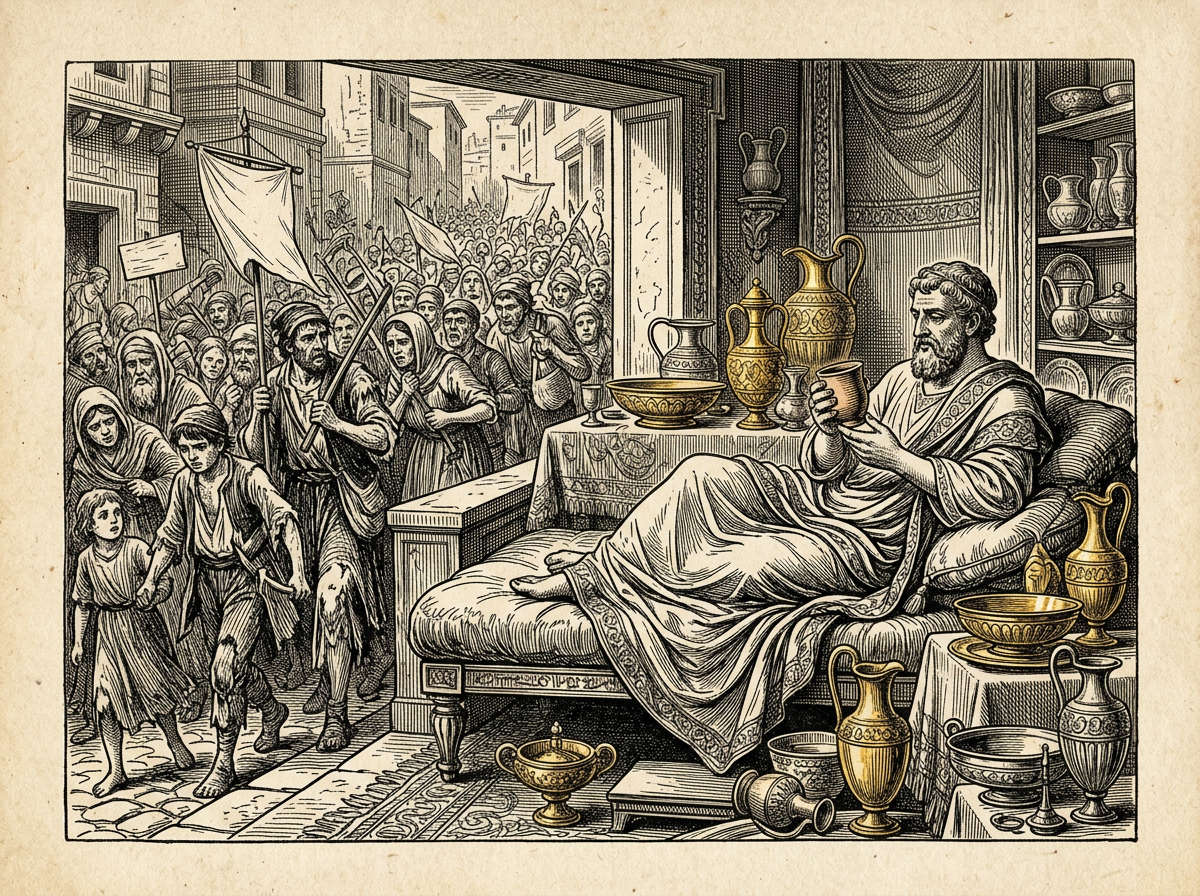
28th August - The Opulent Stoic
MORAL DILUTION: WEALTH SANCTIFICATION
Comfortable Stoicism dilutes ancient moral discipline into simple self-justification. Modern self-help commentary often strips Stoicism of its rigorous moral demands to offer affluent readers a comfortable rationale for hoarding wealth. While emotional detachment from luxury remains a useful practice, reducing ancient philosophy to financial pragmatism erodes the genuine integrity required for ethical living.
read dispatch →
Dispatch No. 59 — 28 Aug 2026 share story ↗
27th August - Laugh, Or Cry?
CORE DISTORTION: CHEAP OPTIMISM
When cheerful Stoicism flattens the true weight of human tragedy Modern self-help often reduces the Stoic choice between tragic grief and detached laughter to a superficial recommendation for cheerful coping. While humor can lighten immediate psychological burdens, true resilience demands facing life's hardships with moral duty rather than using levity to evade uncomfortable realities.
read dispatch →
Dispatch No. 60 — 27 Aug 2026 share story ↗
26th August - Seeking Out Shipwrecks
CHEAP STOICISM: ROMANTICIZED SUFFERING
Misfortune is not a plot device for your personal growth arc While modern self-help repackages tragedy as a guaranteed stepping stone to success, genuine Stoicism demands a far grimmer assessment of loss and vulnerability. The true value of Seneca's lesson lies not in expecting happy endings from disaster, but in recognizing how little we actually need to maintain our moral integrity when hardship strikes.
read dispatch →
Dispatch No. 61 — 26 Aug 2026 share story ↗
25th August - Respect The Past, But Be Open To The Future | The Fallacy of Modernizing Virtue
CORE FALLACY: CONVENIENT ETHICS
Modern self-help strips Seneca of discipline to feed consumer ego. Modern interpretations of Seneca dilute rigorous Stoic discipline into a pick-and-choose philosophy that favors present comfort over genuine moral effort. While Seneca urged seekers to pioneer shorter paths only in pursuit of objective truth, contemporary self-help flatters the reader's ego by treating centuries of tested wisdom as obsolete.
read dispatch →
Dispatch No. 62 — 24 Aug 2026 share story ↗
24th August - Pillage From All Sources
CORE ERROR: UTILITARIAN ECLECTICISM
True eclecticism demands rigorous judgment, not convenient plunder While extracting valuable insights across opposing philosophies can free us from tribal dogmatism, reducing wisdom to whatever simply feels helpful risks replacing objective truth with self-serving convenience. To truly benefit from eclectic reading, one must retain rigorous moral judgment rather than treating foundational principles as an unprincipled buffet.
read dispatch →
Dispatch No. 63 — 23 Aug 2026 share story ↗
23rd August - It’s In Your Self-Interest
CORE ERROR: MANIPULATIVE STOICISM
Turning Seneca's moral clarity into a dark psychology life hack While Seneca rightfully advocates demonstrating the concrete harms of vice rather than lecturing in abstract terms, modern commentators corrupt this insight by reducing Stoic self-discipline to Machiavellian levers for social influence. True Stoicism demands rigorous self-governance and moral accountability, not cynical tactics designed to manipulate human behavior for personal gain.
read dispatch →
Dispatch No. 64 — 23 Aug 2026 share story ↗
22th August - Don’t Sweat The Small Stuff
MORAL DILUTION: POP STOICISM
Modern self-help flattens Stoic duty into mere time management. While modern self-help seeks to relieve stress by treating routine obligations as minor annoyances, classical Stoicism views every duty as a vital reflection of moral integrity. True wisdom lies not in shrinking from tedious tasks, but in elevating daily responsibilities into meaningful practice without abandoning higher commitments.
read dispatch →
Dispatch No. 65 — 22 Aug 2026 share story ↗
21th August - Don’t Be Miserable In Advance
FALSE VIRTUE: MANIC BUSYNESS
Don't confuse frantic productivity with genuine Stoic tranquility. While channeling anxious energy into practical labor offers temporary relief from passive dread, substituting endless busyness for mental stillness merely masks underlying existential fears. The lasting value of Stoic wisdom lies not in outrunning anxiety through hustle, but in cultivating a mind that remains at peace even in absolute stillness.
read dispatch →
Dispatch No. 66 — 21 Aug 2026 share story ↗
20th August - Where It Counts
MODERN TRAP: COMMODIFIED VIRTUE
How modern self-help domesticates Seneca into comfortable conformity. Modern self-help commentary often dilutes Seneca's call for radical internal transformation into an excuse for comfortable social conformity. True Stoicism demands rigorous inner discipline and action rather than commercially packaged platitudes designed to appease the crowd.
read dispatch →
Dispatch No. 67 — 20 Aug 2026 share story ↗
19th August - Corralling The Unnecessary
MODERN DISTORTION: CIVIC EVASION
Stop turning an emperor’s public duty into a productivity hack While modern self-help reduces Marcus Aurelius to a guide for calendar optimization, the emperor actually demanded the sacrifice of private comfort for public service. True Stoic discipline clears away personal vanity not to protect leisure, but to fulfill a rigorous duty to the community.
read dispatch →
Dispatch No. 68 — 19 Aug 2026 share story ↗
18th August - Only Fools Rush In
MORAL DRIFT: RISK AVERSION
Modern self-help degrades Stoic virtue into mere risk aversion Modern self-help commentaries frequently degrade Stoic moral detachment into tactical risk aversion to flatter conflict-averse readers. Yet authentic philosophy requires maintaining unyielding virtue through life's inevitable contests rather than retreating to protect a fragile ego.
read dispatch →
Dispatch No. 69 — 18 Aug 2026 share story ↗
17th August - The Buck Stops Here
PHILOSOPHICAL DISTORTION: PERFORMATIVE GUILT
Stop turning Stoic self-examination into performative self-flagellation While Stoicism rightly urges individuals to master their internal reactions, modern self-help twists this discipline into a foolish obligation to take blame for other people's bad behavior. True philosophical rigor requires clearly distinguishing between one's own reasoned choices and the external errors of others, rather than reducing virtue to a performative quick fix.
read dispatch →
Dispatch No. 70 — 17 Aug 2026 share story ↗
16th August - Anything Can Be An Advantage
STOIC REDUCTION: TACTICAL VANITY
Modern self-help turns Stoic cosmic duty into competitive vanity. While ancient Stoicism demands using obstacles to strengthen moral character and serve the collective good, modern self-help dilutes this philosophy into a tactical playbook for personal status. By recasting Marcus Aurelius’s call for quiet endurance into a tool for self-aggrandizement, commentators sell ego-flattering life hacks at the expense of genuine virtue.
read dispatch →
Dispatch No. 71 — 15 Aug 2026 share story ↗
15th August - The Supreme Court Of Your Mind
FALSE VIRTUE: REPUTATION MANAGEMENT
Stoicism demands quiet internal virtue over the pursuit of public applause Modern self-help commentary often reduces Seneca’s rigorous call for internal self-mastery into a superficial playbook for building a public reputation. True Stoic virtue resides strictly in sound reason and private duty rather than the fleeting applause of others.
read dispatch →
Dispatch No. 72 — 14 Aug 2026 share story ↗
14th August - This Isn`t For Fun It's For Life
RETAIL WISDOM: INTELLECTUAL COMPLACENCY
How modern self-help guts Stoic rigor for easy commercial gain Modern pop-Stoicism often flattens ancient warnings against hollow rhetoric into a dogmatic rejection of nuanced debate. By reducing deep philosophy to quick, marketable life-hacks, commentators flatter intellectual laziness to build their personal brands.
read dispatch →
Dispatch No. 73 — 14 Aug 2026 share story ↗
13th August - Take Charge And End Your Troubles
ETHICAL DRIFT: CONSUMER COMFORT
Turning Marcus Aurelius into a self-help hack dilutes ancient Stoicism While modern Stoicism provides a practical framework for emotional regulation, it flattens Marcus Aurelius's demanding philosophy of cosmic duty into a gentle self-care routine. True Stoic reason demands rigorous moral self-sacrifice rather than a convenient technique to optimize daily productivity.
read dispatch →
Dispatch No. 74 — 13 Aug 2026 share story ↗
12th August - Make The Words Your Own
CENTRAL FAULT: CONVENIENT TRUTH
True philosophy demands lived virtue, not tailored self-help slogans While modern self-help commentators urge readers to adapt ancient philosophy for personal comfort, Seneca's true mandate demands that we discipline our actions rather than rewrite demanding truths. Authentic Stoicism is measured not by how comfortably we customize its principles, but by the rigor with which we embody them in daily life.
read dispatch →
Dispatch No. 75 — 11 Aug 2026 share story ↗
11th August - No Time For Theories, Just Results
EDITORIAL MISSTEP: ACTION BIAS
True Stoicism requires embodied moral theory, not frantic action. Modern self-help commentaries often twist ancient Stoic texts into justifications for anti-intellectual productivity and rapid task management. In truth, Musonius Rufus argued that habit must embody sound moral theory, rather than replacing thoughtful ethics with mindless action.
read dispatch →
Dispatch No. 76 — 11 Aug 2026 share story ↗
10th August - Perfection Is The Enemy Of Action
CRITICAL FLAW: DILUTED DISCIPLINE
Stop turning Epictetus's rigorous discipline into comfortable self-compassion. While modern self-help frames Epictetus as an advocate for pragmatic progress over perfectionist paralysis, it misinterprets his posture as permission to lower moral standards. In truth, Stoic philosophy demands relentless daily wrestling with character, proving that the impossibility of flawless perfection never excuses the abandonment of striving.
read dispatch →
Dispatch No. 77 — 10 Aug 2026 share story ↗
9th August - Stick With Just The Facts
FALSE EQUIVALENCE: STOIC RIGOR
Don't confuse Stoic mental discipline with intellectual posture. Popular self-help commentaries often mistake Marcus Aurelius’s call for objective perception as an excuse for superficial thinking rather than a rigorous refusal to add emotional projections to raw facts. By stripping away unevidenced value judgments, true Stoic discipline protects inner peace rather than serving as a posture of intellectual superiority over others.
read dispatch →
Dispatch No. 78 — 08 Aug 2026 share story ↗
8th August - Start With Where The World Is
EGO TRAP: SOCIAL CRUSADES
Small steps matter most when stripped of global ambition Modern self-help commentary often twists Marcus Aurelius's call for quiet daily duty into a grand mandate for societal transformation. True Stoic action demands performing immediate tasks without needing ideal conditions, an audience, or the inflated illusion of changing the world.
read dispatch →
Dispatch No. 79 — 08 Aug 2026 share story ↗
7th August - Pragmatic And Principled
MORAL INTEGRITY: HOSTILE ARENAS
Moral integrity does not require a clean room. True moral strength does not demand an unsullied sanctuary, as high principles can be actively practiced within the compromise and friction of real-world power. While enduring toxic spaces demands immense mental energy, one should not wait for an ideal environment to act with honor and purpose.
read dispatch →
Dispatch No. 80 — 07 Aug 2026 share story ↗
6th August - There Is Always More Room To Maneuve…
TACTICAL AGENCY: STRATEGIC LEVERAGE
Hardship yields to strategic leverage, not blind force. While modern self-help often exaggerates Stoic endurance into delusional self-reliance, Seneca’s actual counsel focuses on maintaining intellectual composure to locate practical points of leverage in tight circumstances. By rejecting learned helplessness and treating rigid obstacles as flexible puzzles, individuals regain agency through thoughtful maneuvering rather than sheer exhaustion.
read dispatch →
Dispatch No. 81 — 06 Aug 2026 share story ↗
5th August - Silence Is Strength
INNER DISCIPLINE: MEASURED SPEECH
Learning when to hold your tongue turns regret into self-assurance. While modern self-help often treats silence as a cynical power tactic, Seneca correctly identifies quiet restraint as an earned byproduct of past verbal missteps. True Stoic stillness is not passive cowardice or emotional withdrawal, but a deliberate discipline that prevents ego from overriding good judgment.
read dispatch →
Dispatch No. 82 — 05 Aug 2026 share story ↗
4th August - No Blame, Just Focus
INNER FREEDOM: MICRO RESISTANCE
The stoic refusal to suffer twice remains a discipline of micro-agency Stoic philosophy offers a crucial framework for maintaining internal agency and dignity when harsh external circumstances strip away physical control. However, modern practitioners must carefully distinguish between reasoned emotional regulation and harmful emotional suppression to preserve self-mastery without denying human vulnerability.
read dispatch →
Dispatch No. 83 — 03 Aug 2026 share story ↗
3rd August - The Good Life Is Anywhere
CORE ILLUSION: GEOGRAPHIC ESCAPE
Stop expecting a change of scenery to cure internal friction. Seneca reminds us that seeking a change of scenery cannot cure internal restlessness, as our anxieties travel with us wherever we go. True discipline requires cultivating peace and focus within our present circumstances rather than postponing productivity for an ideal environment.
read dispatch →
Dispatch No. 84 — 03 Aug 2026 share story ↗
2nd August - We Can Work Any Way
CORE PRINCIPLE: INTERNAL AGENCY
True agency thrives by adapting to whatever constraints remain External disruptions may radically alter our working conditions, but they cannot strip away our fundamental capacity for self-mastery and growth. By accepting new limitations without bitterness, we transform unavoidable constraints into a productive new framework for action.
read dispatch →
Dispatch No. 85 — 03 Aug 2026 share story ↗
1st August - Don`t Go Expecting Perfection
CHIEF OBSTACLE: UTOPIAN PARALYSIS
To do good work, stop waiting for perfect conditions Marcus Aurelius reminds us that friction, waste, and minor annoyances are the inevitable sawdust of an active life, not reasons for outrage or existential paralysis. While modern self-help often treats inconvenience as a personal affront, true pragmatic virtue demands acting decisively within the messy reality we inhabit rather than waiting for ideal conditions.
read dispatch →
Dispatch No. 86 — 03 Aug 2026 share story ↗
31st July - Your Career is Not a Life Sentence
CORE TRAP: ROLE ENGULFMENT
The dignity of stepping down before your career consumes you While dedication to one's vocation is admirable, tying one's entire identity to a professional title leads to a humiliating inability to gracefully relinquish power. Cultivating an existence beyond public approval remains the only true safeguard against a life depleted by mere labor.
read dispatch →
Dispatch No. 87 — 29 Jul 2026 share story ↗
30th July - Stoic Joy
CHEAP CHEER: MORAL RESILIENCE
Beyond superficial cheer lies the quiet resilience of serious joy While modern culture conflates joy with lighthearted cheer, Seneca correctly anchors true joy in solemn self-mastery and the capacity to endure life's inevitable hardships. This distinction remains vital today, reminding us that an internal locus of character offers a far sturdier foundation than fragile, circumstance-bound happiness.
read dispatch →
Dispatch No. 88 — 29 Jul 2026 share story ↗
The Cure For The Self
COGNITIVE SALVE: EMOTIONAL LIMITS
Stoicism offers a powerful framework for growth, not a clinical cure. Framing ancient Stoicism as a precursor to modern cognitive therapy highlights philosophy’s genuine power to reframe destructive thoughts and foster daily resilience. Yet treating philosophical self-examination as a total cure risks conflating everyday moral growth with clinical mental health needs while chasing an unachievable ideal of bulletproof invincibility.
read dispatch →
Dispatch No. 89 — 29 Jul 2026 share story ↗
Check Your Privilege
MORAL PEDESTAL: PATRONIZING EMPATHY
When modern Stoicism turns ancient instruction into patronizing self-congratulation Modern popular Stoicism often reframes ancient pedagogical advice about tailored teaching into a framework of modern privilege, inadvertently fostering condescension toward others. By shifting focus from mutual vulnerability to self-congratulatory tolerance, such commentary turns practical philosophical instruction into a tool for intellectual vanity.
read dispatch →
Dispatch No. 90 — 29 Jul 2026 share story ↗
Virtue Over External Rewards
REALITY CHECK: EXTERNAL NEEDS
Stoic virtue offers an anchor, but external needs cannot be ignored. While Marcus Aurelius rightly notes that external status and wealth fail to deliver lasting peace, modern Stoic self-help often forgets that character alone cannot replace physical security and emotional connection. Cultivating internal integrity remains an essential shield against misfortune, provided we acknowledge that true human flourishment requires both moral discipline and basic material stability.
read dispatch →
Dispatch No. 91 — 29 Jul 2026 share story ↗
Twenty-four hours is a constant. What is not constant is the fraction of them that arrives unencumbered.
KEY PROBLEM: BORROWED URGENCY
“You have the same 24 hours as everyone else.” The sentence is arithmetically true and socially false. Hours are equal only in duration; they differ entirely in what is already claimed against them before you wake up.
read dispatch →
Dispatch No. 92 — 28 Jun 2026 share story ↗
It is easy, in a publication built to examine self-help, to become reflexively corrosive. So let the record show an agreement: the doctrine of inner duty — that you owe yourself the completion of things you have started, independent of how you feel on the morning in question — is substantially correct.
AGREEMENT: INNER DUTY
In defence of discipline, correctly addressed Not everything in the manual is chaff. The claim that obligation to oneself is real, and precedes motivation, holds up under pressure. What fails is the audience it is usually sold to.
read dispatch →
Dispatch No. 93 — 03 Apr 2026 share story ↗
The phrase circulates now with the weight of scripture: focus only on what you can control. It began as triage — a way for a person in genuine powerlessness to keep breathing. It ends, in its modern form, as an instruction to stop looking up.
KEY PROBLEM: CIVIC PASSIVITY
“Focus only on what you can control.” The advice arrives as calm, and leaves as consent. Told often enough, a citizen learns to shrink the circle of control until it fits inside a bedroom. What began as Stoic triage becomes a permission slip for withdrawal.
read dispatch →
Dispatch No. 94 — 14 Feb 2026 share story ↗