MAIN ERROR: EGOIC REDUCTION
Modern self-help turns Epictetus’s humbling theology into a cheap life hack.
28 Sept 2026
28th September: You Hold The Trump Card | The Reduction of Cosmic Limitations to Egoic Self-Empowerment
The Text in Question
The Daily Stoic Rendering:
“How appropriate that the gods put under our control only the most powerful ability that governs all the rest the ability to make the right use of external appearances and that they didn’t put anything else under our control. Was this simply because they weren’t willing to give us more? I think if it had been possible they would have given us more, but it was impossible.” - Epictetus, Discourses, 1.1.7
8
Standard Academic Translation:
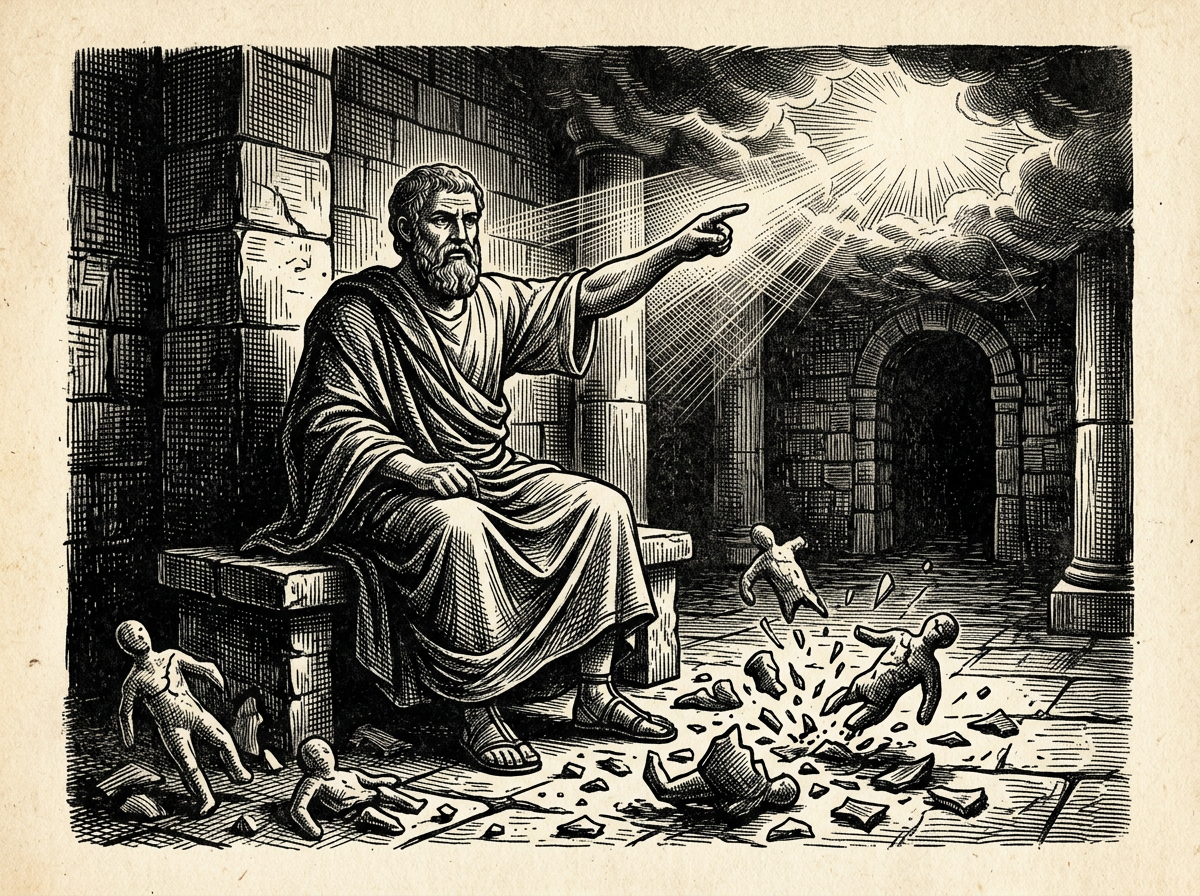
"What then says Zeus? 'Epictetus, had it been possible, I should have made both this little body and this little property of thine free and unhampered. But as things are forget not this this body is not thine own, but only clay cleverly kneaded. Since, however, I could not give thee this, I have given thee a certain portion of ourself, this faculty of desire and aversion, of choice and refusal, in a word, the faculty of using impressions.'" - Epictetus, Discourses, 1.1.7
8 (trans. W.A. Oldfather)
Academic Context & Breakdown
Epictetus delivered this lecture in Nicopolis, teaching in a simple hall after being banished from Rome by the Emperor Domitian. As a former slave whose leg had been deliberately broken by his master, leaving him permanently lame, Epictetus understood the utter powerlessness of the physical body. He spoke not to boost the confidence of modern strivers, but to explain the fundamental, tragic limits of human existence.
In Oldfather’s translation, Epictetus recounts an imagined dialogue with Zeus. The supreme god confesses a cosmic reality: human beings are bound to fragile, clay bodies and vulnerable property because we inhabit a material universe. To compensate for our physical frailty, the divine gave us a fragment of the godhead itself the rational power to judge impressions (prohairesis). This is an exercise in profound humility, reminding the student that their body and wealth are mere clay, completely subject to fate.
The commentary guts this humbling theological lesson on physical vulnerability and rewires it into a secular manifesto on psychological dominance. It transforms a god’s apology for mortal weakness into a boastful self-help tool for winning at life. By replacing cosmic surrender with personal empowerment, the commentary turns Stoicism into an instrument for egoic gratification.
Opening Counter-Punch
The commentary guts Epictetus’s profound theological insight on mortal limitation and degrades it into a cheap pep talk about winning your day. It takes a severe warning that your body and property are mere clay and rewires it into a self-satisfied lesson on playing your personal "trump card."
The Breakdown
- The commentary replaces Epictetus’s theological framing of divine limits with a secular productivity choice, urging readers to "rejoice at the one thing we do control: the ability to decide what any event means." Epictetus was not teaching a life-hack about subjective cognitive reframing; he was describing a sacred, divine fragment ("a certain portion of ourself") granted to withstand physical powerlessness. The commentary degrades a spiritual duty to align with cosmic reason into a shallow exercise in positive self-talk.
- The commentary projects modern transactional fairness onto the cosmos, claiming that "this second option offers the ultimate power a true and fair form of control." In Oldfather's translation, Zeus explicitly notes that physical freedom was impossible to grant because our bodies are "only clay cleverly kneaded." Epictetus presents this not as a neat, fair bargain to make you feel empowered, but as a stark existential boundary between divine reason and mortal decay.
- The commentary converts a humbling reminder of human weakness into an egoic flex, promising that "you’ll find, if you approach it right, that this trump card is plenty." Epictetus never framed the rational faculty as a competitive asset or a secret weapon to conquer daily obstacles. The commentary twists a spiritual fortress designed for surviving tyranny and physical ruin into a casual life-hack for overcoming mild daily friction.
The Lesson of the Text
The academic translation teaches that we must accept the inherent vulnerability of our physical lives while fiercely safeguarding our rational judgment. We apply this by recognizing that our bodies, wealth, and status are temporary clay subject to fate, while holding ourselves strictly accountable for how we choose to respond to every impression.
How the Philosopher Would Respond
Epictetus would sneer at the suggestion that the divine gift of reason exists to help you play a "trump card" for daily success. He did not teach to stroke your ego or make you feel in control of your day, but to remind you that your body is mere dirt compared to the god within you.
"You are a distinct portion of the essence of God; you contain a certain part of Him in yourself. Why then are you ignorant of your noble birth? Why do you not consider whence you came? Will you not bear in mind, when you eat, who it is that eats, and whom you feed? ... You carry a God about with you, poor wretch, and know it not!" - Epictetus, Discourses, 2.8.11-14
Related dispatches
CRITICAL FLAW: TRIVIALIZED TRAUMA · A Critique of Modern Stoicism
Modern Stoicism turns existential trauma into wealth management anxiety.
28 Sept 2026
LIFESTYLE TRAP: BOURGEOIS LEISURE · A Critique of Modern Stoicism
How modern self-help turned Seneca's warnings into resort etiquette.
28 Sept 2026
CHIEF DISTORTION: LIFESTYLE OPTIMIZATION · A Critique of Modern Stoicism
Cold showers cannot save you from self-imposed moral servitude
28 Sept 2026
MAIN ERROR: DOMESTICATED FATE · A Critique of Modern Stoicism
Seneca’s severe confrontation with catastrophe is not a lesson in etiquette.
28 Sept 2026