PRODUCTIVITY TRAP: HUSTLE CULTURE
Stoicism was meant to build character, not feed modern workaholism.
03 Sept 2026
3rd September - First, A Hard Winter Training | The Delusion of Endlessly Optimization
The Text in Question
The Daily Stoic Rendering
“We must undergo a hard winter training and not rush into things for which we haven’t prepared.” - Epictetus, Discourses, 1.2.32
Standard Academic Translation
“We must undergo a tough winter training and not rush headlong into things for which we have no preparation.” - Epictetus, Discourses, 1.2.32 (Trans. Robin Hard)
Academic Context & Breakdown
Epictetus spoke these words not to elite corporate climbers, but to eager, sheltered young men in a drafty classroom in Nicopolis around 108 AD. Many of his students were wealthy Romans who flirted with the idea of being philosophers, expecting instant wisdom and public admiration without doing any of the grueling internal work. Epictetus was a former slave whose knee had been deliberately broken by a master, he knew firsthand that reality breaks the unprepared.
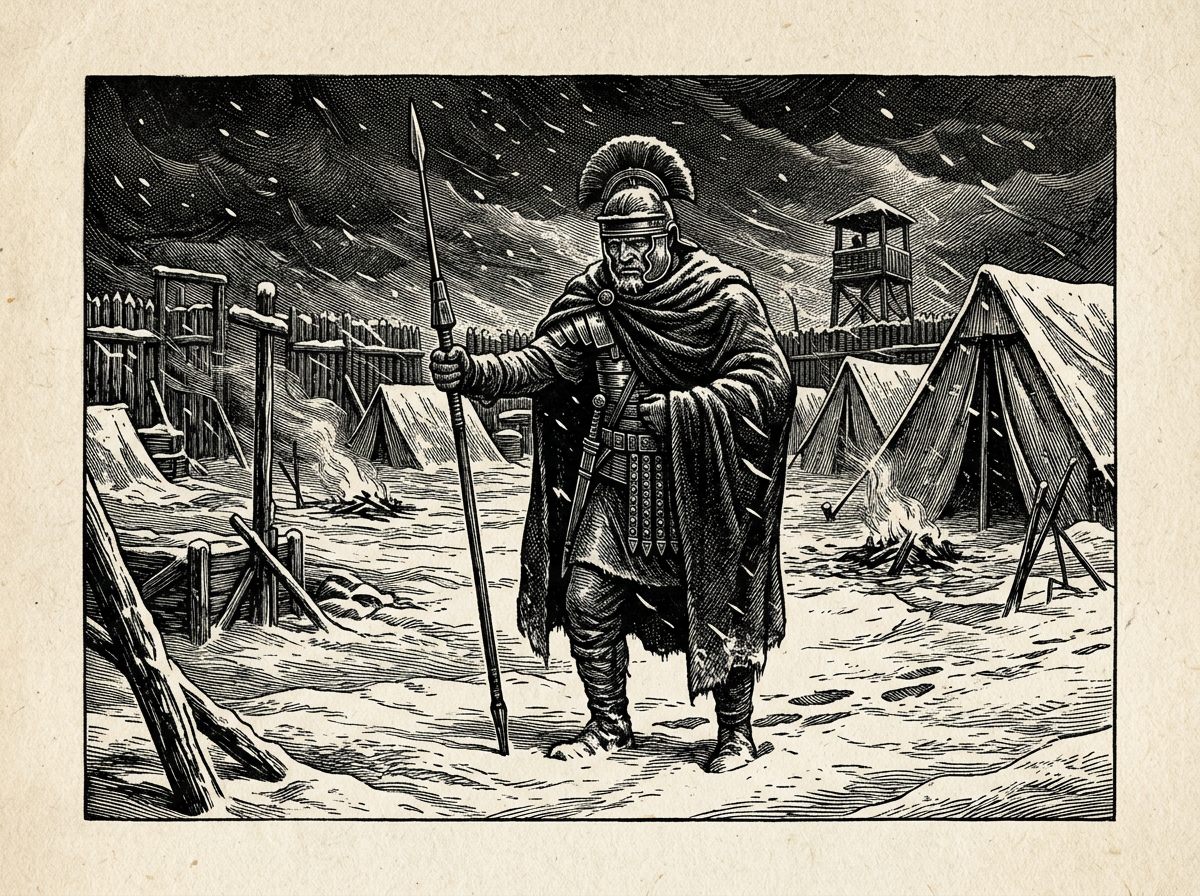
He evokes the brutal physical reality of the Roman military's winter quarters (hibernacula). Roman legionaries did not sit comfortably waiting for spring; they endured relentless winter drill, surviving freezing cold and mud, forging body and mind to survive the shield-wall when battle inevitably resumed.
In its true academic context, the passage warns against spiritual pride and rash ambition. Epictetus is telling his students that claiming the title of "Stoic" without years of unseen, painful self-discipline is a path to total moral destruction when genuine tragedy strikes.
The Opening Counter-Punch
The Daily Stoic takes a solemn warning about moral discipline and violently mutates it into a toxic productivity manifesto. It strips Epictetus of his ancient gravity, turning a plea for patient character-building into a relentless, modern hustle-culture mandate. In doing so, it sells the reader a delusion: that Stoicism means never resting, never resting, and treating every waking second as a commercial campaign.
The Breakdown
- The commentary asserts that "one must dedicate every second and every resource into preparation and training." By injecting this frantic hustle-culture hyperbole, it completely mutates Epictetus’s original meaning. The ancient passage was about building patient internal foundation before making grand external claims, not burning out in an endless, hyper-capitalist grind.
- The commentary degrades the philosophical text by claiming "LeBron James doesn’t take a summer break, he uses it to work on other aspects of his game." Epictetus was calling for quiet moral fortitude, but this commentary hijacks his words to flatter modern athletic and financial vanity. Comparing the ancient cultivation of virtue to an NBA superstar expanding his brand pitch-side turns sacred philosophy into corporate motivational sludge.
- The commentary imposes a suffocating corporate slavery, insisting that "There’s no time off. There aren’t even weekends." This is an unauthentic, grotesque caricature of Stoicism designed to feed the ego of workaholics. Epictetus championed inner freedom (eleutheria) and peace of mind (ataraxia), yet the commentary rewires his text into a recipe for chronic stress and endless self-exploitation.
The Lesson from the Academic Translation
The true lesson of Robin Hard’s translation is measured restraint. Epictetus commands us not to "rush headlong" into commitments, roles, or public displays of virtue before our internal character is strong enough to bear the weight.
To practice this, step back from the modern urge to constantly perform, optimize, and broadcast your life. Practice quiet, unglamorous self-discipline in private mastering your reactions, taming your desire for validation, and building quiet resilience before taking on burdens that will crush your soul.
How the Philosopher Would Respond
Epictetus would view this commentary with total contempt, recognizing it as the exact brand of superficial vanity he spent his life exposing. He cared nothing for professional optimization, athletic dominance, or modern hustle; he cared only whether a human soul was free from passions and moral cowardice.
“First say to yourself what you would be; and then do what you have to do. For in almost everything we see, this is the way it goes... But you want to be a philosopher right away, without any of the preparation, just as if someone said, 'I want to be a doctor,' and bought a box of pills.” - Epictetus, Discourses, 3.23.1-2
Related dispatches
MORAL DILUTION: CORPORATE STOICISM · A Critique of Modern Stoicism
Modern self-help flattens Seneca's horror into corporate risk management.
27 Oct 2026
INTELLECTUAL EROSION: MODERN STOICISM · A Critique of Modern Stoicism
Modern Stoicism dilutes Seneca’s vast blueprint into instant comfort.
26 Oct 2026
ETHICAL DRIFT: BOURGEOIS OPTIMIZATION · A Critique of Modern Stoicism
Modern self-help turns Epictetus's radical freedom into careerist optimization.
25 Oct 2026
KEY FLAW: DILUTED DISCIPLINE · A Critique of Modern Stoicism
True moral strength demands laborious excavation, not positive thinking.
24 Oct 2026