EGO DISTORTION: COMBAT FANTASY
Stoicism is a fortress for endurance, not a cage match
20 Sept 2026
20th September: Life Isn’t a Dance | The Fetishization of Combat Dynamics to Sell Egoic Toughness
The Text in Question
The Daily Stoic Rendering:
“The art of living is more like wrestling than dancing, because an artful life requires being prepared to meet and withstand sudden and unexpected attacks.” - Marcus Aurelius, Meditations, 7.61
Standard Academic Translation:
"The art of life is more like the wrestler's art than the dancer's, in respect of this, that it should stand ready and firm to meet onset from whence it may, even though unforeseen." - Marcus Aurelius, Meditations, 7.61 (trans. A.S.L. Farquharson)
Academic Context & Breakdown
Marcus Aurelius recorded Book 7 in a cold, bleak military camp near the Danube, facing a devastating plague, financial bankruptcy of the empire, and relentless invasions by Northern tribes. He was an aging, frail man suffering from chronic physical pain, burdened with the absolute responsibility of defending Roman civilization. He was not writing a locker-room speech to hype up hyper-competitive athletes or modern careerists. He was engaged in an immediate, internal battle to keep his reason grounded amidst relentless tragedy.
In Farquharson's translation, Marcus contrasts the dancer with the wrestler to emphasize stability (firmness) over mere performative fluidity. A dancer relies on predictable rhythms and controlled environments, whereas a wrestler must maintain a firm stance against sudden, violent forces. Marcus is asserting that life hurls unpredictable hardships at us illness, loss, betrayal and our sole duty is to stand firm (stand ready and firm) without losing our moral equilibrium or rational judgment.
The commentary hijacks this call for internal stability and rewires it into a aggressive, battle-ground fantasy of worldly conquest. It transforms Marcus’s quiet demand for defensive moral grounding into an ego-driven hustle manifesto about defeating rivals. By recasting Stoic endurance as a fight to win, the commentary turns a spiritual fortress into a combat-sport branding exercise.
The Opening Counter-Punch
The commentary guts Marcus Aurelius’s quiet, defensive plea for spiritual stability and replaces it with a visceral combat-sport fantasy. It takes an Emperor's private instruction to stand firm against fate and degrades it into a hyper-aggressive lesson on out-tackling your adversaries.
The Breakdown
- The commentary projects aggressive external combat onto a defense of inner stability, claiming that a wrestler's "sport is a battle, just like life." Marcus Aurelius was not framing life as an external war against other human beings; he was addressing the soul's defense against unpredictable fortune. By romanticizing life as an active combat arena, the commentary shifts the horizon from peaceful inner fortitude to aggressive confrontation.
- The commentary invents an external enemy where Stoicism demands universal brotherhood, claiming that a wrestler is "fighting an opponent as well as their own limitations." In Farquharson's translation, the "onset" (attack) comes from external events, not human adversaries to be conquered or choked out. The commentary distorts Stoic cosmopolitanism into a paranoid worldview where other people are rivals meant to be overcome.
- The commentary replaces quiet moral resilience with egoic triumph, urging readers to "cultivate an indomitable will to prevail." Marcus Aurelius never used the wrestling metaphor to urge personal dominance or victory over others. The commentary transforms a practice aimed at surrendering outcome to the cosmic order into a self-help promise of becoming an unstoppable victor.
The Lesson of the Text
The academic translation teaches that life requires an unshakeable foundation capable of absorbing sudden blows without being knocked off balance. We apply this by establishing deep, internal stability before crises arrive, ensuring that when unexpected tragedy strikes, our moral stance remains rooted and unbroken.
How the Philosopher Would Respond
Marcus Aurelius would flatly reject this attempt to turn internal stance-building into a combat-sport victory speech. He did not write to help you defeat opponents or dominate an arena, but to keep your soul firm and unbent when destiny strikes without warning.
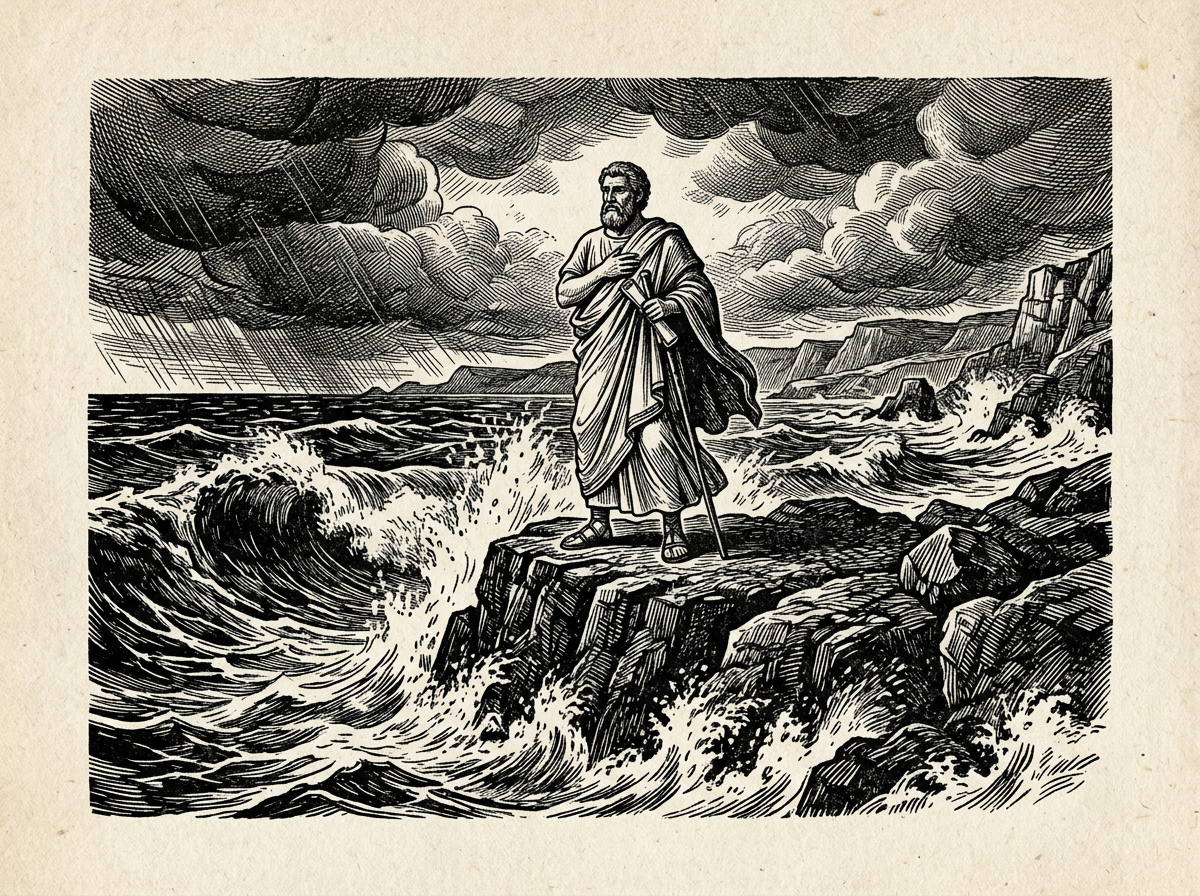
"Be like the promontory against which the waves continually break, but it stands firm and tames the fury of the water around it." - Marcus Aurelius, Meditations, 4.49
Related dispatches
MAIN ERROR: EGOIC REDUCTION · A Critique of Modern Stoicism
Modern self-help turns Epictetus’s humbling theology into a cheap life hack.
28 Sept 2026
CRITICAL FLAW: TRIVIALIZED TRAUMA · A Critique of Modern Stoicism
Modern Stoicism turns existential trauma into wealth management anxiety.
28 Sept 2026
LIFESTYLE TRAP: BOURGEOIS LEISURE · A Critique of Modern Stoicism
How modern self-help turned Seneca's warnings into resort etiquette.
28 Sept 2026
CHIEF DISTORTION: LIFESTYLE OPTIMIZATION · A Critique of Modern Stoicism
Cold showers cannot save you from self-imposed moral servitude
28 Sept 2026