KEY PROBLEM: BOURGEOIS VANITY
Modern self-help degrades ancient civic duty into bourgeois lifestyle optimization.
22 Oct 2026
20th thick: It’s Easy To Get Better. But Better At What? | The Sanitization of Imperial Duty into Bourgeois Lifestyle Optimization
The Text in Question
The Daily Stoic Rendering
“So someone’s good at taking down an opponent, but that doesn’t make them more community-minded, or modest, or well-prepared for any circumstance, or more tolerant of the faults of others.”
- Marcus Aurelius, Meditations, 7.52
Standard Academic Translation
“Suppose that someone is better than you at wrestling: that does not make him more devoted to the common good, or more modest, or better trained to meet whatever happens, or more forgiving toward the mistakes of his neighbors.”
- Marcus Aurelius, Meditations, 7.52 (Waterfield adapted)
Academic Context & Breakdown
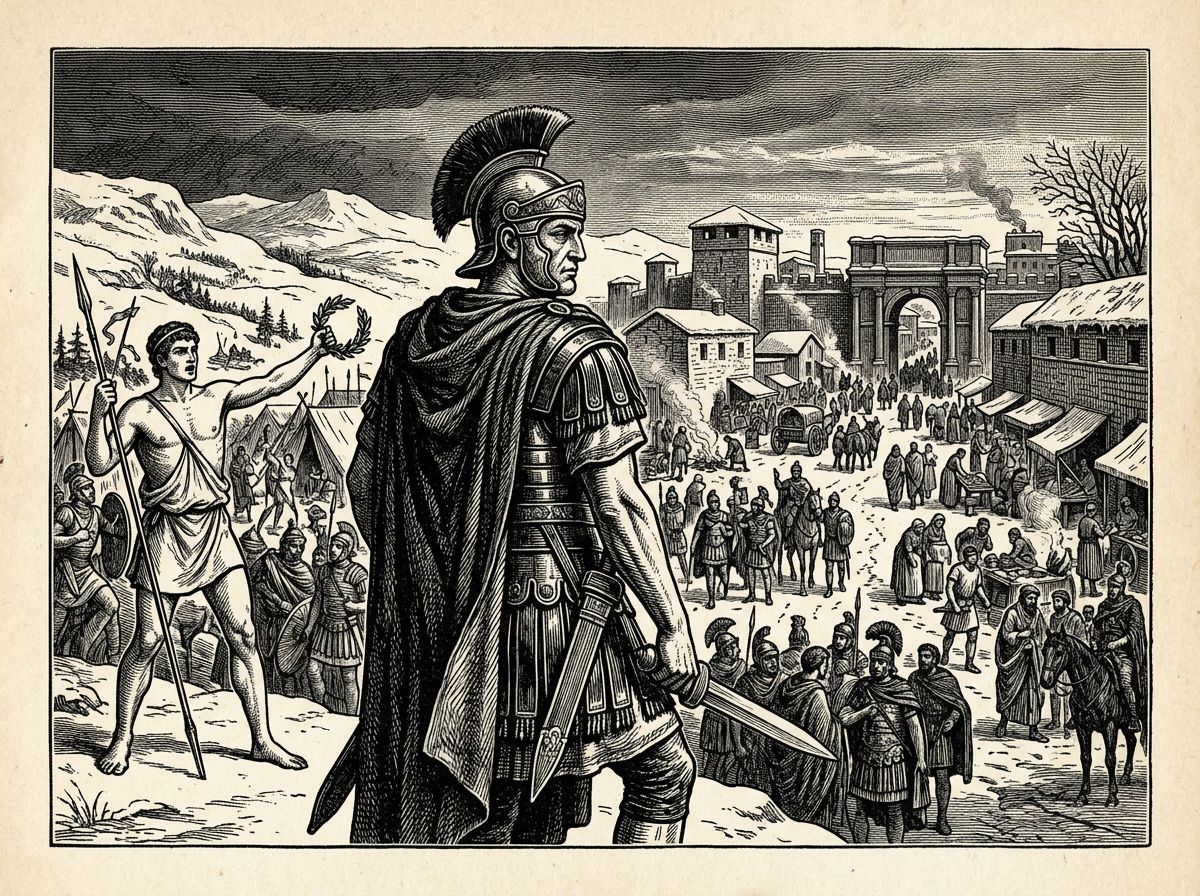
Marcus Aurelius recorded this reflection while commanding legionaries along the frozen, hostile northern border of the Roman Empire. Surrounded by elite gladiatorial trainers, boastful military commanders, and athletic champions, Marcus was evaluating the true worth of physical and technical superiority.
He was not writing a self-help essay or a gym-membership sanity check. He was performing a hard rational audit on his own imperial ego, reminding himself that physical dominance or athletic skill (palaistrikōteros) means absolutely nothing to the cosmic state (polis) if it fails to yield moral virtue and civic duty.
The Opening Counter-Punch
The commentary takes an Emperor's severe audit of human vanity and degrades it into a gentle wellness check on lifestyle habits. It hijacks a stark warning against substituting athletic prowess for moral virtue and twists it into a soft lecture on balancing gym time with family life. By swapping radical cosmic obligation for comfortable bourgeois self-help, the text sanitizes Marcus’s uncompromising standard to pamper modern ego-drivers.
The Breakdown
- The commentary takes Marcus’s specific critique of competitive wrestling and degrades it into pop-fitness banter, asking if "you want six-pack abs because you are challenging yourself." Marcus was contrasting physical dominance with absolute civic duty, but the commentary shifts the original focus away from moral integrity toward modern vanity metrics and superficial physical aesthetics.
- The text trivializes Marcus’s demand for radical tolerance and preparedness, reframing it as a warning against being someone "who can speak multiple languages but who doesn’t have a second for other people." The original text measured a man’s soul by his devotion to the common good (koinōnikōs), whereas the commentary flattens this standard into a basic critique of poor time management and social rudeness.
- The commentary reduces Marcus’s uncompromising Stoic hierarchy to a soft choice between hobbies, advising us to not "confuse getting better at stuff with being a better person." Marcus treated physical skill without virtue as completely useless to human nature, but the commentary presents it as merely a lower priority on a personal self-improvement checklist.
What Is the Lesson?
The authentic lesson of Meditations 7.52 is that technical skill, physical dominance, and personal achievements carry zero intrinsic moral value. You practice this by refusing to let your talents or achievements convince you that you are a good human being. Measure your worth solely by your commitment to the common good, your modesty, your emotional resilience, and your patience with the faults of others.
How The Philosopher Would Respond
Marcus Aurelius would flatly reject the idea that virtue is merely a "bigger priority" on a list of self-improvement goals, viewing any achievement disconnected from the common good as meaningless posturing.
"No longer wander at random: for you will not read your own memoirs, nor the deeds of the ancient Greeks and Romans... Hasten then to the end which you have in view, and cast away vain hopes, and come to your own aid, if you care at all for yourself."
- Marcus Aurelius, Meditations, 3.14
Related dispatches
MORAL DILUTION: CORPORATE STOICISM · A Critique of Modern Stoicism
Modern self-help flattens Seneca's horror into corporate risk management.
27 Oct 2026
INTELLECTUAL EROSION: MODERN STOICISM · A Critique of Modern Stoicism
Modern Stoicism dilutes Seneca’s vast blueprint into instant comfort.
26 Oct 2026
ETHICAL DRIFT: BOURGEOIS OPTIMIZATION · A Critique of Modern Stoicism
Modern self-help turns Epictetus's radical freedom into careerist optimization.
25 Oct 2026
KEY FLAW: DILUTED DISCIPLINE · A Critique of Modern Stoicism
True moral strength demands laborious excavation, not positive thinking.
24 Oct 2026