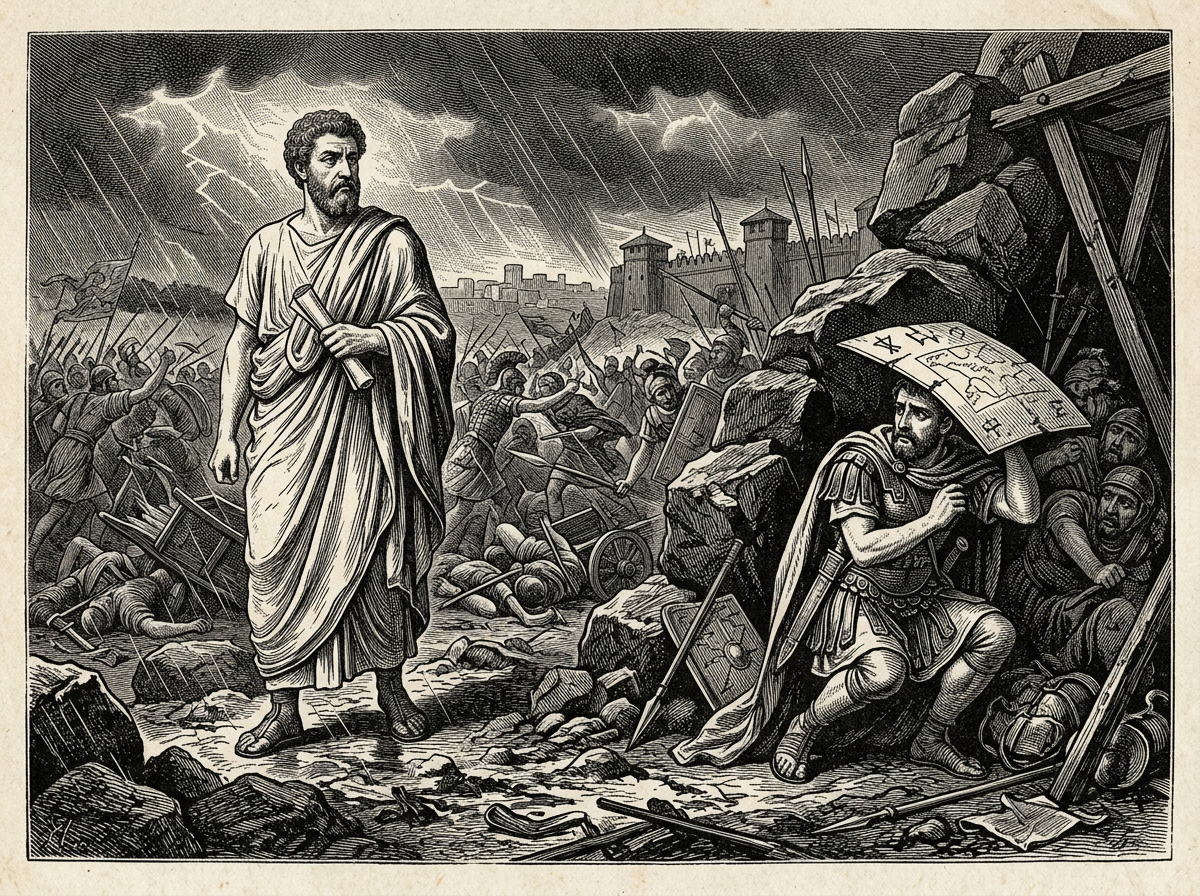
MORAL DRIFT: RISK AVERSION
Modern self-help degrades Stoic virtue into mere risk aversion
18 Aug 2026
18th August - Only Fools Rush In
“A good person is invincible, for they don’t rush into contests in which they aren’t the strongest. If you want their property, take it take also their staff, profession, and body. But you will never compel what they set out for, nor trap them in what they would avoid. For the only contest the good person enters is that of their own reasoned choice. How can such a person not be invincible?”
EPICTETUS, DISCOURSES, 3.6.5
The commentary:
One of the most fundamental principles of martial arts is that strength should not go against strength. That is - don’t try to beat your opponent where they are strongest. But that’s exactly what we do when we try to undertake some impossible task we haven’t bothered to think through. Or we let someone put us on the spot. Or we say yes to everything that comes our way. Some people think that “choosing your battles” is weak or calculating. How could reducing the amount of times we fail or minimizing the number of needless injuries inflicted upon us be weak? How is that a bad thing? As the saying goes, discretion is the better part of valor. The Stoics call it reasoned choice. That means be reasonable! Think hard before choosing, and make yourself unbeatable.
Chaff & Wheat Analyse:
Takes the commentary Epictetus’s radical vision of spiritual invincibility and degrades it into a cowardly tactical playbook for ego-preservation.
The Distortion of Truth
Epictetus defines invincibility through moral detachment: you cannot be defeated because you do not care about money, fame, or physical safety only your character.
violently twists this into strategic self-preservation:
- Replacing Virtue with Self-Defense — Epictetus says, "Let them take my body and property." The commentator says, "Don't get injured or put on the spot." Epictetus surrenders the physical world; the commentator hides from it.
- Conflating "Reasoned Choice" with Risk Aversion — Epictetus’s "reasoned choice" (prohairesis) is the discipline of keeping your soul uncorrupted. The commentator redefines it as "discretion" a slick advice to dodge difficult tasks and avoid public failure.
- Fabricating "Unbeatability" — Epictetus calls you invincible because no tyrant can break your inner choice. The commentator calls you unbeatable because you simply refuse to enter any arena where you might lose. That isn't invincibility; it's retreat.
Ignorance or Self-Aggrandizement?
This is not an honest mistake. It is a calculated reduction of hard philosophy into comfortable self-help designed to flatter the reader and sell books.
- Feeding the Reader's Weakness — True Stoicism demands that you face hardship, injustice, and death without flinching. The commentator tells the reader that avoiding hard things isn't cowardice it's "martial arts wisdom." It absolves readers of their passivity and calls it intelligence.
- Popularity over Depth — Deep spiritual discipline doesn't sell pop-philosophy newsletters. A self-help guru needs digestible, bite-sized "hacks." By turning Epictetus into a corporate strategist advocating for work-life balance and "choosing your battles," the commentator trades timeless truth for viral applause.
It replaces the heroic soul with a calculating coward, wrapped in a blanket of smug self-satisfaction.
Marcus Aurelius’s Response
Marcus Aurelius lived in the mud, cold, and bloodshed of the Marcomannic Wars. He did not have the luxury of "avoiding contests." His judgment would be swift and contemptuous:
"You offer men a shield made of excuses. Epictetus taught us to relinquish the world, not to cower before it. To call retreat 'wisdom' and risk-aversion 'virtue' is the mark of a soft mind seeking applause from other soft minds. Do your duty regardless of the odds, face the contest assigned to you by nature, and stop using philosophy to justify your fear of failure."
Related dispatches
MORAL DILUTION: CORPORATE STOICISM · A Critique of Modern Stoicism
Modern self-help flattens Seneca's horror into corporate risk management.
27 Oct 2026
INTELLECTUAL EROSION: MODERN STOICISM · A Critique of Modern Stoicism
Modern Stoicism dilutes Seneca’s vast blueprint into instant comfort.
26 Oct 2026
ETHICAL DRIFT: BOURGEOIS OPTIMIZATION · A Critique of Modern Stoicism
Modern self-help turns Epictetus's radical freedom into careerist optimization.
25 Oct 2026
KEY FLAW: DILUTED DISCIPLINE · A Critique of Modern Stoicism
True moral strength demands laborious excavation, not positive thinking.
24 Oct 2026