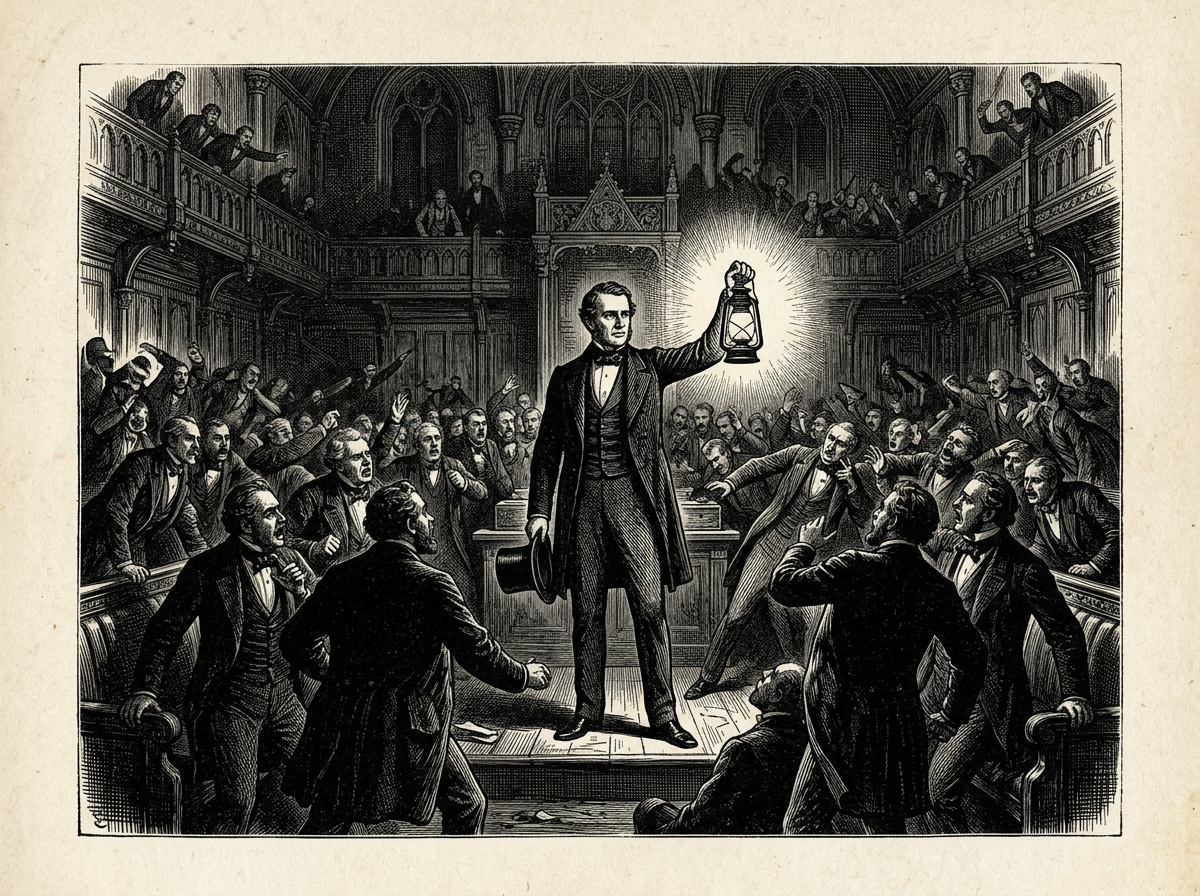
MORAL INTEGRITY: HOSTILE ARENAS
Moral integrity does not require a clean room.
07 Aug 2026
7th August - Pragmatic And Principled
7th August - Pragmatic And Principled
The commentary:
“Wherever a person can live, there one can also live well; life is also in the demands of court, there too one can live well.”
MARCUS AURELIUS, MEDITATIONS, 5.16
Chaff & Wheat Analyse:
William Lee
Miller, in his unique “ethical biography” of Abraham Lincoln, makes an important point about this famous president: our deification of the man makes a point to pretend he wasn’t a politician. We focus on his humble beginnings, his self-education, his beautiful speeches. But we gloss over his job, which was politics. That misses what was so truly impressive about him: Lincoln was all the things he was, compassionate, deliberate, fair, open-minded, and purposeful, while being a politician. He was what we admire in a profession we believe to be filled exclusively with the opposite of that type of person. Principles and pragmatism are not at odds. Whether you live in the snake pit of Washington, D.C., work among the materialism of Wall Street, or grew up in a closed-minded small town, you can live well. Plenty of others have.
The Meaning of the Passage
In Meditations 5.16, Marcus Aurelius, who was the Emperor of Rome and held absolute power, reminds himself that it is possible to live a noble, virtuous life regardless of your environment, even in places infamous for corruption, intrigue, and high-pressure politics (like the Imperial Court).
pairs this quote with an observation about Abraham Lincoln. We often mythologize Lincoln as a saintly figure, ignoring that he was a shrewd, practical politician working in the ruthless machine of 19th-century American politics. The passage highlights that Lincoln's true greatness wasn't that he isolated himself from dirty environments, but that he remained deeply principled, moral, and wise while navigating those exact environments.
The Core Meaning
is: Your environment is not an excuse for moral decay. Principles and pragmatism can coexist. You don't need to withdraw from the world or work in a pure, unsullied environment to live a good, meaningful life.
What is the Agreement (The Core Argument)?
Marcus Aurelius and the commentary share a central argument regarding moral responsibility and practical reality:
- Moral Relativism of Place is a Lie — It is easy to say, "I would be a better person if I didn't work in this toxic office / brutal industry / chaotic city." The Stoics argue that wherever duty places you, virtue is possible.
- Pragmatism and Virtue Belong Together — Being a good person does not mean being naive or ineffective. You can understand real-world power dynamics, strategy, and compromise (pragmatism) without compromising your core character (principles).
- Environment as a Testing Ground — Difficult, high-stakes environments, like courtrooms, political halls, or corporate boardrooms, are not barriers to living well; they are the exact arenas where character is tested and proven.
Is It True?
Yes, this is supported by both history and moral psychology.
- Historical Validation — Virtue in the Mud
History demonstrates that some of the most profound human achievements occurred because principled individuals chose to enter, and stay in, morally messy arenas rather than retreating to safety:
- Marcus Aurelius — As Emperor, he managed endless wars, plague, economic crises, and political betrayals, yet used his private journal (Meditations) to keep his integrity intact.
- Abraham Lincoln — Used political maneuvering, patronage, and strategic timing to pass the 13th Amendment, combining shrewd, pragmatic political tactics with an unshakeable moral goal.
- Psychological Truth — Active Integrity vs. Passive Purity
In moral philosophy and psychology, there is a distinct difference between passive innocence (being "good" because you've never been challenged or exposed to corruption) and active virtue (maintaining integrity while facing temptation and pressure).
Psychological research shows that individuals who maintain an internal locus of control don't absorb the toxicity of their environment. Instead, they act as stabilizing forces within it.
- Where Nuance is Needed
While it is true you can live well anywhere, modern psychology offers a healthy caveat: friction matters.
- If you are in an environment that actively demands you violate your deepest ethics daily, staying requires immense mental energy.
- Marcus and Lincoln stayed in their respective "courts" out of a profound sense of duty to others, not for self-enrichment. Living well in a difficult place requires knowing why you are there and keeping your core values anchored.
The Takeaway: You don't need perfect conditions, an ethical boss, or a stress-free workplace to act with honor, kindness, and discipline. Don't wait for a better environment, bring the good life to the environment you are currently in.
Related dispatches
MAIN ERROR: EGOIC REDUCTION · A Critique of Modern Stoicism
Modern self-help turns Epictetus’s humbling theology into a cheap life hack.
28 Sept 2026
CRITICAL FLAW: TRIVIALIZED TRAUMA · A Critique of Modern Stoicism
Modern Stoicism turns existential trauma into wealth management anxiety.
28 Sept 2026
LIFESTYLE TRAP: BOURGEOIS LEISURE · A Critique of Modern Stoicism
How modern self-help turned Seneca's warnings into resort etiquette.
28 Sept 2026
CHIEF DISTORTION: LIFESTYLE OPTIMIZATION · A Critique of Modern Stoicism
Cold showers cannot save you from self-imposed moral servitude
28 Sept 2026