EXISTENTIAL REDUCTION: BOURGEOIS NOSTALGIA
Don't reduce Seneca's political exile to cozy lifestyle downsizing
29 Sept 2026
29th September: Your Actual Needs Are Small | The Reduction of Cosmic Exile to Nostalgic Lifestyle Downsizing
The Text in Question
The Daily Stoic Rendering:
“Nothing can satisfy greed, but even a small measure satisfies nature. So it is that the poverty of an exile brings no misfortune, for no place of exile is so barren as not to produce ample support for a person.” - Seneca, On Consolation to Helvia, 10.11
Standard Academic Translation:
"Greed can never be satisfied, but nature is content with a little. Therefore, the poverty of an exile is no hardship; for no place of exile is so barren that it cannot yield enough to sustain a man." - Seneca, Of Consolation: To Helvia, 10.11 (trans. Aubrey Stewart)
Academic Context & Breakdown
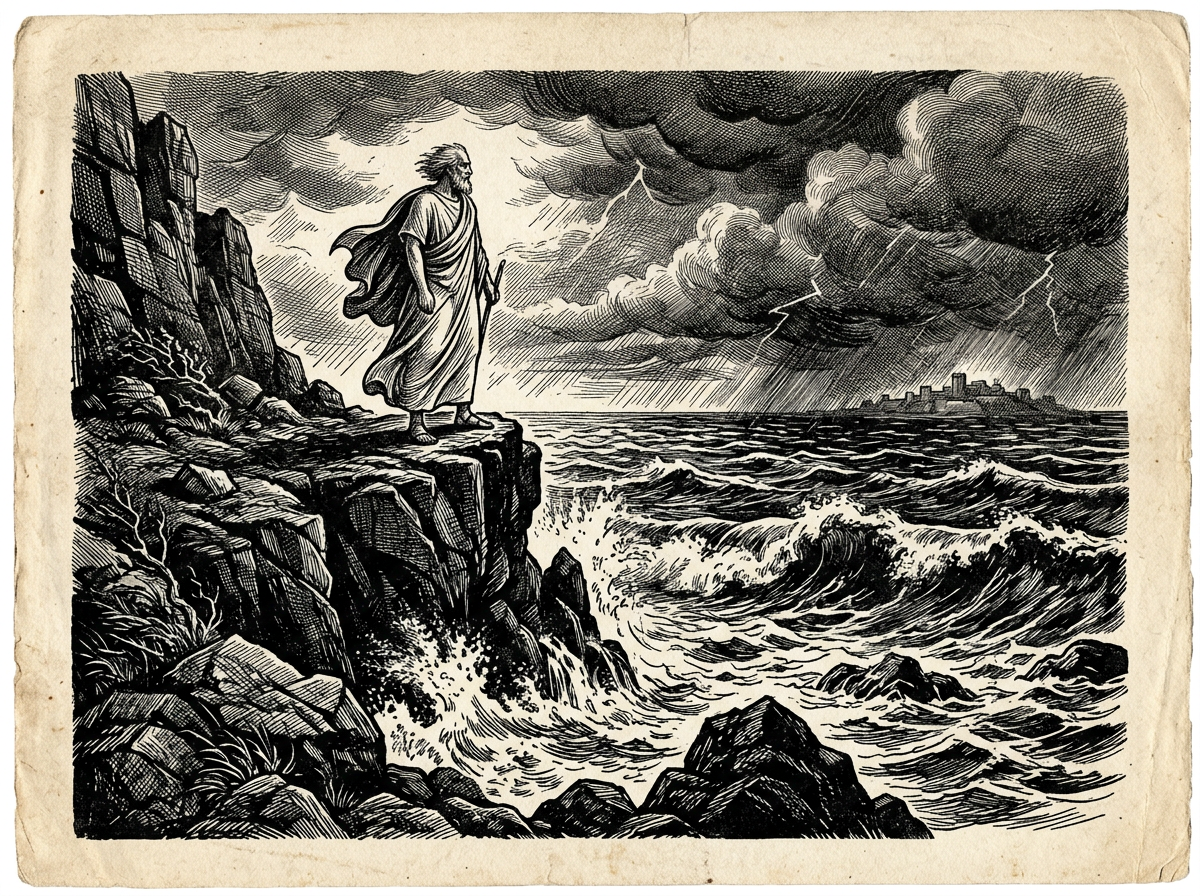
Seneca wrote Ad Helviam Matrem (To His Mother Helvia, On Consolation) from the desolate, wind-swept island of Corsica in 42 AD. Stripped of his senatorial rank, exiled by Emperor Claudius on charges of adultery, and torn from his family, Seneca lived in physical isolation surrounded by harsh terrain and a hostile population. He was not penning a cozy meditation on budgeting for young professionals. He was attempting to console his grieving mother by proving that his spirit remained entirely uncrushed by total political banishment.
In Stewart’s translation, Seneca establishes a radical Stoic truth: nature requires only bare physical sustenance water, basic bread, and rudimentary shelter to keep the human vessel alive. The "poverty of an exile" is not a temporary financial setback or a lower standard of living. It is the absolute stripping away of social status, country, and luxury to prove that the rational mind remains self-sufficient (autarkeia) anywhere in the universe.
The commentary neuters this heroic defense of moral survival under imperial banishment into a patronizing lecture on lifestyle inflation. It transforms Seneca’s raw, existential isolation into nostalgic sentimentality about eating instant noodles in your first apartment. By replacing cosmic self-sufficiency with middle-class lifestyle downsizing, the commentary turns Stoic endurance into a self-satisfied exercise in personal budgeting.
The Opening Counter-Punch
The commentary guts Seneca’s severe treatise on surviving political exile and replaces it with a sentimental trip down memory lane. It takes a terrifying confrontation with total displacement and degrades it into a cozy prompt to remember your college apartment.
The Breakdown
- The commentary replaces Seneca's radical physical stripped-down state with nostalgic lifestyle inflation, asking you to "consider your first paycheck how big it seemed then." Seneca was not reflecting on early career milestones or how far you have climbed up the corporate ladder. By reframing the passage around career progression, the commentary swaps out Seneca's defense against total political ruin for routine financial advice.
- The commentary trivializes the stark reality of cosmic exile into cozy bourgeois nostalgia, dwelling on "the ramen you gladly scarfed down in the kitchen." In Stewart's translation, Seneca is discussing barren volcanic islands and the absolute minimum required to sustain biological life. The commentary degrades a profound meditation on human survival into a privileged, romanticized memory of entry-level housing.
- The commentary turns Seneca’s defense of moral autonomy into a passive, historical self-soothing exercise, pointing out how "in the days of the world wars, our parents and grandparents made do with rationed gas, butter, and electricity." Seneca never urged his mother to feel better by comparing her situation to historical rationing or past comfort levels. The commentary replaces an active, unyielding reliance on internal virtue with a soft, collective reassurance that you will probably be fine.
The Lesson of the Text
The academic translation teaches that human nature requires almost nothing external to maintain its moral integrity and survival. We apply this by mentally stripping away our artificial luxuries, recognizing that even if we were cast out into total poverty and exile, our rational mind would remain complete and unbowed.
How the Philosopher Would Respond
Seneca would flatly reject this attempt to turn the agony of political exile into a lesson on managing your lifestyle expectations. He did not write from a barren island to help you feel better about your budget, but to prove that a wise man is at home anywhere in the cosmos.
"Nature requires but little, and necessity still less. If we are driven into exile, no banishment can deprive us of the universe itself, nor of our own virtue." - Seneca, On Consolation to Helvia, 11.1-2
Related dispatches
MAIN ERROR: EGOIC REDUCTION · A Critique of Modern Stoicism
Modern self-help turns Epictetus’s humbling theology into a cheap life hack.
28 Sept 2026
CRITICAL FLAW: TRIVIALIZED TRAUMA · A Critique of Modern Stoicism
Modern Stoicism turns existential trauma into wealth management anxiety.
28 Sept 2026
LIFESTYLE TRAP: BOURGEOIS LEISURE · A Critique of Modern Stoicism
How modern self-help turned Seneca's warnings into resort etiquette.
28 Sept 2026
CHIEF DISTORTION: LIFESTYLE OPTIMIZATION · A Critique of Modern Stoicism
Cold showers cannot save you from self-imposed moral servitude
28 Sept 2026