CHEAP STOICISM: ROMANTICIZED SUFFERING
Misfortune is not a plot device for your personal growth arc
26 Aug 2026
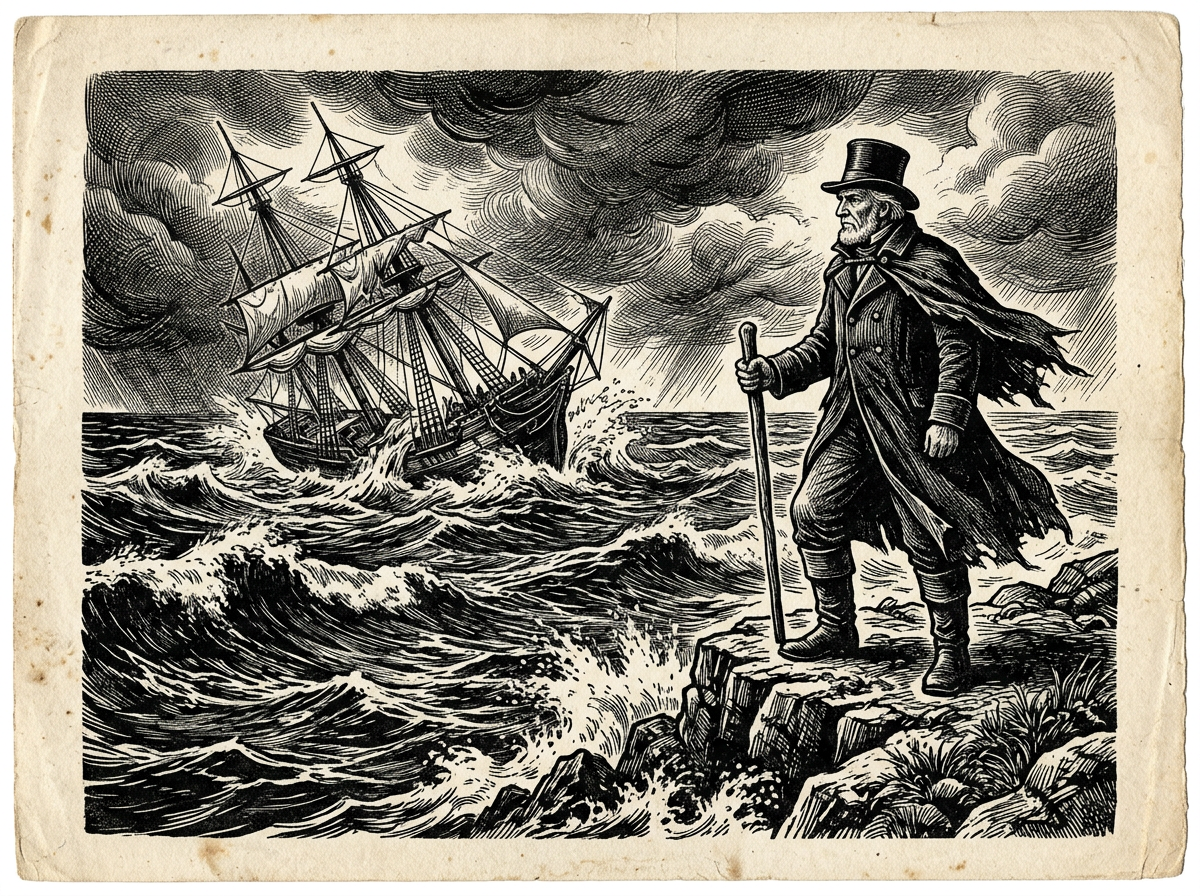
26th August - Seeking Out Shipwrecks
“I was shipwrecked before I even boarded… the journey showed me this how much of what we have is unnecessary, and how easily we can decide to rid ourselves of these things whenever it’s necessary, never suffering the loss.”
SENECA, MORAL LETTERS, 87.1
The commentary:
Zeno, widely considered to be the founder of the school of Stoicism, was a merchant before he was a philosopher. On a voyage between Phoenicia and Peiraeus, his ship sank along with its cargo. Zeno ended up in Athens, and while visiting a bookstore he was introduced to the philosophy of Socrates and, later, an Athenian philosopher named Crates. These influences drastically changed the course of his life, leading him to develop the thinking and principles that we now know as Stoicism. According to the ancient biographer Diogenes Laertius, Zeno joked,
“Now that I’ve suffered shipwreck, I’m on a good journey,”
or according to another account,
“You’ve done well, Fortune, driving me thus to philosophy,”
he reportedly said. The Stoics weren’t being hypothetical when they said we ought to act with a reverse clause and that even the most unfortunate events can turn out to be for the best. The entire philosophy is founded on that idea!
Chaff & Wheat Analyse:
drips with shallow cheerleading and totally distorts Seneca’s sober lesson into a self-congratulatory "everything happens for a reason" slogan.
Here is the ruthless breakdown of how the commentator guts the real meaning of Seneca's words:
The Distortion of Truth
- The Trap — Seneca is describing a profound, humbling realization about human greed: we accumulate clutter and luxuries we don't need, and it takes a catastrophe to show us that losing them doesn't actually harm our souls.
- The Cheerful Lie — The commentator ignores Seneca's sharp warning about attachment and turns the passage into a motivational pep talk. He tells you to "seek out shipwrecks" or celebrate them because misfortune is just a hidden blessing waiting to make your life "better."
- The Coward’s Shift — Seneca calls for ruthless self-examination and voluntary detachment (stripping away the unnecessary). The commentator shifts this to passive optimism framing disaster as a magic trick where Fortune always hands you a happy ending.
Ego Over Truth: Why the Commentator Distorts
This is not a lack of historical facts the commentator knows the story of Zeno. It is a deliberate choice to dilute hard philosophy into feel-good self-help.
True Stoicism does not promise that every loss will result in you founding a famous philosophy or getting rich in a new way. Most shipwrecks are just shipwrecks painful, devastating, and final. Stoicism teaches you how to keep your moral integrity intact even when nothing turns out for the best.
Because a message of stark endurance doesn't sell books, the commentator package-deals tragedy as an "opportunity for growth." He flatters the reader’s desire for guaranteed success, transforming a grim lesson on human vulnerability into a triumphant story to make the reader feel like a main character whose setbacks are just plot points for future greatness.
How Marcus Aurelius Would Respond
Marcus Aurelius would view the commentary as foolish, romanticized nonsense.
“Be like the promontory against which the waves continually break, but it stands firm and tames the fury of the water around it.”
- Meditations, 4.49
To Marcus, suffering is not a entertainment arc designed to make you famous or successful; it is simply the raw material of life. He would ruthlessly remind the commentator that Zeno did not cheer his shipwreck because it made him rich or popular, but because it stripped away his illusions and forced him to face reality. You do not "seek out shipwrecks" or celebrate loss; you endure what Nature throws at you with quiet, unboastful dignity, without asking for a happy ending.
Related dispatches
MORAL DILUTION: CORPORATE STOICISM · A Critique of Modern Stoicism
Modern self-help flattens Seneca's horror into corporate risk management.
27 Oct 2026
INTELLECTUAL EROSION: MODERN STOICISM · A Critique of Modern Stoicism
Modern Stoicism dilutes Seneca’s vast blueprint into instant comfort.
26 Oct 2026
ETHICAL DRIFT: BOURGEOIS OPTIMIZATION · A Critique of Modern Stoicism
Modern self-help turns Epictetus's radical freedom into careerist optimization.
25 Oct 2026
KEY FLAW: DILUTED DISCIPLINE · A Critique of Modern Stoicism
True moral strength demands laborious excavation, not positive thinking.
24 Oct 2026