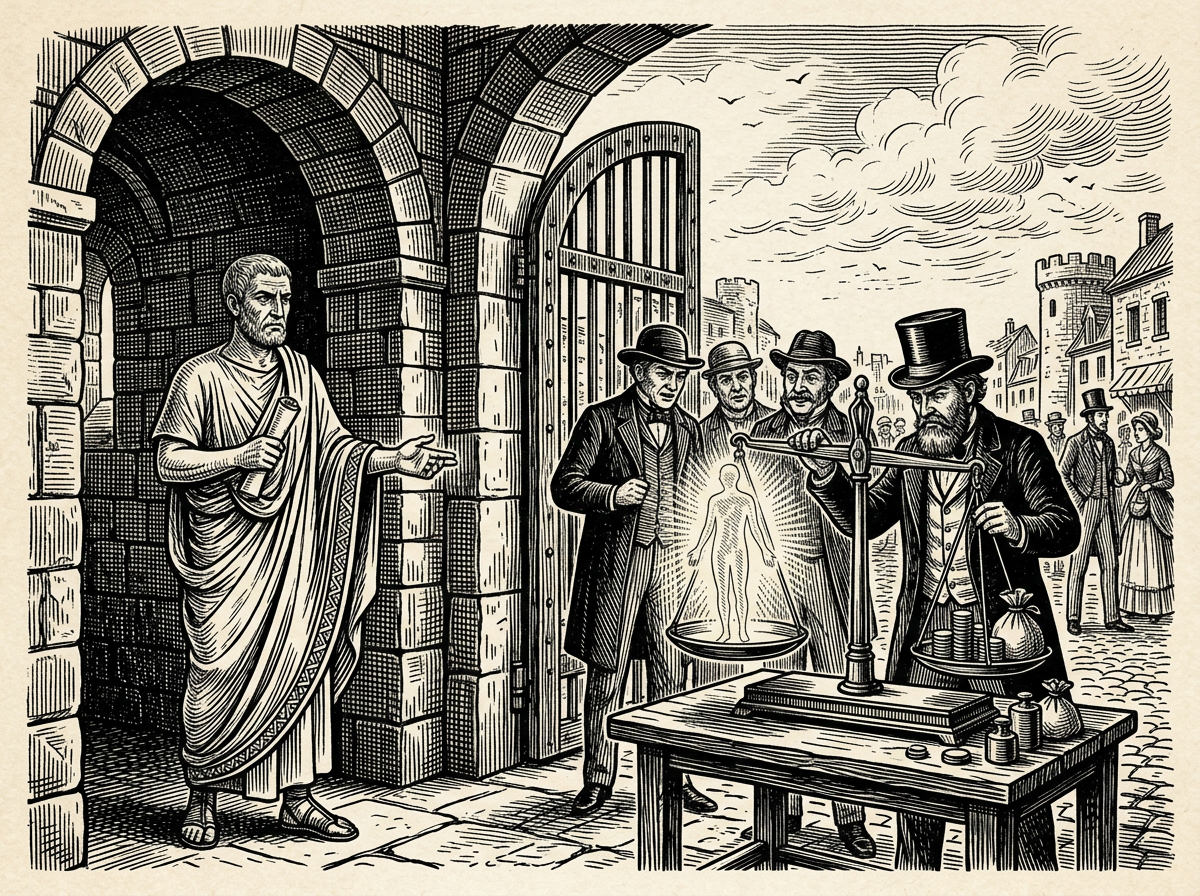
MORAL REFRAMING: ASSET MANAGEMENT
Virtue is a moral fortress, not a personal asset strategy
02 Oct 2026
2nd October: The Most Valuable Asset | The Commercialization of Inner Fortress into Portfolio Management
The Text in Question
The Daily Stoic Rendering
“But the wise person can lose nothing. Such a person has everything stored up for themselves, leaving nothing to Fortune, their own goods are held firm, bound in virtue, which requires nothing from chance, and therefore can’t be either increased or diminished.” - SENECA, ON THE FIRMNESS OF THE WISE, 5.4
Standard Academic Translation
“The wise man can lose nothing; he has everything bound up in himself, he trusts nothing to Fortune, his own goods are kept secure, because he is content with virtue, which needs no help from chance, and so can neither be increased nor diminished.” - SENECA, ON THE FIRMNESS OF THE WISE, 5.4 (Aubrey Stewart)
Academic Context & Breakdown
Seneca wrote De Constantia Sapientis (On the Firmness of the Wise) during a reign of arbitrary imperial terror, addressing his friend Serenus, who was struggling with political betrayal and social insults. Seneca was not pitching a lifestyle choice; he was asserting an absolute radical truth: that moral character is ontologically invulnerable to external harm.
The scene is one of stark existential defense. Standing in a Roman climate where land, power, and human life could be seized by a tyrant’s whim overnight, Seneca argued that a sage's virtue is an impregnable fortress that cannot be touched by violence, exile, or confiscation.
The Opening Counter-Punch
The commentary hijacks an uncompromising declaration of radical moral invincibility and degrades it into an engine for personal asset allocation. It sanitizes Seneca's existential shield, recasting spiritual self-sufficiency as merely the ultimate "hedging strategy" for the modern investor's ego. Where Seneca demanded complete detachment from material status, the commentary sells virtue as just another diversified asset class in a wellness portfolio.
The Breakdown
- By framing character through the lens of those who "put their money in assets, stocks, bonds, property," the commentary bastardizes Seneca’s absolute rejection of material goods into a corporate wealth-management metaphor. Seneca does not present virtue as a superior investment option among worldly choices; he declares that virtue is the only true good, rendering financial instruments completely meaningless to the sage.
- The commentary asks "Which of these assets is most immune to market fluctuations and disasters?", reducing the soul’s absolute moral autonomy to a risk-hedging tool for economic instability. This financialized language lies to the reader by treating moral integrity as an insurance policy designed to yield personal safety, rather than an unyielding commitment to duty regardless of physical consequences.
- The text romanticizes Seneca's forced retirement by asserting he "left anyway, retiring in relative peace," sanitizing the brutal reality of Roman political terror to sell a comfortable narrative of personal agency. It turns a desperate, life-or-death bid for survival under a murderous tyrant into a cozy fable about cashing out your investments to enjoy a quiet lifestyle.
Application of the True Lesson
The standard academic rendering demands that you recognize virtue as self-contained and complete, entirely detached from worldly utility, gain, or protection.
To practice this, identify one moral action you are currently evaluating through the lens of ROI, what it will get you, how it protects your status, or how it builds your "personal brand", and perform that action solely because it is right, expecting zero external yield or security in return.
How the Philosopher Would Respond
Seneca would utterly despise seeing the sacred invulnerability of the soul reduced to financial metaphors and capital preservation strategies for comfortable readers.
“Virtue is barred to no one; it is open to all, it receives all, it invites all... It requires no house, no property; it is content with the man himself.” - SENECA, ON BENEFITS, 3.18.2
Related dispatches
CHIEF DEFECT: SENTIMENTAL STOICISM · A Critique of Modern Stoicism
Stoic duty is an unyielding mandate, not a cozy affirmation.
01 Oct 2026
CORE FALLACY: DELUSIONAL DENIAL · A Critique of Modern Stoicism
Modern Stoicism trades hard moral courage for cheap mental escape
30 Sept 2026
EXISTENTIAL REDUCTION: BOURGEOIS NOSTALGIA · A Critique of Modern Stoicism
Don't reduce Seneca's political exile to cozy lifestyle downsizing
29 Sept 2026
MAIN ERROR: EGOIC REDUCTION · A Critique of Modern Stoicism
Modern self-help turns Epictetus’s humbling theology into a cheap life hack.
28 Sept 2026