CORE PROBLEM: DILUTED DISCIPLINE
Modern self-help dilutes Seneca’s stern medicine into gentle life coaching.
16 Oct 2026
16th October: Spread The Word | The Conversion of Moral Obligation into Benevolent Social Utility
The Text in Question
The Daily Stoic Rendering
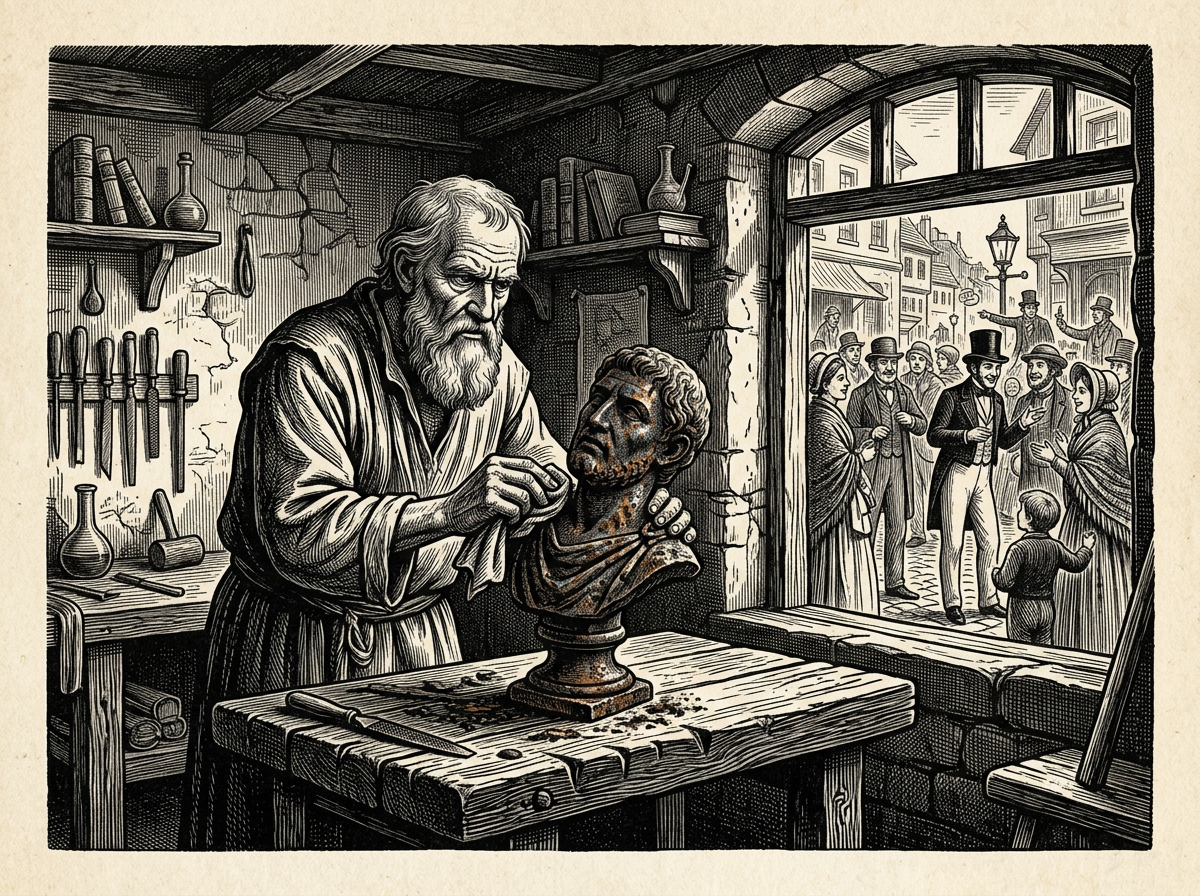
“Some people with exceptional minds quickly grasp virtue, or produce it within themselves. But other dim and lazy types, hindered by bad habits, must have their rusty souls constantly scrubbed down. . . . The weaker sorts will be helped and lifted from their bad opinions if we put them in the care of philosophy’s principles.” - Seneca, Moral Letters, 95.36
37
Standard Academic Translation
“Some individuals are endowed with a nature so fortunate that virtue is grasped without long training... But others, dull and sluggish, or bogged down by bad habits, require that their rusty souls be repeatedly polished... The weaker sort need a guiding hand to lift them out of their flawed opinions, and they will find this support if they are committed to the care of philosophy’s doctrines.” - Seneca, Moral Letters, 95.36
37 (Gummere adapted)
Academic Context & Breakdown
Seneca wrote this massive letter toward the end of his life under the oppressive, unpredictable regime of Nero. He was addressing his friend Lucilius on a core Stoic debate: whether practical advice (precepts) is enough to guide human behavior, or if one must master rigid, uncompromising philosophical principles (dogmata).
This was not a call for public community service or casual mentoring. Seneca was describing a harsh diagnostic reality of human nature: most human souls are heavily rusted over by ignorance and vice, requiring rigorous, relentless philosophical re-education to escape mental slavery.
The Opening Counter-Punch
The commentary takes Seneca’s austere, uncompromising assessment of moral sickness and degrades it into a gentle call for peer-to-peer life coaching. It hijacks a stern philosophical mandate to scrub away cognitive corruption and twists it into a feel-good obligation to hand out friendly advice. By swapping hard intellectual medicine for comfortable social helpfulness, the text sanitizes Seneca’s harsh diagnosis to pamper the reader's savior complex.
The Breakdown
- The commentary softens Seneca's grim diagnosis of human ignorance by reassuring the reader that "you can share your wisdom or insight with a friend or stranger," presenting moral instruction as a casual act of neighborly goodwill. Seneca was arguing that soul-corruption requires intense, systematic instruction in core doctrines, but the commentary degrades this deep philosophical discipline into light, unstructured conversation.
- The commentary claims that "behavior is always a better example than a lecture," quietly nudging the reader to rely on subtle personal example rather than confronting false beliefs. Seneca explicitly insisted in Letter 95 that passive example is insufficient for deeply rusted minds, making this gloss a total reversal of his argument for active, rigorous instruction in principles.
- The text imposes a vague social debt on the reader, insisting that "you owe them that much" if someone asks for guidance. Seneca viewed philosophy as an arduous medical treatment for those genuinely desperate to cure their rational faculties, whereas the commentary alters this serious inner discipline into an obligation of generic social politeness.
What Is the Lesson?
The authentic lesson of Seneca’s 95th letter is that bad habits and false opinions deeply corrode human reason, requiring relentless alignment with true philosophical principles to fix. You practice this by treating philosophy not as casual advice to share, but as an urgent, rigorous prescription to continually scrub the rust from your own mind. Hold yourself to an exacting standard of intellectual truth before attempting to guide anyone else.
How The Philosopher Would Respond
Seneca would flatly reject the idea that philosophy is a light, feel-good commodity to be politely offered around to make life smoother, viewing such casual treatment as a complete failure to respect the severity of moral error.
"Philosophy is no popular craft, nor is it made for show; it is not in words, but in deeds. It is not employed to make the day pass pleasantly, or to strip leisure of its tedium; it molds and builds the soul."
- Seneca, Moral Letters, 16.3
Related dispatches
ETHICAL DILUTION: PERFORMATIVE GOODWILL · A Critique of Modern Stoicism
Modern self-help reduces severe moral warnings to relatable social quirks.
16 Oct 2026
CHIEF DISTORTION: TRANSACTIONAL KINDNESS · A Critique of Modern Stoicism
Unconditional virtue is a duty, not a transactional life hack
16 Oct 2026
MORAL DRIFT: PUBLIC MEDDLING · A Critique of Modern Stoicism
Stoic radical acceptance is not a mandate to fix your neighbor.
14 Oct 2026
PHILOSOPHICAL REDUCTION: THERAPEUTIC COMFORT · A Critique of Modern Stoicism
Why modern Stoicism turns cosmic duty into cheap emotional self-soothing
13 Oct 2026