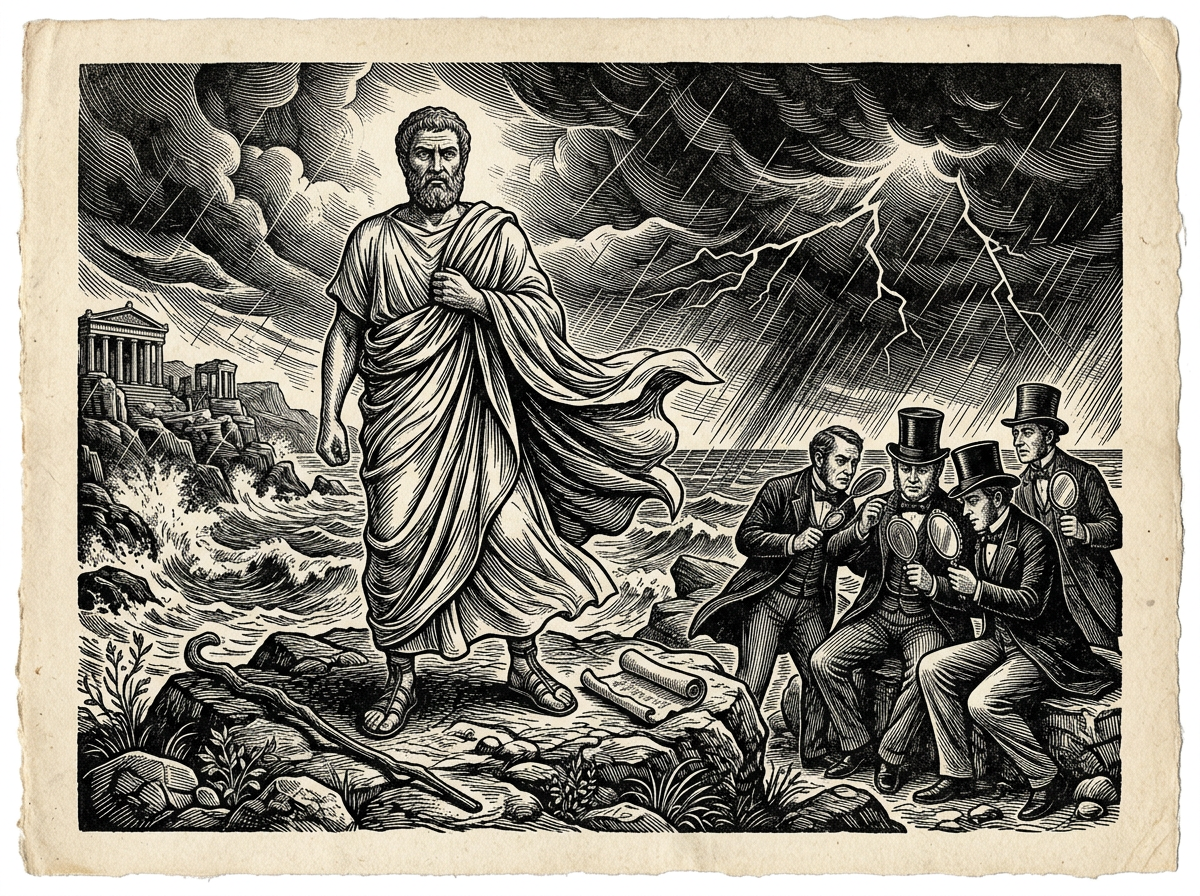
CORE ERROR: COZY STOICISM
Hardship is a test of virtue, not a corporate growth strategy.
04 Sept 2026
4th September - How Can You Know Whether You’ve Never Been Tested? | Turning Moral Combat into Corporate Self-Actualization
The Text in Question
The Daily Stoic Rendering
“I judge you unfortunate because you have never lived through misfortune. You have passed through life without an opponent, no one can ever know what you are capable of, not even you.”
Standard Academic Translation
“I judge you unfortunate because you have never been unfortunate; you have passed through life without an adversary; no one can know what you are capable of, not even yourself.” - Seneca, De Providentia, 4.3 (trans. Aubrey Stewart)
Academic Context & Breakdown
Seneca wrote De Providentia as a dying empire’s elites were being routinely executed, exiled, or forced into suicide on the whim of brutal emperors like Nero. He was writing to his friend Lucilius, addressing a bitter, existential question: if divine providence rules the cosmos, why do horrible, destructive things happen to good people? Seneca’s answer is forged in terror: the gods treat virtuous men like elite soldiers, intentionally subjecting them to brutal suffering to harden their souls against a corrupt world.
The academic translation highlights a fierce metaphysical paradox: to be spared all suffering is to be abandoned by the divine, left untested and morally flabby. Seneca does not promise a happy ending or a triumphant career arc. He argues that hardship is not a temporary bump on the road to success, but the necessary battlefield where moral integrity is forged under existential threat.
The Opening Counter-Punch
The Daily Stoic takes Seneca’s brutal call to moral combat and guts it into a cozy, feel-good narrative of personal branding. It sanitizes existential terror into a mere stepping stone for career growth, reassuring comfortable readers that their bad days are just character-building exercises designed to make them feel powerful. Seneca demands that you endure suffering to prove your soul’s virtue; modern self-help promises that suffering is just a temporary investment in your future self-esteem.
The Breakdown
- Commercializing Pain as Nostalgia — The commentary reframes agonizing hardship as something people "come to later wear those experiences as badges of honor," reducing severe moral trial to a sentimental backstory for successful elites. Seneca was not talking about looking back fondly on "young and hungry" hustle days over a morning coffee; he was describing the agonizing crucible of exile and state-sanctioned violence.
- Confusing Career Growth with Virtue — The commentary promises that hardship yields a "better understanding of our own capacity and inner strength" meant to boost confidence for future success. Seneca cared nothing for personal empowerment or ego-building, but rather the stark realization that virtue is the only good, regardless of whether you survive the trial or perish.
- Flattening Providence into Cheap Positivism — The text trivializes Seneca's severe theology into a hollow motivational poster: "So today if things look like they might take a bad turn or your luck might change, why worry?" Seneca never tells you not to worry because things will work out; he warns that fate may destroy your life, and your only job is to refrain from corrupting your character when it happens.
Lessons from the Academic Text
The true Stoic lesson is that hardship is not a personal development tool, but a test of moral character that strips away all worldly illusions. True strength is not measured by whether you overcome a setback to reach better circumstances, but by whether your moral integrity remains uncorrupted when everything is taken from you.
To practice this, stop viewing current difficulties as uncomfortable detours on your path to success. Instead, treat every trial as an immediate, uncompromising test of your character where the only acceptable outcome is acting with honor, regardless of whether you win or lose.
How the Philosopher Would Respond
Seneca would utterly despise this attempt to turn a doctrine of heroic endurance into a comforting balm for soft, risk-averse egos. He would remind us that the gods do not send trials to build your self-confidence, but to burn away your vanity and reveal whether you are truly a master of yourself.
“You are a great man; but how do I know it if fortune gives you no opportunity of showing your virtue? You have entered the lists at the Olympic games, but no one else has entered: you have gained the crown, but not the victory.” - Seneca, De Providentia, 4.3
Related dispatches
MORAL DRIFT: THERAPEUTIC STOICISM · A Critique of Modern Stoicism
Reducing Stoic cosmic unity to soft therapeutic interdependence dilutes civic duty.
28 Oct 2026
MORAL DILUTION: CORPORATE STOICISM · A Critique of Modern Stoicism
Modern self-help flattens Seneca's horror into corporate risk management.
27 Oct 2026
INTELLECTUAL EROSION: MODERN STOICISM · A Critique of Modern Stoicism
Modern Stoicism dilutes Seneca’s vast blueprint into instant comfort.
26 Oct 2026
ETHICAL DRIFT: BOURGEOIS OPTIMIZATION · A Critique of Modern Stoicism
Modern self-help turns Epictetus's radical freedom into careerist optimization.
25 Oct 2026