CORE DISTORTION: EXECUTIVE RESILIENCE
How modern Stoicism turned radical exile into a corporate resilience hack
08 Sept 2026
8th September: Do Not Be Deceived By Fortune | Rewriting Moral Exile as a Temporary Career Bump
The Text in Question
The Daily Stoic Rendering:
“No one is crushed by Fortune, unless they are first deceived by her . . . those who aren’t pompous in good times, don’t have their bubbles burst with change. Against either circumstance, the stable person keeps their rational soul invincible, for it’s precisely in the good times they prove their strength against adversity.”
Standard Academic Translation:
“Never have I trusted Fortune, even when she seemed to offer peace; all those gifts which she kindly showered upon me money, office, influence I deposited in a place from which she might take them back without disturbing me. I kept a wide distance between them and myself; and so she has taken them away, not torn them away. No man is crushed by adverse Fortune who has not been deceived by her prosperity... Those who are not puffed up by prosperity do not collapse in adversity.” - Seneca, Consolatio ad Helviam, 5.4b
6 (trans. Aubrey Stewart)
Academic Context & Breakdown
In 41 AD, Seneca was banished to the rocky, isolated island of Corsica under order of Emperor Claudius, accused of adultery with the emperor’s niece, Julia Livilla. Banishment meant the immediate confiscation of his estate, the annihilation of his political standing, and sudden separation from everyone he loved. Writing from a barren outpost, Seneca addressed his mother Helvia to stem her desperate grief.
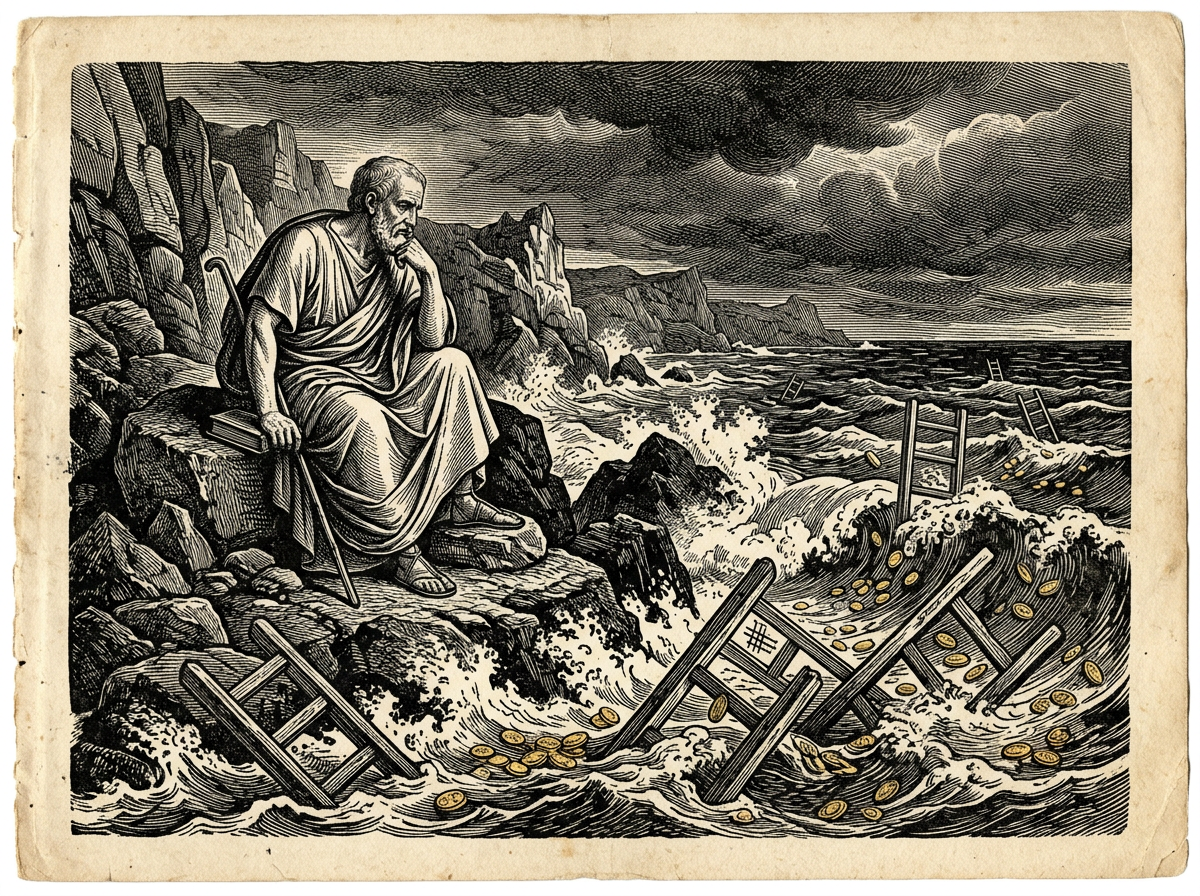
In the academic text, Seneca outlines a strict metaphysical stance on external goods. Prosperity is a trap if you mistake it for your own property. By treating wealth, influence, and political status as temporary loans rather than personal possessions, Seneca insists that a soul remains totally unbothered when Fortune reclaims what was always hers.
The Opening Counter-Punch
The Daily Stoic turns a devastating sentence of political exile into a relatable lesson on managing life’s little "consequences." It downgrades Seneca’s total detachment from worldly power into a self-satisfied hustle strategy for waiting out bad luck until your career recovers.
The Breakdown
- Downplaying Moral Catastrophe into a Temporary Setback — The commentary reduces Seneca's traumatic, life-altering banishment to "this unexpected twist he was taking pretty hard," infantilizing a brutal imperial sentence into a mere bad week at the office.
- Corrupting Spiritual Detachment into Waiting for Success — The commentary asserts that Seneca used philosophy to find "the determination and patience he needed to wait it out" until his fortune was restored, misrepresenting Seneca's radical surrender of worldly goods as a strategy for riding out a bear market.
- Flattering the Ego under the Guise of Preparation — By claiming philosophy "prevented him from taking it for granted" when he returned to power, the text treats external power as the ultimate goal, missing Seneca’s point that worldly power is fundamentally worthless to a rational soul.
Lessons from the Academic Text
The academic translation teaches that everything external to your own character, your savings, your job title, your social standing is merely on loan from the universe. Suffering occurs only when you develop an illusion of ownership over things you do not control.
To practice this, look at your most prized external assets today and mentally surrender them back to Fortune. Remind yourself explicitly that if they vanish tomorrow, nothing essential to your moral character has been lost or damaged.
How the Philosopher Would Respond
Seneca would utterly despise this attempt to turn his exile letter into an inspirational pitch for executive resilience. He would remind us that philosophy does not help you "wait out" bad luck so you can regain power, but strips away your desire for external power altogether.
“I have never trusted Fortune, even when she seemed to offer peace... She takes things back, she does not tear them away.” - Seneca, Consolatio ad Helviam, 5.4b
Related dispatches
MORAL DILUTION: CORPORATE STOICISM · A Critique of Modern Stoicism
Modern self-help flattens Seneca's horror into corporate risk management.
27 Oct 2026
INTELLECTUAL EROSION: MODERN STOICISM · A Critique of Modern Stoicism
Modern Stoicism dilutes Seneca’s vast blueprint into instant comfort.
26 Oct 2026
ETHICAL DRIFT: BOURGEOIS OPTIMIZATION · A Critique of Modern Stoicism
Modern self-help turns Epictetus's radical freedom into careerist optimization.
25 Oct 2026
KEY FLAW: DILUTED DISCIPLINE · A Critique of Modern Stoicism
True moral strength demands laborious excavation, not positive thinking.
24 Oct 2026