CRITICAL FLAW: DILUTED DISCIPLINE
Stop turning Epictetus's rigorous discipline into comfortable self-compassion.
10 Aug 2026
10th August - Perfection Is The Enemy Of Action
10th August - Perfection Is The Enemy Of Action
The commentary:
“We don’t abandon our pursuits because we despair of ever perfecting them.”
EPICTETUS, DISCOURSES, 1.2.37
Chaff & Wheat Analyse:
Psychologists speak of cognitive distortions, exaggerated thinking patterns that have a destructive impact on the life of the patient. One of the most common is known as all-or-nothing thinking (also referred to as splitting). Examples of this include thoughts like: If you’re not with me, you’re against me. So-and-so is all good/bad. Because this wasn’t a complete success, it is a total failure. This sort of extreme thinking is associated with depression and frustration. How could it not be? Perfectionism rarely begets perfection only disappointment. Pragmatism has no such hang-ups. It’ll take what it can get. That’s what Epictetus is reminding us. We’re never going to be perfect if there is even such a thing. We’re human, after all. Our pursuits should be aimed at progress, however little that it’s possible for us to make.
Another clear instance where modern commentary uses Stoic quotes as a springboard for generic self-help, distorting the original philosophy in the process.
Where the Commentary Missteps
By equating Epictetus’s quote with modern "pragmatism" and psychological "all-or-nothing thinking," the commentary misses the radical moral claim Epictetus was actually making.
- Lowering the Bar vs. Striving for Excellence: The commentary frames Epictetus as saying, "We're human, take what you can get, don't be too hard on yourself." This modern "be easy on yourself" attitude is foreign to Epictetus, who was a fiercely demanding teacher. He never advocated settling for mediocrity out of self-compassion.
- Psychologizing a Moral Principle — Translating Epictetus's rigorous discipline into a lesson on avoiding "cognitive distortions" turns a philosophical pursuit of moral character into a self-care strategy.
- The Posture of the "Pragmatist" — Pitching Stoicism as "pragmatism that has no hang-ups" paints the Stoic as a relaxed, efficient achiever. In reality, Epictetus demanded relentless, painstaking effort toward moral improvement, even if absolute perfection (the Sage) was unreachable.
The Real Meaning of Discourses 1.2.37
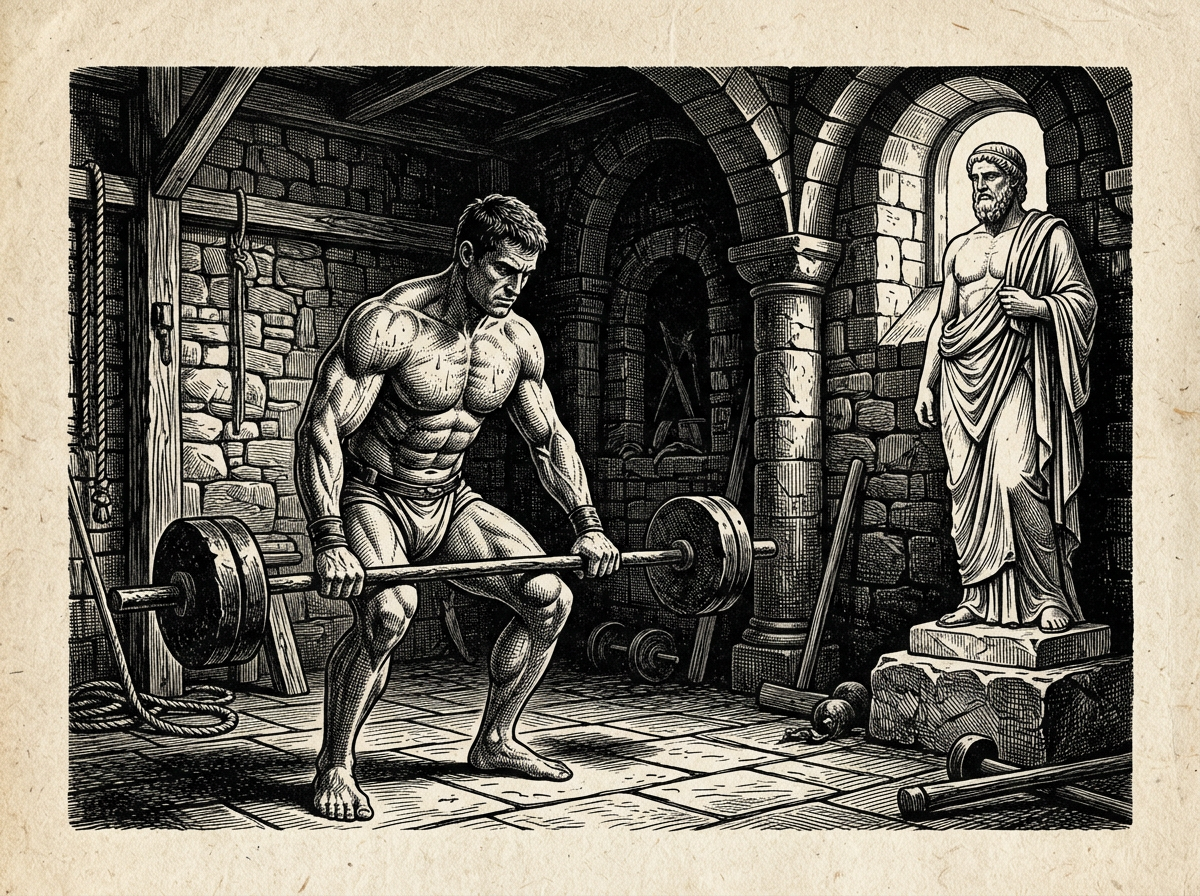
To understand this line, you have to look at the exact context in Discourses. Epictetus is giving an example of Milo of Croton (a famous ancient wrestler) and Socrates:
"Milo will not be completely invincible; but am I to give up training for that reason? Socrates will not be a philosopher of the highest rank; is he to abandon his search for wisdom for that reason?"
Epictetus’s real point relies on two core Stoic concepts:
- The Ideal of the Sage (Sophos) — Stoics acknowledged that true moral perfection (becoming a "Sage") was almost impossible, even Socrates might not have fully achieved it. But the Stoic Prokopton (one who is making progress) must still strive for it every single day without making excuses.
- Duty Over Outcome — Virtue lies in the effort and intent (prohairesis), not in whether you reach an impossible finish line. You do not abandon the daily practice of virtue simply because you will never be a flawless human being.
Epictetus isn't telling you to lower your standards or "take what you can get." He is telling you to stay in the gym and keep wrestling with your character every single day, regardless of whether you will ever win a gold medal.
Related dispatches
MORAL DILUTION: CORPORATE STOICISM · A Critique of Modern Stoicism
Modern self-help flattens Seneca's horror into corporate risk management.
27 Oct 2026
INTELLECTUAL EROSION: MODERN STOICISM · A Critique of Modern Stoicism
Modern Stoicism dilutes Seneca’s vast blueprint into instant comfort.
26 Oct 2026
ETHICAL DRIFT: BOURGEOIS OPTIMIZATION · A Critique of Modern Stoicism
Modern self-help turns Epictetus's radical freedom into careerist optimization.
25 Oct 2026
KEY FLAW: DILUTED DISCIPLINE · A Critique of Modern Stoicism
True moral strength demands laborious excavation, not positive thinking.
24 Oct 2026