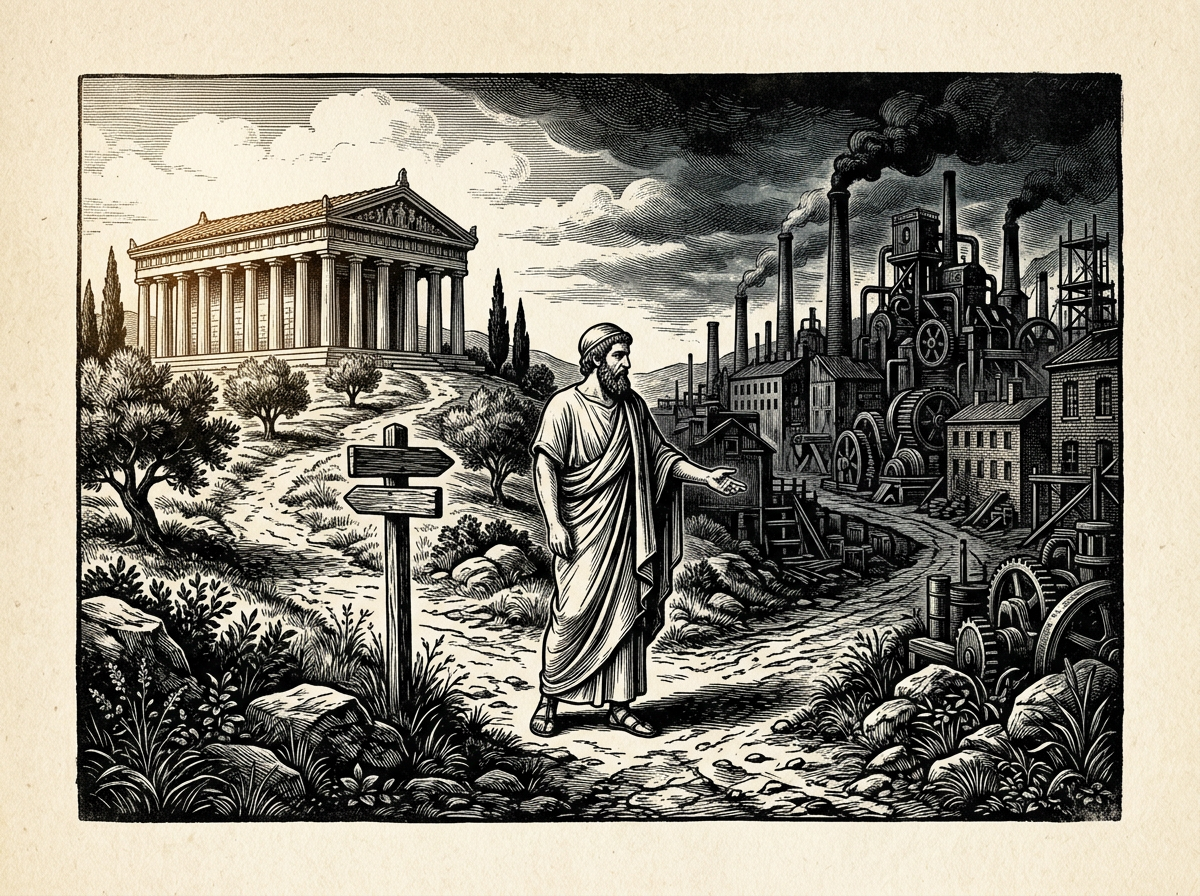
KEY PROBLEM: COMMERCIALIZED STOICISM
Stoicism loses its soul when flattened into Silicon Valley productivity
29 Aug 2026
30th August - When You Feel Lazy
“Anything that must yet be done, virtue can do with courage and promptness. For anyone would call it a sign of foolishness for one to undertake a task with a lazy and begrudging spirit, or to push the body in one direction and the mind in another, to be torn apart by wildly divergent impulses.”
SENECA, MORAL LETTERS, 31
The commentary:
If you start something and right away feel yourself getting lazy and irritated, first ask yourself: Why am I doing this? If it really is a necessity, ask yourself: What’s behind my reluctance? Fear? Spite? Fatigue? Don’t forge ahead hoping that someone will come along and relieve you of this task you don’t want to do. Or that someone else will suddenly explain why what you’re doing matters. Don’t be the person who says yes with their mouth but no with their actions. Steve Jobs told BusinessWeek in 2005, only midway through Apple’s stunning rise to becoming one of the world’s most valuable companies:
“Quality is much better than quantity… One home run is much better than two doubles.”
Chaff & Wheat Analyse:
The commentator takes Seneca’s profound warning against inner conflict and degrades it into a corporate productivity sermon backed by tech-CEO hype.
The Distortion of Truth
- The Trap — Seneca is warning against a divided soul doing one thing while your mind hungers for another. To Seneca, virtue requires absolute inner harmony and wholehearted moral action.
- * The Absurd Lie: The commentator brings in Steve Jobs and his quote about hitting "home runs" over "doubles." Steve Jobs was talking about product development strategy and market share; Seneca was talking about the integrity of the human soul. Equating Stoic virtue with Apple's market capitalization is a breathtaking insult to philosophy.
- * The Coward’s Shift: Seneca demands that you align your mind and body to act with courage. The commentator turns this into a workplace efficiency checklist: diagnosing your "reluctance" so you can finish your tasks faster and avoid being unproductive.
- Ego Over Truth — Why the Commentator Distorts
This is not a mistake; it is pure brand strategy. Genuine Stoicism demands that you evaluate whether a task is morally right, regardless of profit, status, or success. But telling modern ambition-driven readers to examine the moral purpose of their lives doesn't sell books linking Stoicism to Silicon Valley fortune does.
The commentator strips Seneca of his spiritual weight and repackages him as an executive coach. He flatters the reader’s hustle-culture mindset, reassuring them that their daily grind is equivalent to ancient virtue. By riding the coattails of Steve Jobs, the commentator elevates his own image as a savvy, modern interpreter of "success."
How Marcus Aurelius Would Respond
Marcus Aurelius would view this commentary with cold, absolute disgust.
“Perform every act of your life as though it were the very last act of your life, freed from all distraction, all emotional blindness, all hypocrisy, self-love, and resentment...”
- Meditations, 2.5
To Marcus, doing your duty with a undivided mind is an act of sacred alignment with the universe, not a technique to increase your work output or build a valuable company. He would ruthlessly point out that citing a wealthy businessman to explain the health of the soul reveals a mind completely enslaved by worldly fame and commercial status.
Related dispatches
MORAL DILUTION: CORPORATE STOICISM · A Critique of Modern Stoicism
Modern self-help flattens Seneca's horror into corporate risk management.
27 Oct 2026
INTELLECTUAL EROSION: MODERN STOICISM · A Critique of Modern Stoicism
Modern Stoicism dilutes Seneca’s vast blueprint into instant comfort.
26 Oct 2026
ETHICAL DRIFT: BOURGEOIS OPTIMIZATION · A Critique of Modern Stoicism
Modern self-help turns Epictetus's radical freedom into careerist optimization.
25 Oct 2026
KEY FLAW: DILUTED DISCIPLINE · A Critique of Modern Stoicism
True moral strength demands laborious excavation, not positive thinking.
24 Oct 2026