ETHICAL REDUCTION: SOCIAL COMPLIANCE
Do not reduce Zeno’s warning against pride to timid social etiquette.
12 Sept 2026
12th September: Be Down To Earth, Or Be Brought Down | The Taming of Stoic Pride Into Social Self-Preservation
The Text in Question
The Daily Stoic Rendering:
“Zeno always said that nothing was more unbecoming than putting on airs, especially with the young.” - Diogenes Laertius, Lives of the Eminent Philosophers, 7.1.22
Standard Academic Translation:
“He used also to say that nothing was so unbecoming as pride, and especially in the young.” - Diogenes Laertius, Lives of the Eminent Philosophers, 7.1.22 (trans. C.D. Yonge)
1.5 Academic Context & Breakdown
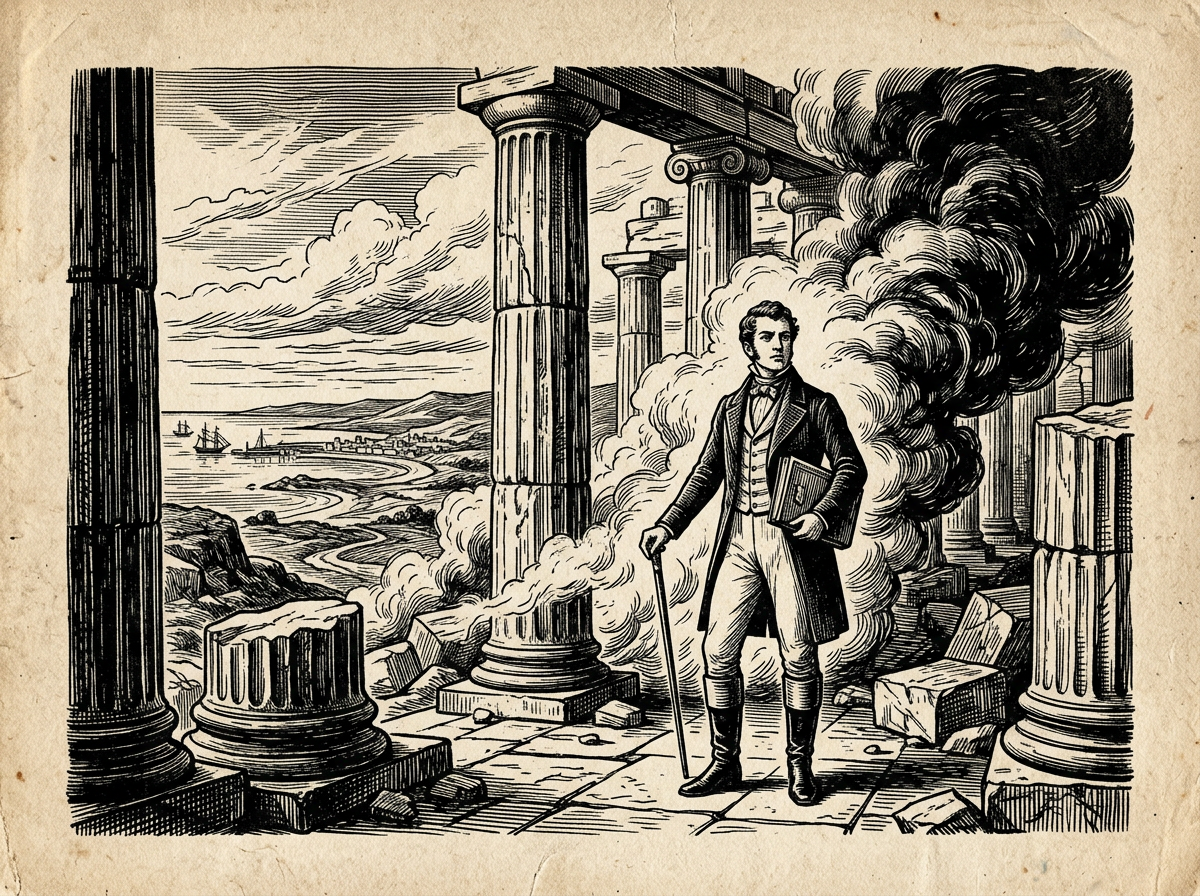
Zeno of Citium, the Phoenician merchant who founded Stoicism after losing everything in a shipwreck, taught in the heart of Athens at the Stoa Poikile. He stood amidst the marble columns and bustling marketplace, explicitly addressing the aristocratic youth of Greece who flocked to him brimming with arrogance, social status, and inherited wealth.
For Zeno, pride (typhos literally "smoke" or "fog") was not merely bad manners; it was an intellectual delusion that blinded the soul to virtue and reasoned truth. In the academic translation, Zeno targets this deep-seated moral blindness that prevents a young person from recognizing their own ignorance.
- The Opening Counter-Punch
The Daily Stoic degrades Zeno’s sharp moral warning into a strategy for avoiding embarrassing social awkwardness. It guts an existential demand for radical self-knowledge and replaces it with a timid warning against social friction. This is not Stoic philosophy; it is middle-management advice on how to fit in and stay likeable.
- The Breakdown
- Flattening Moral Delusion into Superficial Mannerisms — The commentary sanitizes Zeno's condemnation of soul-warping pride into a mere warning against "putting on airs" and being "unpleasant to put up with." By substituting deep character corruption with bad manners, the commentary changes a fundamental Stoic critique of ego into a superficial lesson in etiquette.
- Replacing Spiritual Truth with Social Self-Preservation — The text argues that we should remain humble because "if you are already humble, no one will need to humble you and the world is much less likely to have nasty surprises in store for you." This completely shifts Zeno’s objective from pursuing genuine wisdom to dodging harsh social friction. It unauthentically converts virtue into a shield for ego preservation.
- Co-opting Wisdom to Sell Fear-Based Compliance — The commentary claims that staying humble prevents someone from having to "drop some knowledge on them" and avoids being brought down "oftentimes crushingly so." It frames humility not as an intrinsic good, but as a fear-driven strategy to avoid social punishment. This reduces Stoic self-examination to a timid survival tactic designed to keep you safe from public humiliation.
- The Lesson & Application
The academic text teaches that pride is a veil of delusion that isolates us from virtue and truth. True humility is not about acting modest to stay out of trouble; it is the honest recognition of our vast ignorance and moral imperfection.
We practice this by actively interrogating our assumptions, welcoming correction, and treating every encounter as a reminder that status and opinion are meaningless compared to character.
- How the Philosopher Would Respond
Zeno would reject this spineless attempt to reduce moral discipline to social self-preservation. He did not preach humility so you could avoid awkward confrontations, but to clear away the suffocating fog of vanity that blocks the light of reason.
“It is impossible for a man to learn that which he thinks he already knows.” - Epictetus, Discourses, Book II, 17.1 (echoing Zeno's core doctrine)
Related dispatches
MORAL DILUTION: CORPORATE STOICISM · A Critique of Modern Stoicism
Modern self-help flattens Seneca's horror into corporate risk management.
27 Oct 2026
INTELLECTUAL EROSION: MODERN STOICISM · A Critique of Modern Stoicism
Modern Stoicism dilutes Seneca’s vast blueprint into instant comfort.
26 Oct 2026
ETHICAL DRIFT: BOURGEOIS OPTIMIZATION · A Critique of Modern Stoicism
Modern self-help turns Epictetus's radical freedom into careerist optimization.
25 Oct 2026
KEY FLAW: DILUTED DISCIPLINE · A Critique of Modern Stoicism
True moral strength demands laborious excavation, not positive thinking.
24 Oct 2026