VIRTUE DEGRADATION: POP NEUROSCIENCE
Stop reducing ancient moral duty to a dopamine hack.
08 Oct 2026
8th October: A Higher Pleasure | The Reduction of Sacred Integrity to Long-Lasting Dopamine
The Text in Question
The Daily Stoic Rendering
“Yes, getting your wish would have been so nice. But isn’t that exactly why pleasure trips us up? Instead, see if these things might be even nicer, a great soul, freedom, honesty, kindness, saintliness. For there is nothing so pleasing as wisdom itself, when you consider how sure-footed and effortless the works of understanding and knowledge are.” - MARCUS AURELIUS, MEDITATIONS, 5.9
Standard Academic Translation
“How enticing pleasure is! But see if magnanimity, freedom, simplicity, considerateness, piety are not more enticing. For what is more enticing than wisdom itself, when you consider the security and prosperity that attend in everything the capacity of understanding and knowledge?” - MARCUS AURELIUS, MEDITATIONS, 5.9 (C.R. Haines)
Academic Context & Breakdown
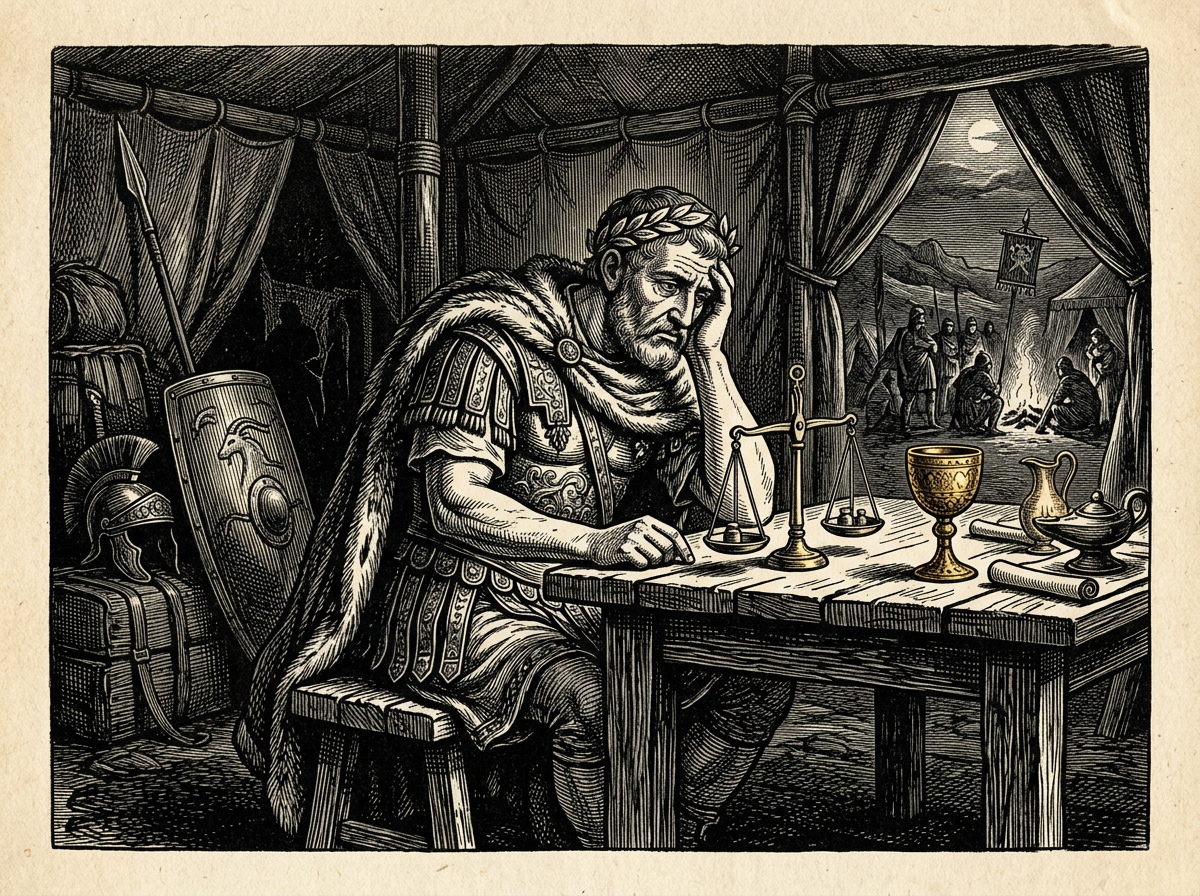
Marcus Aurelius wrote Book 5 in his winter quarters during the Marcomannic Wars along the frozen, muddy Danube frontier. Exhausted by political betrayal, illness, and constant warfare, he struggled every morning just to pull himself out of bed and face his emperor's duty.
Surrounded by physical discomfort and endless administrative burdens, Marcus was not trying to optimize his daily neurochemistry. He was conducting an urgent internal audit, re-anchoring his mind in the absolute supremacy of rational virtue over transient bodily sensations and ego-driven desires.
The Opening Counter-Punch
The commentary guts a profound metaphysical choice between moral truth and sensory distraction, degrading it into a low-grade optimization hack for your brain chemicals. It swaps Marcus Aurelius's absolute demand for spiritual nobility with a shallow cost-benefit analysis on personal satisfaction. Where the emperor commanded devotion to sacred duty, the commentary merely offers a longer-lasting emotional high.
The Breakdown
- The commentary asserts that "the dopamine rush that comes from sex is momentary," hijacking Marcus Aurelius's meditation on moral gravity to deliver a cheap, pop-neuroscience lecture on brain chemistry. The academic text contrasts the immediate allure of pleasure with the inherent dignity of magnanimity and piety, whereas the commentary degrades virtue into a mere biohack for avoiding temporary chemical crashes.
- By pointing out that sensory experiences "wear off and leave us wanting more," the commentary frames the problem as mere addiction and diminishing returns rather than a fundamental distortion of the rational soul. Marcus was not complaining about the brief half-life of physical stimulation; he was asserting that virtue is intrinsically superior because it aligns with the cosmic order, regardless of how long its emotional afterglow lasts.
- The text asks "what lasts longer (and remains more within our circle of control)?", reducing moral character to a utilitarian investment chosen purely for its durability and convenience. This trick corrupts the academic meaning, as Marcus never urged virtue because it yields a more enduring high, but because the exercise of wisdom and truth is the only proper function of a rational human being.
Application of the True Lesson
The standard academic rendering demands that you pursue moral integrity and truth as ultimate goods in themselves, entirely independent of the physical pleasure or emotional satisfaction they produce.
To practice this today, choose to perform a necessary, honest, or generous act that offers zero emotional payoff, public praise, or sensory reward, doing it solely because it is rational and right.
How the Philosopher Would Respond
Marcus Aurelius would despise seeing the sacred nobility of the rational soul reduced to a utilitarian pursuit of longer-lasting personal satisfaction.
“Does a horse pride itself when it runs? Or a dog when it tracks game? Do you then demand reward for doing the work of a human being?” - MARCUS AURELIUS, MEDITATIONS, 9.42
Related dispatches
CORE ERROR: SELFISH VIRTUE · A Critique of Modern Stoicism
Modern self-help turns moral integrity into a hack for anxiety management
07 Oct 2026
MAIN ERROR: THERAPEUTIC REDUCTION · A Critique of Modern Stoicism
Stop treating Stoic virtue as therapy for professional jealousy
06 Oct 2026
SHALLOW READING: RECKLESS SPEECH · A Critique of Modern Stoicism
Why modern Stoicism reduces moral discipline to mere social politeness
05 Oct 2026
STOIC MISTRANSLATION: SOCIAL GUILT · A Critique of Modern Stoicism
Pop Stoicism trades cosmic endurance for easy moralizing
04 Oct 2026