MORAL REDUCTION: PERSONAL BRANDING
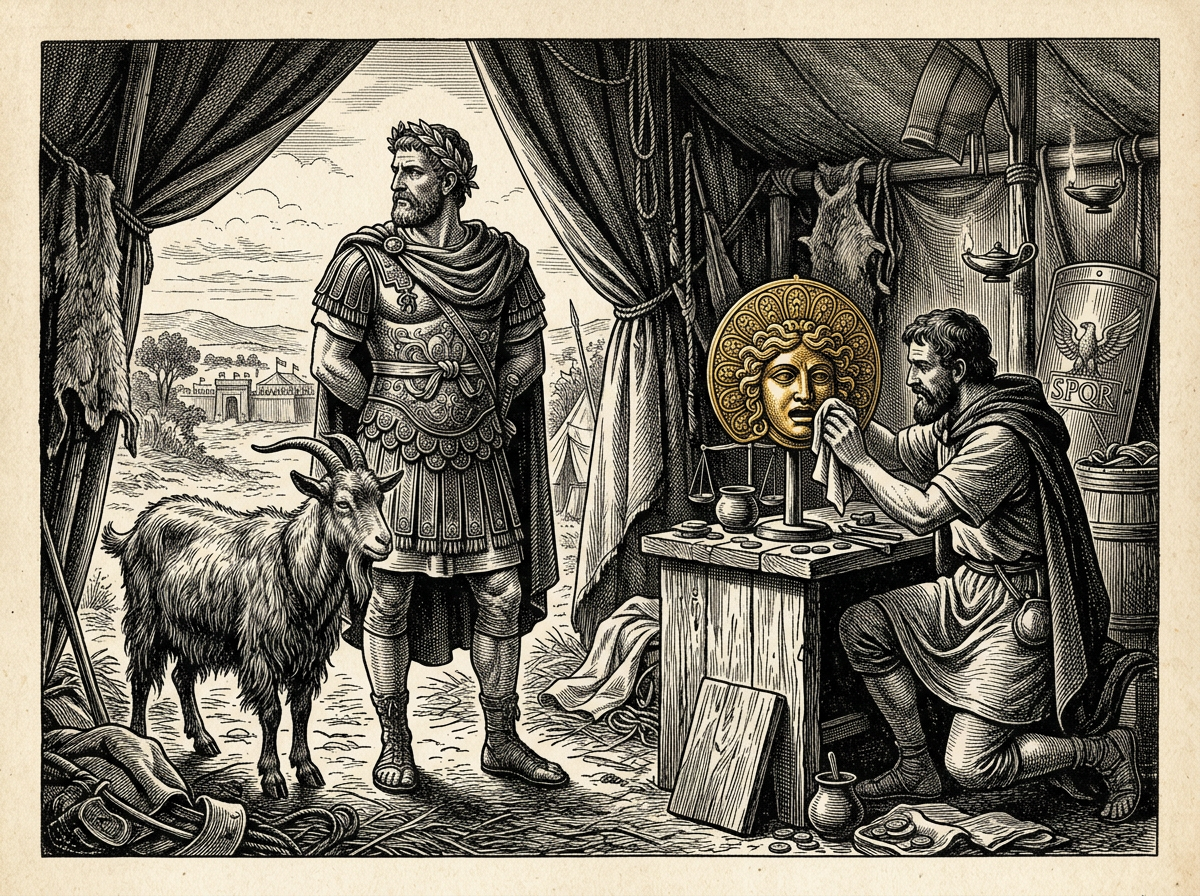
Real integrity smells like a goat, not a curated personal brand.
11 Oct 2026
11th October: Honesty As Our Default | The Commercialization of Character into Personal Branding
The Text in Question
The Daily Stoic Rendering
“How rotten and fraudulent when people say they intend to ‘give it to you straight.’ What are you up to, dear friend? It shouldn’t need your announcement, but be readily seen, as if written on your forehead, heard in the ring of your voice, a flash in your eyes just as the beloved sees it all in the lover’s glance. In short, the straightforward and good person should be like a smelly goat you know when they are in the room with you.” - Marcus Aurelius, Meditations, 11.15
Standard Academic Translation
“How rotten and fake is the person who says, ‘I have chosen to be straightforward with you.’ What are you doing, man? This shouldn’t require a preview; it should be obvious right away. It ought to be written on your forehead, ringing in your tone, flashing in your eyes just as a lover immediately reads everything in the eyes of the beloved. The simple, good man should be like someone who smells of goat: anyone standing near him senses it instantly, whether they want to or not.” - Marcus Aurelius, Meditations, 11.15 (C.R. Gill / W.A. Oldfather adapted)
Academic Context & Breakdown
Marcus Aurelius wrote this in a military tent along the frozen northern frontier, surrounded by scheming senators, treacherous generals, and sycophants who whispered loyalty while plotting treason. He was not writing a productivity guide or management advice; he was an exhausted Emperor reminding himself to spot political theater and self-conscious posturing before it poisoned his own mind.
The original text is an aggressive, visceral warning against performance art. Marcus compares genuine goodness to a stench so pungent, like a goat in a small room, that it forces itself upon everyone present without a spoken word, completely unbidden and unmanaged.
The Opening Counter-Punch
The commentary hijacks an Emperor's brutal warning against deceit and degrades it into a corporate networking strategy. It takes an uncompromising demand for radical, uncalculated virtue and twists it into a pitch for building an influential personal brand. By swapping moral integrity for social utility, the text sanitizes Marcus’s coarse, offensive metaphor to sell a comfortable bourgeois ego-boost.
The Breakdown
- The commentary asks what it says about you if you preface your words with reassurances, urging you to create a reputation "as bankable as a note from the U.S. Treasury." Marcus wrote to purge self-interest, but the commentary reframes character as financial capital, reducing radical Stoic integrity to a mere transaction tool for winning market trust.
- The text promises that managing this reputation "will save you from needing to use reassurances," pitching honesty as an efficient life-hack to avoid awkward social friction. This changes Marcus's uncompromising demand for visceral, unannounced virtue into a tactical optimization strategy aimed entirely at personal convenience.
- The commentary urges the reader to make their honesty "as permanent as a tattoo," focusing entirely on an external mark meant to be observed and evaluated by others. Marcus used the revolting metaphor of a goat's stench specifically because stink is an involuntary reality, whereas a tattoo is a deliberate, self-conscious aesthetic choice crafted for display.
The Real Lesson
The authentic lesson of Meditations 11.15 is that true character requires no preamble, strategy, or self-conscious curation. You apply it by ruthlessly stripping away every phrase, disclaimer, and calculated gesture designed to control how other people perceive your integrity. Live so directly that your moral nature radiates involuntarily, requiring zero public relations management.
How The Philosopher Would Respond
Marcus Aurelius would flatly reject the idea that virtue exists to yield a "bankable reputation" or smooth over business dealings, viewing such calculated posturing as the exact rotten fraud he originally condemned.
"A horse when it has run, a dog when it has tracked the game, a bee when it has made the honey, rises not to give a shout, but passes on to another thing. So should a man be when he has done a good act, not calling out for others to come and see." - Marcus Aurelius, Meditations, 6.6
Related dispatches
ETHICAL DILUTION: INNER TRANQUILITY · A Critique of Modern Stoicism
Marcus Aurelius demanded existential duty, not modern self-help tranquility.
10 Oct 2026
CORE ERROR: IDENTITY CURATION · A Critique of Modern Stoicism
Stoicism is an objective scale, not a personal branding exercise
09 Oct 2026
VIRTUE DEGRADATION: POP NEUROSCIENCE · A Critique of Modern Stoicism
Stop reducing ancient moral duty to a dopamine hack.
08 Oct 2026
CORE ERROR: SELFISH VIRTUE · A Critique of Modern Stoicism
Modern self-help turns moral integrity into a hack for anxiety management
07 Oct 2026