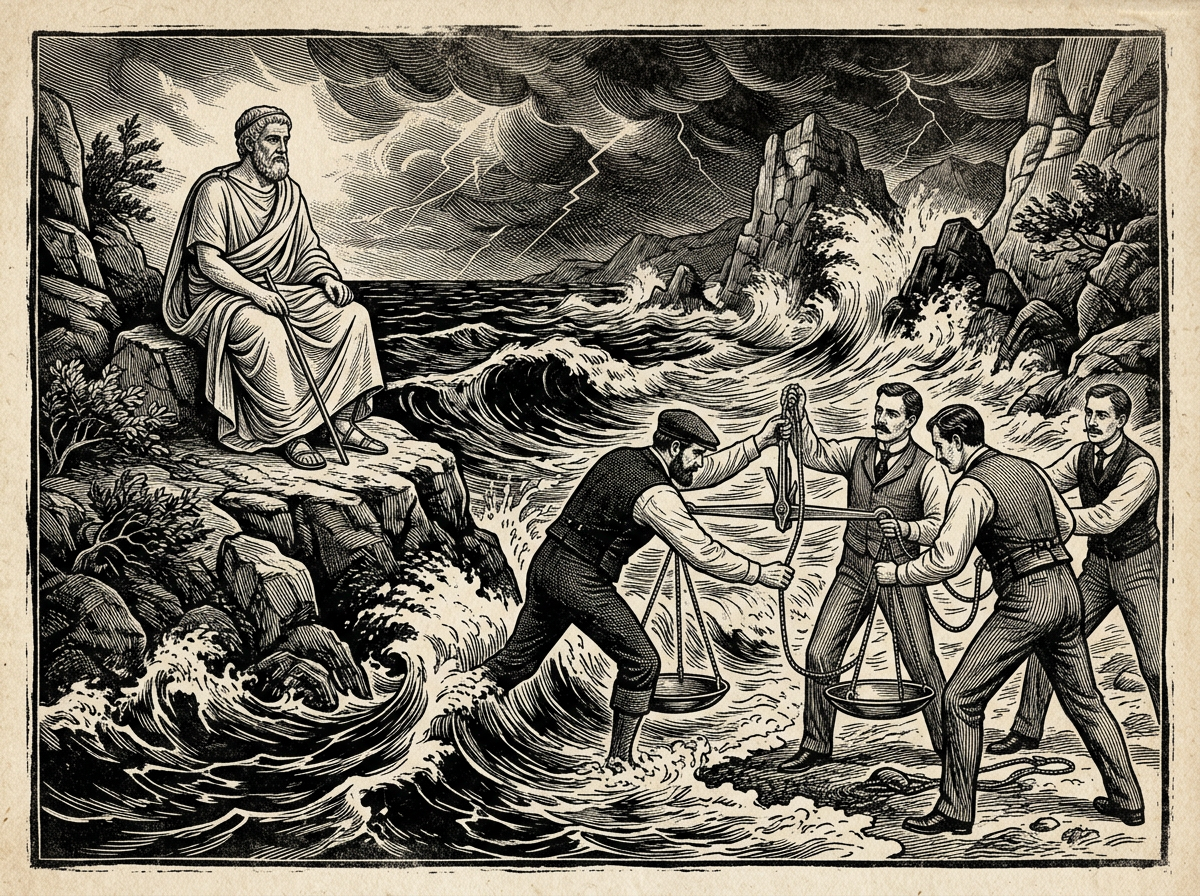
COMMODIFIED VIRTUE: PERFORMANCE RESILIENCE
Stop reducing Seneca's radical moral virtue to a personal productivity hack
03 Sept 2026
1st September - A Strong Soul Is Better Than Good Luck | The Consumerist Myth of Resilience
The Text in Question
The Daily Stoic Rendering
"The rational soul is stronger than any kind of fortune, from its own share it guides its affairs here or there, and is itself the cause of a happy or miserable life."
Seneca, Moral Letters, 98.2b
Standard Academic Translation
"The mind is superior to every phase of fortune; it conducts its own affairs, and is itself the cause of its own happiness or misery, according to its direction of its own life."
Seneca, Epistulae Morales ad Lucilium, 98.2b (trans. Gummere)
Academic Context & Breakdown
Seneca wrote Letter 98 to his friend Lucilius during a period of profound political instability under Nero's reign, where exile or forced suicide was a constant threat for the Roman elite. Suffering from severe asthma and lifelong frail health himself, Seneca wrote these lines to confront the immediate reality of grief, bodily pain, and arbitrary political ruin.
The original passage is an absolute declaration of inner sovereignty: the animus (mind/soul) operates on a completely different plane than outer events. For Seneca, "happiness" (beata vita) is not a feeling of empowerment or toughing out bad luck; it is moral virtue itself, completely unattached to external outcomes.
The Opening Counter-Punch
The Daily Stoic commentary takes Seneca’s radical metaphysical claim—that outer fortune is utterly irrelevant to moral integrity—and degrades it into a self-help fitness regimen. It shifts the focus from mastering one's moral intent to using discomfort as a biohack for personal performance. By framing Cato’s radical political protest and ascetic discipline as mere preparation for "any kind of luck," the commentary replaces Stoic virtue with modern self-optimization.
The Breakdown
- The Flattening of Moral Intent — The commentary claims Cato walked barefoot and ate simple fare because "Cato was training his soul to be strong and resilient." Seneca presents the mind's sovereignty as a fundamental truth of human reason, but the commentary reframes it as a gym routine for mental endurance. It changes Seneca’s ontological claim into a functional tool for personal stamina, stripping away the spiritual demand for moral perfection.
- The Commodification of Indifference — The commentary reduces Stoic apatheia and virtue to "an attitude of 'let come what may' that would serve him well." This shift transforms an uncompromising ethical posture into a utilitarian tactic for career success in the Senate or the trenches. In doing so, it dishonestly sells Stoicism as a tool to conquer the world rather than a discipline to relinquish one's desire for it.
- The Softening of Philosophical Demand — By concluding that "we might find ourselves similarly strengthened," the text replaces Seneca’s imperative certainty with a comfortable, low-stakes lifestyle suggestion. Seneca asserts that the mind is the absolute master of its state, whereas the commentary lowers the bar to a speculative perk for the modern self-improver.
The Lesson of the Text
Seneca calls us to realize that external circumstances hold zero power over our moral choices unless we grant it to them. True happiness is derived entirely from the intent and integrity of the mind, regardless of whether external events yield prosperity or disaster.
To practice this, stop viewing daily discomforts as training exercises to gain a competitive edge. Instead, when faced with loss, insult, or sudden setback, immediately separate the external event from your internal moral choice, choosing virtue for its own sake rather than as a strategy to secure better fortune.
How the Philosopher Would Respond
Seneca would utterly revile the idea of turning philosophy into a utility belt for personal ambition and comfort. He did not write to make men feel bad-ass or resilient in the face of bad luck; he wrote to liberate the soul entirely from the tyranny of external outcomes.
"Philosophy is no popular craft, nor made for show; it is not in words, but in deeds. It is not employed to make the day pass pleasantly, or to take off the bitterness of our leisure. It forms and builds the soul; it orders our life, guides our conduct, shows us what we should do and what we should leave undone; it sits at the helm and directs our course as we waver amid uncertainties."
Seneca, Moral Letters, 16.3
Related dispatches
MORAL DILUTION: CORPORATE STOICISM · A Critique of Modern Stoicism
Modern self-help flattens Seneca's horror into corporate risk management.
27 Oct 2026
INTELLECTUAL EROSION: MODERN STOICISM · A Critique of Modern Stoicism
Modern Stoicism dilutes Seneca’s vast blueprint into instant comfort.
26 Oct 2026
ETHICAL DRIFT: BOURGEOIS OPTIMIZATION · A Critique of Modern Stoicism
Modern self-help turns Epictetus's radical freedom into careerist optimization.
25 Oct 2026
KEY FLAW: DILUTED DISCIPLINE · A Critique of Modern Stoicism
True moral strength demands laborious excavation, not positive thinking.
24 Oct 2026