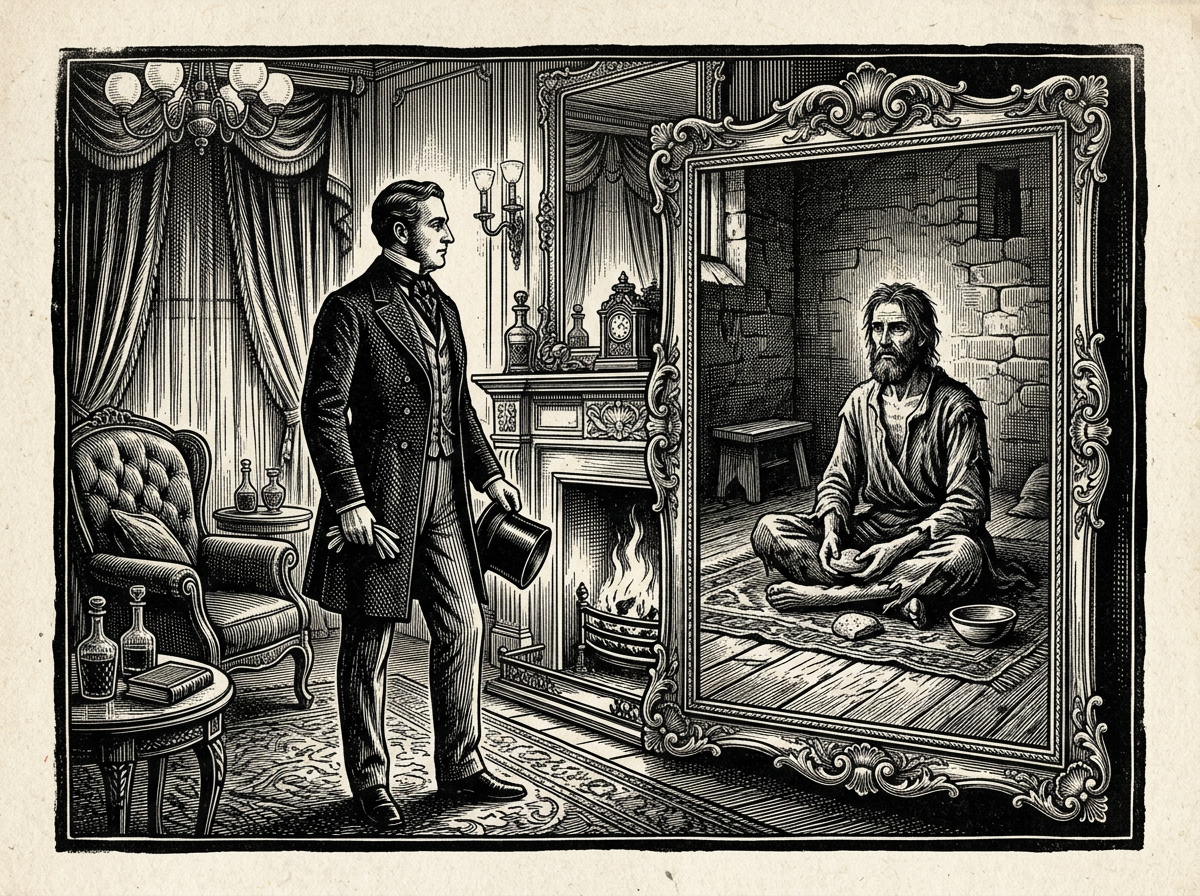
CORE ERROR: PERFORMATIVE POVERTY
Seneca’s voluntary poverty was a trial, not a suburban game
10 Sept 2026
10th September - Preparing On The Sunny Day | Packaging Ascetic Spiritual Combat as a Cosplay Vacation for the Wealthy
The Text in Question
The Daily Stoic Rendering:
“Here’s a lesson to test your mind’s mettle: take part of a week in which you have only the most meager and cheap food, dress scantly in shabby clothes, and ask yourself if this is really the worst that you feared. It is when times are good that you should gird yourself for tougher times ahead, for when Fortune is kind the soul can build defenses against her ravages. So it is that soldiers practice maneuvers in peacetime, erecting bunkers with no enemies in sight and exhausting themselves under no attack so that when it comes they won’t grow tired.”
Standard Academic Translation:
“Set aside a certain number of days, during which you shall be content with the scantiest and cheapest fare, with coarse and rough dress, saying to yourself the while: ‘Is this the condition that I feared?’ It is precisely in times of immunity from care that the soul should toughen itself beforehand for occasions of greater stress... If you would not have a man flinch when the crisis comes, train him before it comes.” - Seneca, Epistulae Morales ad Lucilium, 18.5
6 (trans. Richard M. Gummere)
Academic Context & Breakdown
Seneca wrote this letter to Lucilius during Saturnalia, the Roman holiday season of wild feasting, drinking, and social inversion. While Rome degenerated into luxurious debauchery, Seneca urged his friend to retreat into extreme poverty to confront his fear of losing his status.
In the academic translation, Seneca demands a severe, literal exercise in voluntary poverty (paupertatis meditatio) to break the soul's dependency on luxury. Seneca is not suggesting a fun life experiment; he is forcing Lucilius to realize that true security comes from knowing that virtue alone is sufficient for life, even when stripped of all material comforts.
The Opening Counter-Punch
The Daily Stoic guts Seneca's radical spiritual discipline and degrades it into a weekend LARPing session for comfortable elites. It turns an existential assault on material greed into a harmless, middle-class exercise in role-playing real human suffering.
The Breakdown
- Reducing Spiritual Poverty to a Pretend Game — The commentary instructs the reader to "pretend your hot water has been turned off," substituting Seneca's actual physical deprivation with a cozy, temporary game of pretend that leaves the ego completely untouched.
- Trivializing Systemic Misfortune into Household Inconveniences: By suggesting you "pretend your cushy mattress was far away," the text degrades Seneca’s profound confrontation with ruin into a mild camping trick for pampered professionals.
- Corrupting Spiritual Freedom into Habituation to Shock — The commentary claims that after practice, poverty "would start to feel normal and no longer quite so scary," shifting Seneca's goal—realizing that virtue does not depend on wealth—to merely building up a tolerance to temporary discomforts.
Lessons from the Academic Text
The academic text teaches that your fear of losing comfort is a leash around your neck, keeping you enslaved to your wealth and status. True freedom comes from deliberately stripping away luxury until you realize that your essential moral dignity remains entirely intact without it.
To practice this, set aside three consecutive days this month where you eat only basic, low-cost staples and abstain from all luxuries, extra spending, and entertainment. Face the experience directly and ask yourself: "Is this really the condition I was so terrified of?"
How the Philosopher Would Respond
Seneca would utterly despise this attempt to turn a rigorous spiritual trial into a suburban role-playing game. He would remind us that practicing poverty requires real, uncomfortable sacrifices, not a playful fantasy designed to make you feel good about returning to your luxury bed.
“Let the pallet be real, and the coarse cloak; let the bread be hard and dirty. Endure all this for three or four days at a time, sometimes for more, so that it may be a test of yourself, not a game.” - Seneca, Epistulae Morales ad Lucilium, 18.7
Related dispatches
MORAL DILUTION: CORPORATE STOICISM · A Critique of Modern Stoicism
Modern self-help flattens Seneca's horror into corporate risk management.
27 Oct 2026
INTELLECTUAL EROSION: MODERN STOICISM · A Critique of Modern Stoicism
Modern Stoicism dilutes Seneca’s vast blueprint into instant comfort.
26 Oct 2026
ETHICAL DRIFT: BOURGEOIS OPTIMIZATION · A Critique of Modern Stoicism
Modern self-help turns Epictetus's radical freedom into careerist optimization.
25 Oct 2026
KEY FLAW: DILUTED DISCIPLINE · A Critique of Modern Stoicism
True moral strength demands laborious excavation, not positive thinking.
24 Oct 2026