MORAL REDUCTION: TOXIC POSITIVITY
Stoicism is a call to moral duty, not shallow optimism
07 Sept 2026
7th September: Our Hidden Power | Reducing Radical Cosmic Duty to a Toxic Positivity Hack
The Text in Question
The Daily Stoic Rendering “Consider who you are. Above all, a human being, carrying no greater power than your own reasoned choice, which oversees all other things, and is free from any other master.”
Standard Academic Translation “Consider who you are. To begin with, a Human Being, that is, one who has nothing more sovereign than moral choice, but subjects all else to this, while keeping this itself unenslaved and unsubjected.” - Epictetus, Discourses, 2.10.1 (trans. W.A. Oldfather)
Academic Context & Breakdown
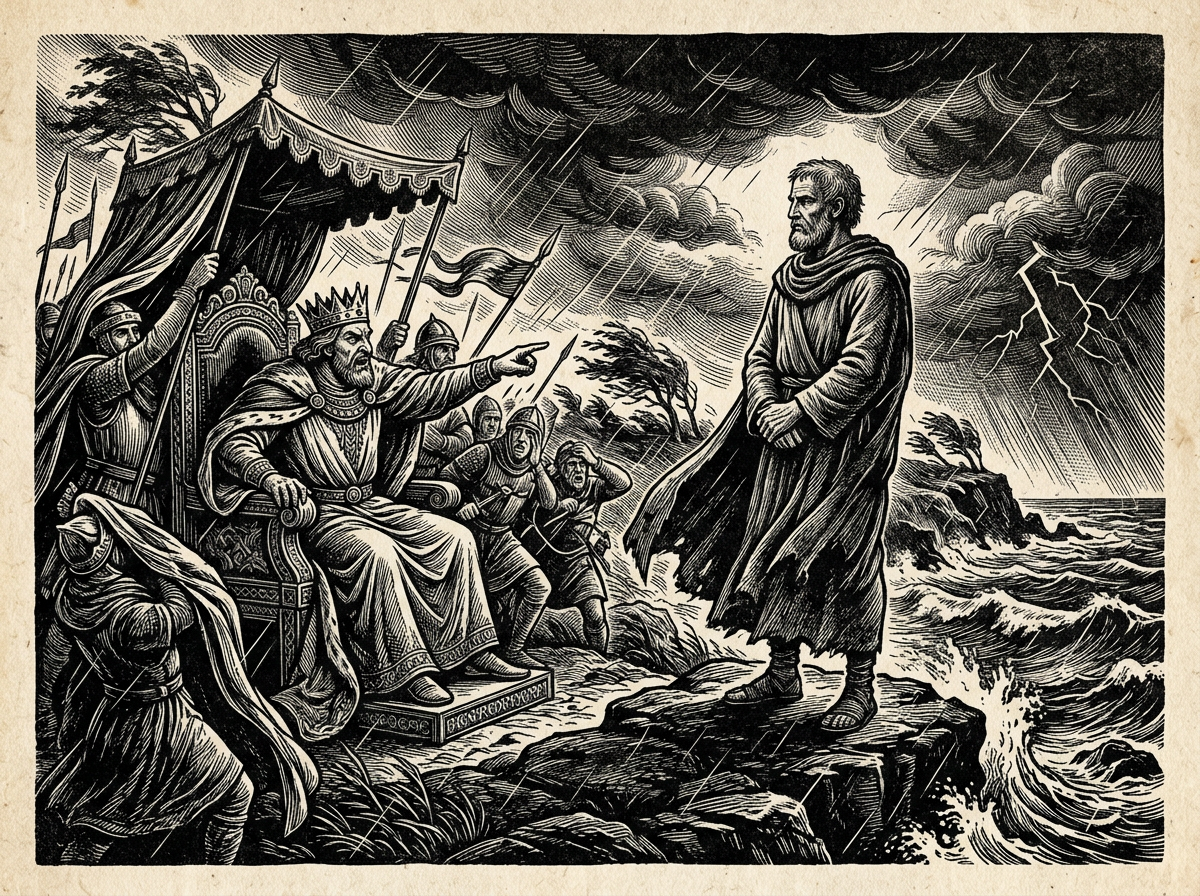
Epictetus delivered this discourse in his crowded lecture hall in Nicopolis, teaching young Romans who faced execution or exile if they displeased the tyrannical Emperor Domitian. He was not giving a motivational lecture on how to feel better during tough times; he was defining what makes a human being distinct from animals and objects.
In the academic translation, Epictetus lays out a strict, uncompromising hierarchy of existence: your body, wealth, and reputation are subordinate to your faculty of moral choice (prohairesis). For Epictetus, having an "unenslaved" moral choice is not a secret life hack to make life feel nicer, but a terrifying cosmic responsibility to act with justice and honor regardless of your physical suffering.
The Opening Counter-Punch
The Daily Stoic takes Epictetus's stern call to moral responsibility and degrades it into a shallow exercise in toxic positivity. It hijacks Holocaust survival to sell a self-help routine, telling readers that the ultimate purpose of human reason is to put a happy spin on modern inconveniences.
The Breakdown
- Commercializing Total Horror for Modern Self-Help — The commentary exploits Viktor Frankl’s agonizing imprisonment to claim he "realized that he could actually find positives in his situation," cheapening the immense tragedy of the Holocaust to convince comfortable modern readers that every horror has a silver lining.
- Corrupting Moral Duty into "Finding Positives" — The text instructs you to ask yourself, "Are you finding the positives?", replacing Epictetus's rigorous demand to preserve your moral integrity with a modern, toothless mandate to keep a positive attitude.
- Diverting Sovereignty to Ineffective Self-Soothing — By framing reason as a tool to navigate "areas of your life where you are under duress," the commentary changes Epictetus’s sovereign, absolute master of the soul into a mere mental coping mechanism for enduring bad bosses and bureaucratic headaches.
Lessons from the Academic Text
The academic text teaches that your primary identity is not your profession, your suffering, or your social status, but your capacity for rational, moral action. Your moral choice is entirely free from external control, meaning no circumstance can ever force you to act dishonorably.
To practice this today, identify a situation where you feel victimized or forced into a bad decision. Strip away the excuses about external pressure and ask yourself what the strictly honorable, rational choice is right now, then execute it without complaining.
How the Philosopher Would Respond
Epictetus would scathingly reject this attempt to reduce his doctrine of human dignity to a cheap self-help routine. He would remind us that the goal of human reason is not to manipulate your feelings into "finding positives," but to fulfill your moral duties as a citizen of the universe.
“What then is the property of a human being? To be gentle, to be cooperative, to be patient, to be self-restrained... Look to it that you never act like a wild beast, look to it that you never act like a sheep.” - Epictetus, Discourses, 2.10.14-15
Related dispatches
MORAL DILUTION: CORPORATE STOICISM · A Critique of Modern Stoicism
Modern self-help flattens Seneca's horror into corporate risk management.
27 Oct 2026
INTELLECTUAL EROSION: MODERN STOICISM · A Critique of Modern Stoicism
Modern Stoicism dilutes Seneca’s vast blueprint into instant comfort.
26 Oct 2026
ETHICAL DRIFT: BOURGEOIS OPTIMIZATION · A Critique of Modern Stoicism
Modern self-help turns Epictetus's radical freedom into careerist optimization.
25 Oct 2026
KEY FLAW: DILUTED DISCIPLINE · A Critique of Modern Stoicism
True moral strength demands laborious excavation, not positive thinking.
24 Oct 2026