CORE PRINCIPLE: INTERNAL AGENCY
True agency thrives by adapting to whatever constraints remain
03 Aug 2026
2nd August - We Can Work Any Way
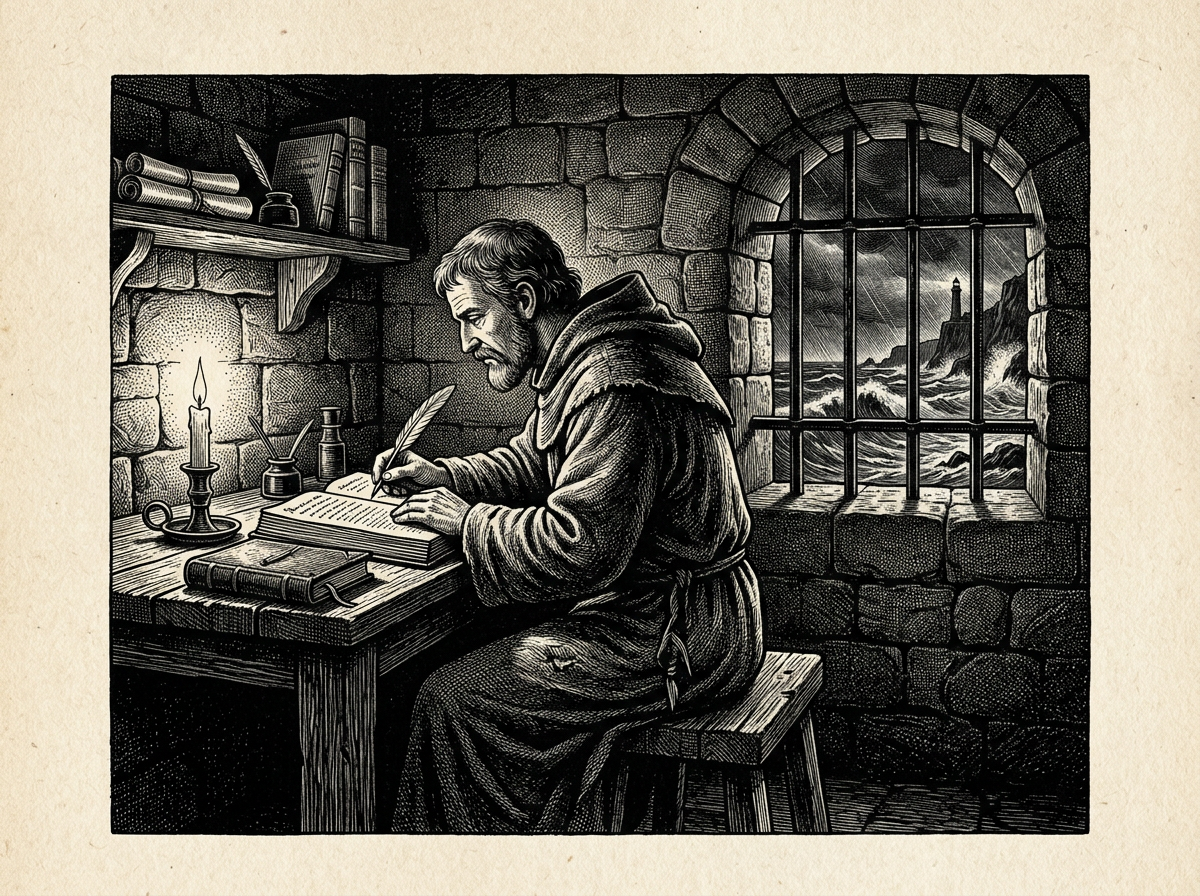
“Indeed, how could exile be an obstacle to a person’s own cultivation, or to attaining virtue when no one has ever been cut off from learning or practicing what is needed by exile?” — MUSONIUS RUFUS, LECTURES, 9.37.30
31, 9.39.1
The commentary:
Late in his life, after a surgery, Theodore Roosevelt was told he might be confined to a wheelchair for the remainder of his days. With his trademark ebullience, he responded, “All right! I can work that way too!” This is how we can respond to even the most disabling turns of fate, by working within whatever room is left. Nothing can prevent us from learning. In fact, difficult situations are often opportunities for their own kinds of learning, even if they’re not the kinds of learning we’d have preferred. Musonius Rufus, for his part, was exiled three times (twice by Nero and once by Vespasian), but being forcibly expelled from his life and his home didn’t impinge on his study of philosophy. In his way, he responded by saying “All right! I can work that way too.” And he did, managing to squeeze in some time between exiles with a student named Epictetus and thus helping to bring Stoicism to the world.
Chaff & Wheat Analyse:
The Meaning of the Passage
This passage addresses how to respond when your life, career, or freedom is severely disrupted by circumstances beyond your control.
Musonius Rufus (one of the four great Roman Stoics and the teacher of Epictetus) points out that being exiled does not stop a person from growing in wisdom or virtue. Being physically moved, stripped of wealth, or cut off from your normal environment cannot prevent you from practicing character, learning, and self-mastery.
The modern commentary connects this ancient Stoic wisdom to a famous anecdote about Theodore Roosevelt. When told he might spend the rest of his life in a wheelchair, Roosevelt didn't despair, he simply adapted: "All right! I can work that way too!"
The Core Meaning
is: No external setback can stop your internal growth. Whatever constraints, disabilities, or forced disruptions life places on you, there is always still room to learn, practice virtue, and do meaningful work.
What is the Agreement (The Core Argument)?
Musonius Rufus, Theodore Roosevelt, and the modern commentary share a core belief about adaptability and agency:
- Limits are external, character is internal — Circumstances can take away your freedom, health, job, or home, but they cannot take away your ability to choose how you respond.
- Constraints redefine the work, they don't stop it — A setback doesn't end your trajectory; it merely alters the medium you are working in. As the famous Stoic adage goes, "The impediment to action advances action. What stands in the way becomes the way."
- Setbacks contain unique learning opportunities — Musonius Rufus's repeated exiles didn't ruin his life's work, they refined it. Being exiled to a remote island gave him the backdrop to teach and inspire students like Epictetus, whose writings survived to influence millions for two millennia.
Is It True?
Yes, it is profoundly true, both historically and psychologically.
- Historical & Real-World Proof
History is full of individuals who embodied "I can work that way too":
- Musonius Rufus & Epictetus — Epictetus was born a slave and had a broken leg, yet became one of history's most influential thinkers.
- Theodore Roosevelt — Beyond his late-life health challenges, Roosevelt suffered severe asthma as a child and turned himself into an outdoorsman through deliberate, relentless physical exertion.
- Viktor Frankl — In Man’s Search for Meaning, psychiatrist Viktor Frankl observed in Nazi concentration camps that even when stripped of everything, humans retain one final freedom: "to choose one's attitude in any given set of circumstances."
- Psychological Reality — The Growth Mindset & Cognitive Reframing
Modern psychology strongly validates this approach through two key concepts:
- Post-Traumatic Growth — While trauma and disruption are painful, individuals who engage in cognitive reframing (actively searching for new meaning or skills within a limitation) often develop higher psychological resilience and life satisfaction than they had before the event.
- Radical Acceptance — Dialectical Behavior Therapy (DBT) emphasizes "radical acceptance", accepting reality as it is without fighting it emotionally. Saying "All right, I can work that way too" is the ultimate act of radical acceptance. It wastes zero energy on complaining about what should have happened, directing 100% of available energy toward what can be done now.
The Takeaway: Life will repeatedly change the rules of the game on you. When it does, spending your energy wishing for the old rules back is useless. The most resilient response is to look at your new constraints, smile, and say: "All right, I can work this way too."
Related dispatches
MAIN ERROR: EGOIC REDUCTION · A Critique of Modern Stoicism
Modern self-help turns Epictetus’s humbling theology into a cheap life hack.
28 Sept 2026
CRITICAL FLAW: TRIVIALIZED TRAUMA · A Critique of Modern Stoicism
Modern Stoicism turns existential trauma into wealth management anxiety.
28 Sept 2026
LIFESTYLE TRAP: BOURGEOIS LEISURE · A Critique of Modern Stoicism
How modern self-help turned Seneca's warnings into resort etiquette.
28 Sept 2026
CHIEF DISTORTION: LIFESTYLE OPTIMIZATION · A Critique of Modern Stoicism
Cold showers cannot save you from self-imposed moral servitude
28 Sept 2026