CENTRAL ERROR: SENTIMENTAL REDUCTION
Stop turning Marcus Aurelius’s cosmic physics into corporate team synergy.
03 Oct 2026
3rd October: A Mantra Of Mutual Interdependence | The Reduction of Cosmic Order into Corporate Teamwork
The Text in Question
The Daily Stoic Rendering
“Meditate often on the interconnectedness and mutual interdependence of all things in the universe. For in a sense, all things are mutually woven together and therefore have an affinity for each other for one thing follows after another according to their tension of movement, their sympathetic stirrings, and the unity of all substance.” - MARCUS AURELIUS, MEDITATIONS, 6.38
Standard Academic Translation
“Constantly reflect upon the binding together of all things in the cosmos and their mutual relationship. For all things are intertwined with one another, and for this reason have a common friendship; for one thing follows another by virtue of tone, sympathetic movement, and the unity of substance.” - MARCUS AURELIUS, MEDITATIONS, 6.38 (C.R. Haines)
Academic Context & Breakdown
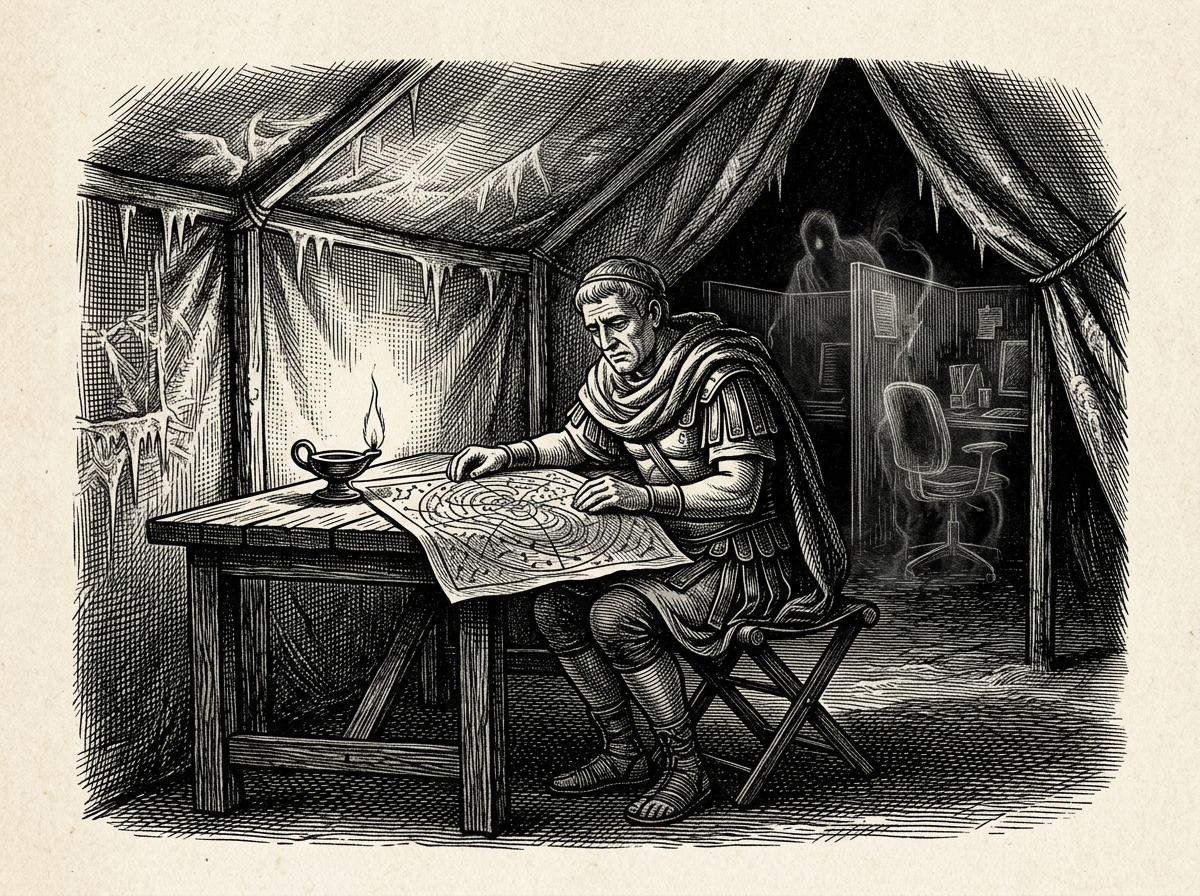
Marcus Aurelius penned Book 6 amidst the brutal, freezing realities of the Marcomannic Wars along the northern frontier. Dictating to himself while sitting in a cold military tent surrounded by death and logistics, the Emperor was not seeking emotional comfort or team unity. He was grounding himself in Stoic physics, specifically the doctrine of sympatheia, to endure the staggering weight of ruling an empire in crisis.
In Stoic physics, the universe is a single, rational organism governed by a continuous tension (tonos) of active breath (pneuma). Marcus was reminding himself that every event, no matter how catastrophic or painful, is bound to the rational order of the cosmos. To resist one's duty or resent one's burden is to attempt to tear oneself away from the cosmic whole.
The Opening Counter-Punch
The commentary guts a cosmic, metaphysical law of physics and degrades it into a banal corporate HR memo about team synergy. It takes Marcus's rigorous meditation on cosmic necessity and dilutes it into a squishy sentiment about getting along at the office. Where the Emperor demanded submission to the rational order of the universe, the commentary merely begs desk workers to collaborate nicely.
The Breakdown
- By comparing cosmic unity to how "even inside the same company, people selfishly forget they’re working together," the commentary trivializes a profound law of Stoic physics into workplace complaints about office politics. Marcus was articulating the structural cohesion of the entire universe, not offering a scolding critique to middle managers who fail to share project deliverables.
- The commentary claims that historical horrors occurred because people forgot "how we’re related to our fellow human beings and the environment," replacing the Stoic concept of rational cosmic order with modern sentimental empathy. In standard Stoic thought, cruelty stems from moral ignorance (amathia) and misplaced value on externals, not a lack of warm emotional feelings toward nature or colleagues.
- The text instructs the reader to simply "remember that we are woven together and that each of us plays a role (good, bad, or ugly)", transforming an active moral obligation into a passive, feel-good observation. The Academic translation stresses an underlying "common friendship" rooted in physical reality that demands active, rational cooperation with duty, whereas the commentary allows the reader to sit back as a spectator to their own participation in the world.
Application of the True Lesson
The standard academic rendering demands that you recognize yourself as an inseparable part of a larger rational whole, requiring you to act in accordance with cosmic nature regardless of personal discomfort.
To practice this, accept a frustration, hardship, or difficult person in your life today without complaint, treating the circumstance not as an unfair interruption, but as an integral thread woven into the necessary fabric of your day.
How the Philosopher Would Respond
Marcus Aurelius would scoff at reducing the cosmic architecture of the universe down to an inspirational pep talk for co-workers.
“We are made for cooperation, like feet, like hands, like the rows of the upper and lower teeth. To act against one another then is contrary to Nature.” - MARCUS AURELIUS, MEDITATIONS, 2.1
Related dispatches
MORAL REFRAMING: ASSET MANAGEMENT · A Critique of Modern Stoicism
Virtue is a moral fortress, not a personal asset strategy
02 Oct 2026
CHIEF DEFECT: SENTIMENTAL STOICISM · A Critique of Modern Stoicism
Stoic duty is an unyielding mandate, not a cozy affirmation.
01 Oct 2026
CORE FALLACY: DELUSIONAL DENIAL · A Critique of Modern Stoicism
Modern Stoicism trades hard moral courage for cheap mental escape
30 Sept 2026
EXISTENTIAL REDUCTION: BOURGEOIS NOSTALGIA · A Critique of Modern Stoicism
Don't reduce Seneca's political exile to cozy lifestyle downsizing
29 Sept 2026