PHILOSOPHICAL ERROR: SELF OPTIMIZATION
Stop turning Epictetus’s brutal moral surgery into self-optimization.
03 Sept 2026
2nd September - The Philosopher’s School is a Hospital | Sanitizing Soul Surgery into a Spa Treatment
The Text in Question
The Daily Stoic Rendering
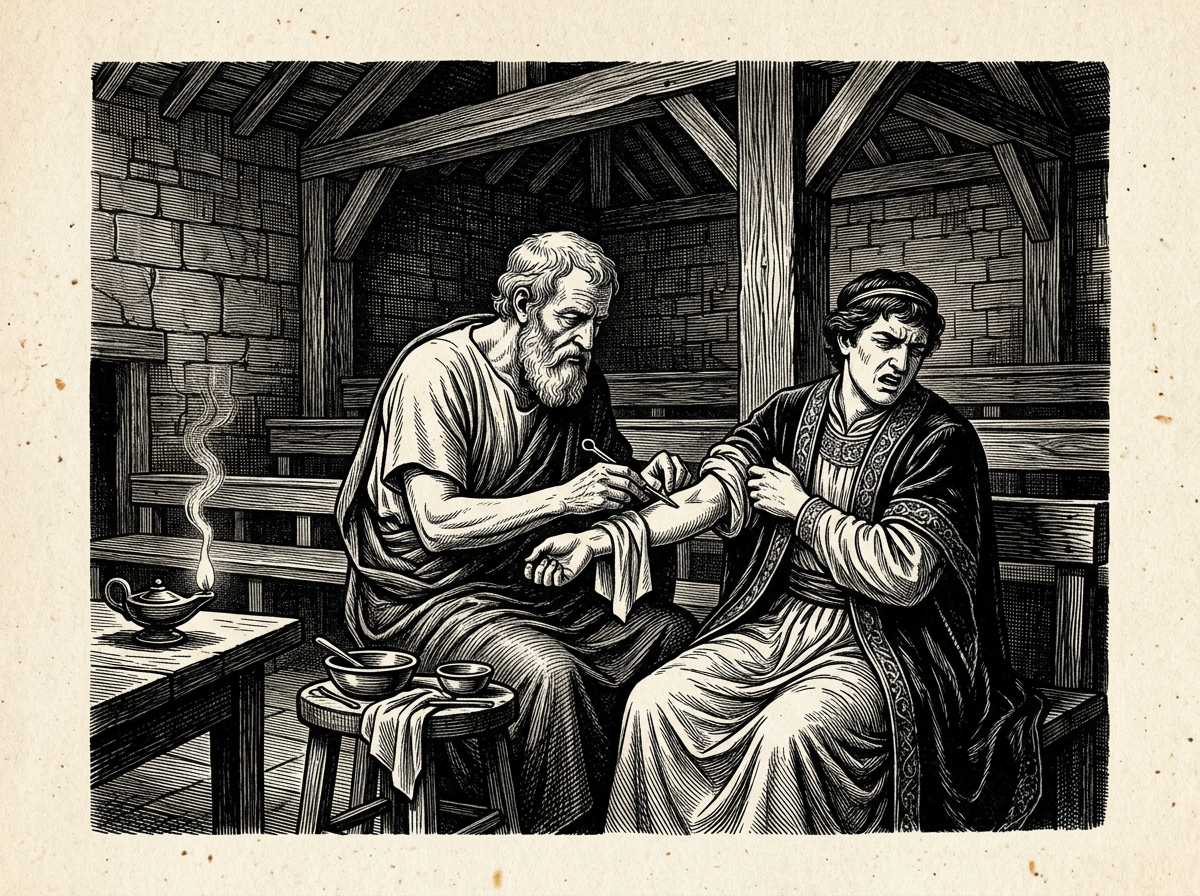
“Men, the philosopher’s lecture-hall is a hospital, you shouldn’t walk out of it feeling pleasure, but pain, for you aren’t well when you enter it.”
Standard Academic Translation
“Men, the lecture-room of the philosopher is a hospital; you ought not to walk out of it in pleasure, but in pain. For you are not in health when you come in: one has a shoulder put out, another an abscess, another a fistula, another a headache.” - Epictetus, Discourses, 3.23.30 (Trans. W.A. Oldfather)
ACADEMIC CONTEXT & BREAKDOWN
Epictetus barked these words in a drafty, unheated classroom in Nicopolis, targeting pampered young Roman aristocrats who treated philosophy as performance art. He was a former slave who had suffered a broken leg at the hands of his master, lecturing vanity-driven students who wanted flattering speeches rather than moral reform. The physical scene was raw: Epictetus pointing directly at the students' moral rot, explicitly comparing their ethical failings to repulsive, oozing ailments like fistulas and abscesses.
The original passage is an aggressive diagnosis of existential sickness, demanding that the listener recognize their own deep moral corruption. Epictetus insists that true philosophical instruction must feel like setting a bone or lancing an infection, requiring total submission to painful self-correction.
THE OPENING COUNTER-PUNCH
The commentary guts Epictetus’s brutal medical intervention and downgrades it to a routine workout session. By swapping severe moral pathology for minor physical therapy, it tricks the modern reader into viewing their deep ethical flaws as mere performance bottlenecks. It converts an agonizing confrontation with personal vice into a self-congratulatory wellness ritual.
THE BREAKDOWN
- The commentary dilutes Epictetus's brutal list of physical deformities into a mild wellness visit, claiming that "how many people you see lying about, getting massages, it’s not a fun place to be." By framing the hospital as a place where people lounge around getting massages, it strips away the visceral terror of 1st-century surgery to make the philosophy feel safe and approachable.
- The text reframes moral failure as a simple physical weakness, asserting that experts know "what to subject to stress so that they can strengthen where the patient is weak." Epictetus was not trying to help you build muscle for a life of achievement; he was trying to amputate your vanity before it destroyed your character.
- The original meaning is completely distorted when the commentary claims that philosophical pain exists "so that you’ll develop the will to endure and persevere through life’s many difficulties." Epictetus demanded pain to cure your internal corruption, not to grant you higher resilience so you can grind harder at your day job.
LESSON & APPLICATION FROM THE ACADEMIC TRANSLATION
The Lesson: True philosophy is not self-optimization; it is an aggressive diagnosis of your own moral hypocrisy. You do not enter the text to feel validated or to build mental toughness, but to identify the ugly, festering vices you actively conceal from yourself.
The Practice: Seek out feedback and self-examination that causes genuine shame rather than mild discomfort. When reading primary texts or evaluating your conduct, focus strictly on the areas where you feel defensive, embarrassed, or exposed, rather than the passages that confirm your current habits.
HOW THE PHILOSOPHER WOULD RESPOND
Epictetus would utterly despise this attempt to turn his medical clinic into a physical therapy clinic for the ambitious. He did not want to send you back into the world stronger for your personal pursuits—he wanted to destroy the illusions that made you seek those pursuits in the first place.
“I incite you to pleasure? What, am I saying things to cure you, or to get your applause? Speak to me, rather, so that I may see whether you are healed; show me your progress. No, you want to sit there and listen to praise! You are a fool if you think that this is what philosophy is for.” - Epictetus, Discourses, 3.23.23
27
Related dispatches
MORAL DILUTION: CORPORATE STOICISM · A Critique of Modern Stoicism
Modern self-help flattens Seneca's horror into corporate risk management.
27 Oct 2026
INTELLECTUAL EROSION: MODERN STOICISM · A Critique of Modern Stoicism
Modern Stoicism dilutes Seneca’s vast blueprint into instant comfort.
26 Oct 2026
ETHICAL DRIFT: BOURGEOIS OPTIMIZATION · A Critique of Modern Stoicism
Modern self-help turns Epictetus's radical freedom into careerist optimization.
25 Oct 2026
KEY FLAW: DILUTED DISCIPLINE · A Critique of Modern Stoicism
True moral strength demands laborious excavation, not positive thinking.
24 Oct 2026