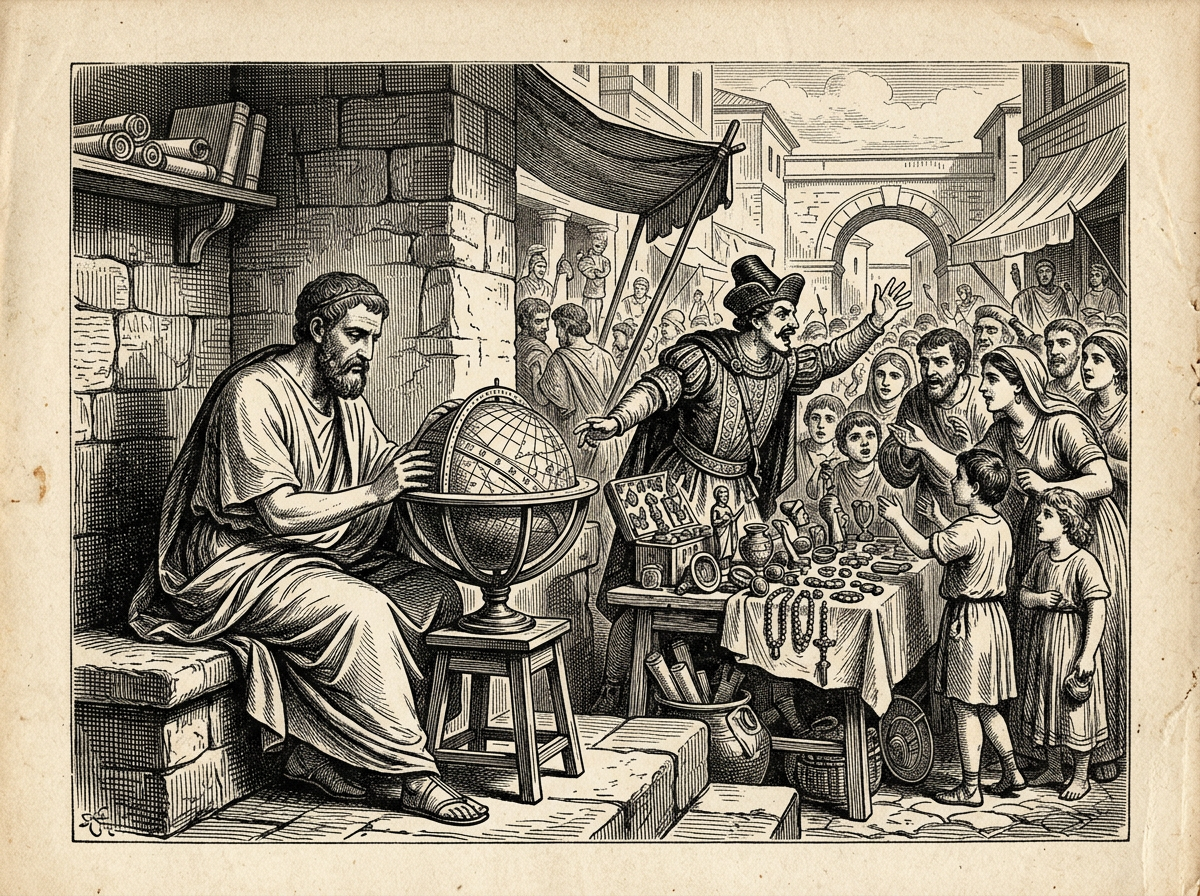
STOIC REDUCTION: TACTICAL VANITY
Modern self-help turns Stoic cosmic duty into competitive vanity.
15 Aug 2026
16th August - Anything Can Be An Advantage
16th August - Anything Can Be An Advantage
The commentary:
“Just as the nature of rational things has given to each person their rational powers, so it also gives us this power just as nature turns to its own purpose any obstacle or any opposition, sets its place in the destined order, and co-opts it, so every rational person can convert any obstacle into the raw material for their own purpose.”
MARCUS AURELIUS, MEDITATIONS, 8.35
Chaff & Wheat Analyse:
At five feet three inches tall, Muggsy Bogues was the shortest player ever to play professional basketball. Throughout his career, he was snickered at, underestimated, and counted out. But Bogues succeeded by turning his height into the very thing that made him nationally known. Some people looked at his size as a curse, but he saw it as a blessing. He found the advantages contained within it. In fact, on the court small size has many advantages: speed and quickness, the ability to steal the ball from unsuspecting (and significantly taller) players, to say nothing of the fact that players just plain underestimated him. Could this approach not be useful in your life? What things do you think have been holding you back that, in fact, can be a hidden source of strength?
Marcus Aurelius wrote about cosmic integration. He meant that a rational mind accepts external events, neutralizes their power to harm the soul, and uses them as fuel to fulfill its natural duty to the logos, the collective good.
mutates this into transactional narcissism. It strips away virtue, duty, and community, replacing them with personal fame, athletic success, and outsmarting rivals.
How the Commentary Distorts Truth
- Cosmic Duty vs. Personal Ambition: Marcus demands that you integrate obstacles into "the destined order." The commentator twists this into gaining "national renown" and stealing basketballs.
- Moral Strength vs. Tactical Gain: Marcus speaks of inner rational sovereignty. The commentary downgrades it to a life hack for competitive advantage.
- Acceptance vs. Self-Glorification: Stoicism demands self-effacement. The commentary preaches self-marketing.
Ignorance or Self-Aggrandizement?
This distortion is not an intellectual accident; it is pandering for popularity. True Stoicism is uncomfortable, demanding, and utterly indifferent to human praise. It tells you that you are a tiny fragment of a vast universe, bound to die, with no right to complain or seek fame.
That raw truth does not sell self-help books.
To make the writing go viral and sell a feel-good product, the commentator sterilizes Stoicism. He transforms a solemn philosophy of endurance into a self-help hype track that flatters the reader’s ego, promising that their weaknesses are secretly superpowers meant to make them rich, famous, or winning. It is shallow populism masquerading as ancient wisdom.
Marcus Aurelius’s Ruthless Judgment
"You turn the logos into a game of ball. I spoke of the rational soul serving the whole; you speak of an individual serving his fame. You offer people candy to make them like you, teaching them to chase the praise of men a thing worthless, hollow, and fleeting. You have missed the entire point: the obstacle is not a springboard for your vanity. It is the arena for your character."
Related dispatches
MORAL DILUTION: CORPORATE STOICISM · A Critique of Modern Stoicism
Modern self-help flattens Seneca's horror into corporate risk management.
27 Oct 2026
INTELLECTUAL EROSION: MODERN STOICISM · A Critique of Modern Stoicism
Modern Stoicism dilutes Seneca’s vast blueprint into instant comfort.
26 Oct 2026
ETHICAL DRIFT: BOURGEOIS OPTIMIZATION · A Critique of Modern Stoicism
Modern self-help turns Epictetus's radical freedom into careerist optimization.
25 Oct 2026
KEY FLAW: DILUTED DISCIPLINE · A Critique of Modern Stoicism
True moral strength demands laborious excavation, not positive thinking.
24 Oct 2026