ETHICAL DRIFT: CONSUMER COMFORT
Turning Marcus Aurelius into a self-help hack dilutes ancient Stoicism
13 Aug 2026
13th August - Take Charge And End Your Troubles
“You’ve endured countless troubles all from not letting your ruling reason do the work it was made for enough already!”
MARCUS AURELIUS, MEDITATIONS, 9.26
The commentary:
How many things you fear have actually come to pass? How many times has anxiety driven you to behave in a way you later regret? How many times have you let jealousy or frustration or greed lead you down a bad road? Letting our reason rule the day might seem like more work, but it saves us quite a bit of trouble. As Ben Franklin’s proverb put it:
“An ounce of prevention is worth a pound of cure.”
Your brain was designed to do this work. It was meant to separate what is important from what is senseless, to keep things in perspective, to only become troubled by that which is worth becoming troubled about. You only need to put it to use.
Chaff & Wheat Analyse:
This commentary guts Stoicism of its moral core, reducing a brutal discipline of duty and self-sacrifice into a shallow self-help productivity hack.
The Distortion of Truth
Marcus Aurelius was not offering life-coaching tips to lower your daily stress levels or avoid feeling bad. When he wrote about the "ruling reason" (hegemonikon), he was demanding absolute mastery over ego, animal appetite, and fear in service of cosmic duty and the common good.
flips this entirely on its head:
- Duty replaced by comfort — Stoicism becomes a tool to "save quite a bit of trouble" rather than a command to endure suffering without complaint.
- Virtue replaced by utility — Reason is reduced to a brain function meant to optimize your daily mood and avoid regret, rather than a divine faculty aligning you with Logos.
- Commercialized self-help — Quoting Benjamin Franklin to frame Stoic philosophy as an "ounce of prevention" turns a spiritual struggle with mortality into a time-management trick.
Philosophy vs. Popularization
This is not an innocent misunderstanding of philosophy; it is deliberate pandering. True Stoicism demands uncomfortable self-examination and painful self-denial—concepts that do not sell books or generate clicks.
The commentator guts the philosophy's teeth to deliver a warm, flattering massage to the reader’s ego:
“Your brain was designed to do this... You only need to put it to use.”
By assuring readers that they are already capable and simply need to optimize their thoughts, the author avoids demanding true moral discipline. It is content designed for popularity, turning Marcus Aurelius into a feel-good fortune cookie.
Marcus Aurelius’s Ruthless Response
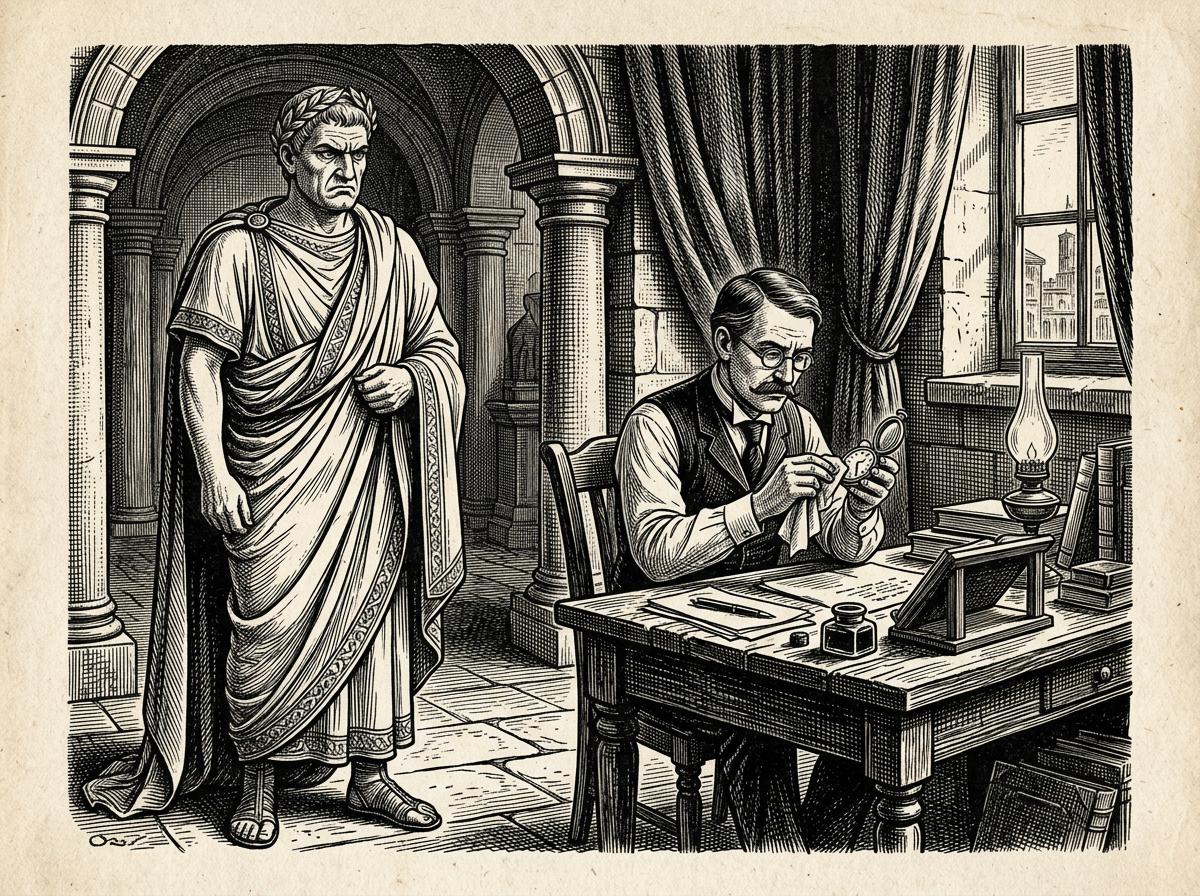
Marcus would despise this self-serving soft-soap:
"You twist the sacred work of the soul into a tool for personal ease. Reason was given to you to serve humankind and bow before nature, not to dodge anxiety or pamper your comfort. Stop flattering yourself. Act like a Roman, do your duty, and die without whining."
Related dispatches
MORAL DILUTION: CORPORATE STOICISM · A Critique of Modern Stoicism
Modern self-help flattens Seneca's horror into corporate risk management.
27 Oct 2026
INTELLECTUAL EROSION: MODERN STOICISM · A Critique of Modern Stoicism
Modern Stoicism dilutes Seneca’s vast blueprint into instant comfort.
26 Oct 2026
ETHICAL DRIFT: BOURGEOIS OPTIMIZATION · A Critique of Modern Stoicism
Modern self-help turns Epictetus's radical freedom into careerist optimization.
25 Oct 2026
KEY FLAW: DILUTED DISCIPLINE · A Critique of Modern Stoicism
True moral strength demands laborious excavation, not positive thinking.
24 Oct 2026