CORE ERROR: SELFISH VIRTUE
Modern self-help turns moral integrity into a hack for anxiety management
07 Oct 2026
7th October: A Selfish Reason To Be Good | The Reduction of Soul-Rot into a Nauseated Stomach
The Text in Question
The Daily Stoic Rendering
“The person who does wrong, does wrong to themselves. The unjust person is unjust to themselves making themselves evil.” - MARCUS AURELIUS, MEDITATIONS, 9.4
Standard Academic Translation
“He who does wrong acts unjustly against himself; he who commits injustice does harm to himself, by making himself evil.” - MARCUS AURELIUS, MEDITATIONS, 9.4 (C.R. Haines)
Academic Context & Breakdown
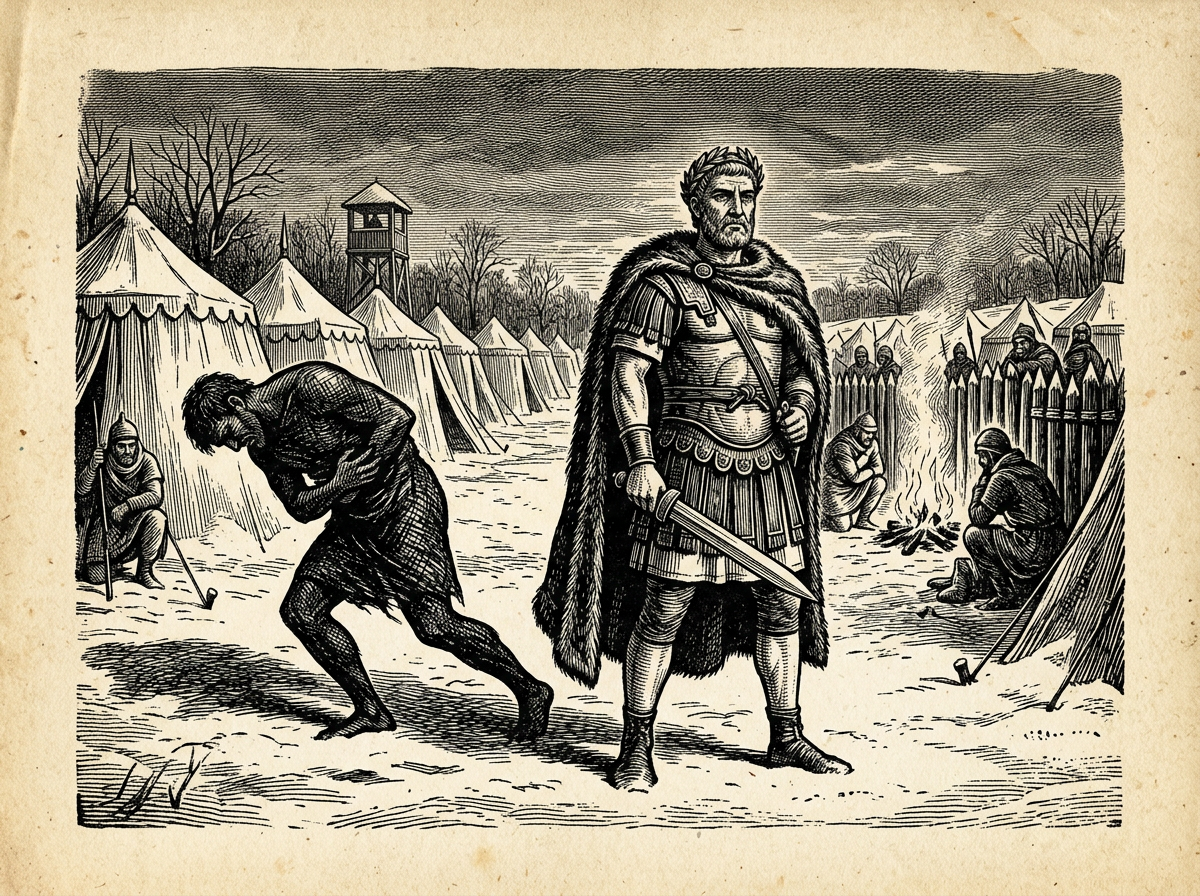
Marcus Aurelius scribbled these words in his private journals while encamped along the freezing northern frontier, managing a plague-ravaged empire while fending off Germanic invasions and internal political treason. Surrounded by duplicity and physical exhaustion, the Emperor was not trying to manage his digestion or avoid mild regret.
In Stoic metaphysics, the ruling center of the mind (hegemonikon) is the only true possession a human being holds. To commit an act of injustice is not merely to breach a social contract; it is an act of spiritual self-mutilation that fractures your own rational soul and degrades you from a human being into a beast.
The Opening Counter-Punch
The commentary guts a profound metaphysical reality and degrades it into a shallow tactic for anxiety management. It swaps Marcus Aurelius's absolute warning against moral self-destruction with a cheap, visceral appeal to physical discomfort and fear of getting caught. Where the Emperor demanded moral purity to safeguard the soul, the commentary merely begs you to refrain from bad behavior so you don't ruin your stomach.
The Breakdown
- The commentary claims that "there is a reason there’s often vomit at crime scenes," swapping Marcus Aurelius’s focus on internal moral corruption for a sensationalized graphic about physical nausea. The academic text asserts that injustice makes the actor evil (kakos), whereas the commentary alters the quote's core meaning to focus on visceral bodily reactions that have nothing to do with genuine Stoic character.
- By asking if "that moment when fear rises in your throat because you suspect you may get caught really worth it?", the commentary turns Stoic virtue into a self-serving risk calculation based entirely on avoiding external consequences. This lie completely reverses Marcus’s point: a Stoic refrains from vice because it destroys their character, not because they are terrified of suffering public shame or legal punishment.
- The text urges the reader to find "a selfish reason to not do wrong," attempting to use the ego's fear of bad feelings as a substitute for rational moral commitment. This trick corrupts the academic meaning, as Marcus never appealed to selfish emotional comfort, but rather commanded an objective recognition of the soul's internal injury.
Application of the True Lesson
The standard academic translation demands that you view moral integrity as its own ultimate reward, recognizing that committing an injustice harms your moral character long before any external consequence manifests.
To practice this today, examine a temptation to cut a corner, tell a white lie, or take unfair advantage, and reject it purely because doing so would compromise your moral character, regardless of whether anyone else would ever discover it or how it makes your body feel.
How the Philosopher Would Respond
Marcus Aurelius would despise seeing his rigorous internal accountability degraded into a self-absorbed lesson on avoiding upset stomachs and nervous anxiety.
“Loss is nothing else than change, and change is the delight of Nature... Will you then go on committing injustice, as if your rational soul were made for nothing higher?” - MARCUS AURELIUS, MEDITATIONS, 9.35
Related dispatches
MAIN ERROR: THERAPEUTIC REDUCTION · A Critique of Modern Stoicism
Stop treating Stoic virtue as therapy for professional jealousy
06 Oct 2026
SHALLOW READING: RECKLESS SPEECH · A Critique of Modern Stoicism
Why modern Stoicism reduces moral discipline to mere social politeness
05 Oct 2026
STOIC MISTRANSLATION: SOCIAL GUILT · A Critique of Modern Stoicism
Pop Stoicism trades cosmic endurance for easy moralizing
04 Oct 2026
CENTRAL ERROR: SENTIMENTAL REDUCTION · A Critique of Modern Stoicism
Stop turning Marcus Aurelius’s cosmic physics into corporate team synergy.
03 Oct 2026