STOIC MISTRANSLATION: SOCIAL GUILT
Pop Stoicism trades cosmic endurance for easy moralizing
04 Oct 2026
4th October: All For One, One For All | The Taming of Cosmic Duty into Social Consciousness
The Text in Question
The Daily Stoic Rendering
“That which isn’t good for the hive, isn’t good for the bee.” - MARCUS AURELIUS, MEDITATIONS, 6.54
Standard Academic Translation
“That which is not harmful to the city cannot harm the citizen either.” - MARCUS AURELIUS, MEDITATIONS, 6.54 (C.R. Haines)
Academic Context & Breakdown
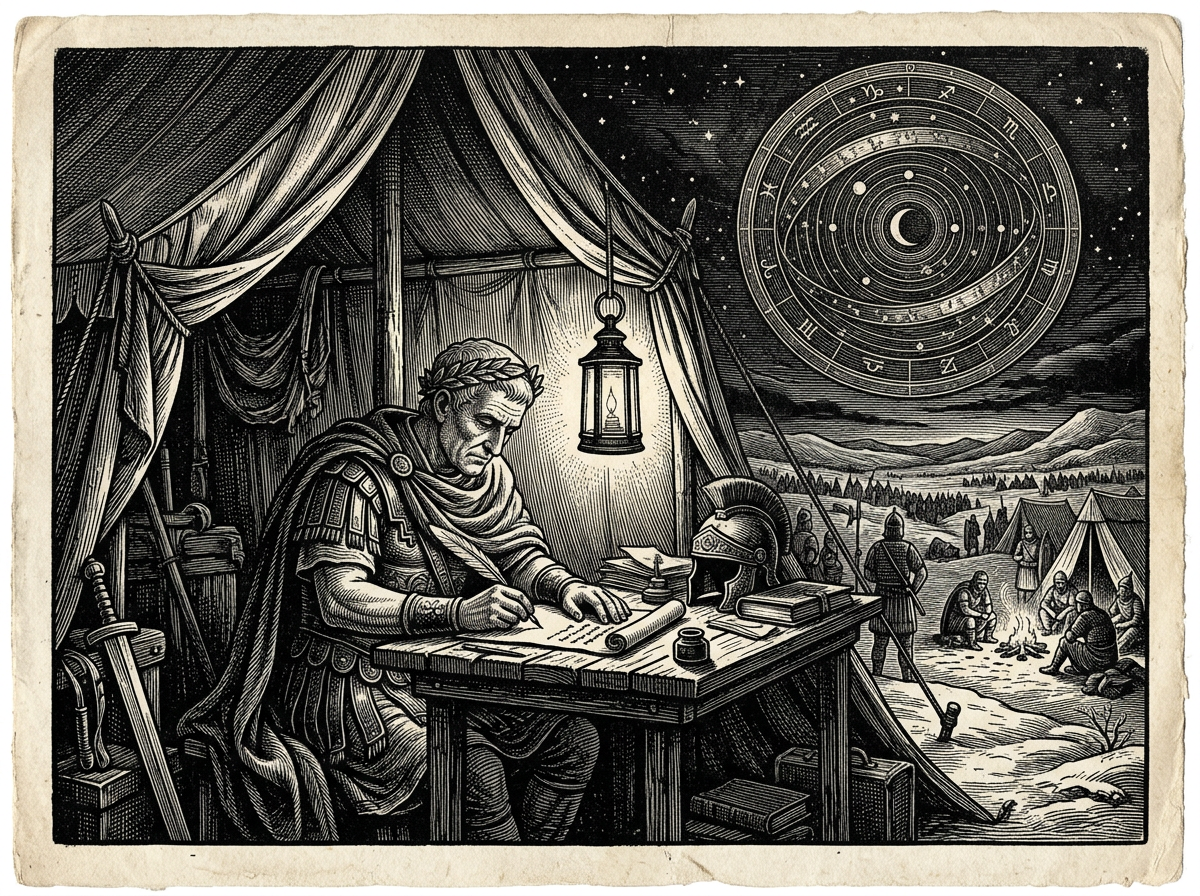
Marcus Aurelius penned this note to himself while encamped along the frozen, hostile Danube river during the Marcomannic Wars. Exhausted by continuous warfare, betrayals in Rome, and the overwhelming weight of governing a plague-stricken empire, he sought to maintain his psychological equilibrium.
The emperor was wrestling with personal hardship and public duty. In Stoic cosmology, the "city" (polis) represents the rational structure of the universe itself, not merely a political state. Marcus was reminding himself that if an event does not damage the moral integrity of the cosmic whole, it cannot truly injure the individual rational soul.
The Opening Counter-Punch
The commentary guts an uncompromising assertion of metaphysical resilience and degrades it into a moralizing lecture on social guilt. It flips Marcus Aurelius’s internal shield against personal suffering into an finger-wagging critique of predatory capitalism. Where the emperor demanded absolute personal endurance, the commentator substitutes a fashionable lecture on civic virtue.
The Breakdown
- The commentary pivots to attack "hedge fund managers who bet massively against the economy," hijacking Marcus Aurelius’s meditation on cosmic order to deliver an easy, pop-culture moral lecture. Marcus was not offering a critique of financial speculation or corporate greed; he was reminding himself to accept physical hardship without claiming personal injury.
- By claiming Marcus articulated a version of "cosmopolitanism saying that he was a citizen of the world," the commentary swaps the rigorous Stoic duty toward rational nature with a modern, squishy globalism. The text misrepresents cosmic physics (sympatheia) as mere social awareness, erasing the stark demands of rational self-mastery in favor of vague community spirit.
- The commentary asserts that Marcus meant "just because something is bad for you doesn’t mean it’s bad for everyone," reversing the actual logical direction of the academic text. The original passage does not ask you to accommodate the group's preferences; it establishes that true personal harm is impossible unless the rational whole itself is compromised.
Application of the True Lesson
The standard academic translation demands that you stop treating personal inconveniences, setbacks, or physical pains as true evils.
To practice this, take a current personal disappointment or hardship today and reframe it immediately: recognize that unless it degrades your moral character, it has not harmed your soul or damaged the order of the world.
How the Philosopher Would Respond
Marcus Aurelius would despise having his private, rigorous self-discipline weaponized as a trite socio-economic critique.
“Does what has happened keep you from being just, generous, temperate, reasonable, deliberate, truthful, free, self-respecting?” - MARCUS AURELIUS, MEDITATIONS, 4.49
Related dispatches
CENTRAL ERROR: SENTIMENTAL REDUCTION · A Critique of Modern Stoicism
Stop turning Marcus Aurelius’s cosmic physics into corporate team synergy.
03 Oct 2026
MORAL REFRAMING: ASSET MANAGEMENT · A Critique of Modern Stoicism
Virtue is a moral fortress, not a personal asset strategy
02 Oct 2026
CHIEF DEFECT: SENTIMENTAL STOICISM · A Critique of Modern Stoicism
Stoic duty is an unyielding mandate, not a cozy affirmation.
01 Oct 2026
CORE FALLACY: DELUSIONAL DENIAL · A Critique of Modern Stoicism
Modern Stoicism trades hard moral courage for cheap mental escape
30 Sept 2026