CORE DISTORTION: CAREER HUSTLE
Stop turning Seneca's existential terror into a corporate pep talk
16 Sept 2026
16th September: Anyone Can Get Lucky, Not Everyone Can Persevere | The Fetishization of Meritocratic Hustle in Place of Existential Tragedy
The Text in Question
The Daily Stoic Rendering:
“Success comes to the lowly and to the poorly talented, but the special characteristic of a great person is to triumph over the disasters and panics of human life.” - Seneca, On Providence, 4.1
Standard Academic Translation trans. Audrey Stewart:
"Prosperity can come to the vulgar and to low talents; but to tame the disasters and terrors of mortal life is the peculiar privilege of a great man." - Seneca, On Providence, 4.1
Academic Context & Breakdown
Seneca wrote De Providentia (On Providence) late in life under the increasingly paranoid and tyrannical reign of Emperor Nero the very student he had spent years attempting to guide. Suffering from chronic respiratory disease, exiled to Corsica for years, and watching his political influence dissolve into imminent danger, Seneca was not giving a motivational speech to careerists seeking a promotion. He was wrestling with the ultimate question of divine justice: why do terrible catastrophes happen to good people?
In the original Latin, Seneca addresses his friend Lucilius not to offer a formula for career achievement, but to explain that fate tests the noble soul through hardship the way fire tests gold. The "terrors of mortal life" (mortaliūm terrōrēs) are not minor setbacks on the path to financial or personal success; they are exile, torture, illness, and execution. Seneca’s argument is radical and stark: true greatness lies not in achieving external victories, but in maintaining an unshakeable moral soul when the universe strips away everything you own.
The commentary neuters Seneca's existential theology into a cozy narrative about meritocratic hustle. It transforms a terrifying defense of divine providence under political terror into a comforting pep talk for corporate strivers. By recasting cosmic disaster as a stepping stone to personal achievement, the commentary turns Stoic endurance into a branding exercise for modern ambition.
The Opening Counter-Punch
The commentary guts Seneca’s grim meditation on mortality and replaces it with a suburban lecture on career envy. It takes a severe treatise on enduring political terror and economic ruin, degrading it into a motivational speech about out-hustling your lazy coworkers.
The Breakdown
- The commentary reduces cosmic disaster to routine career frustration, claiming that Seneca's focus is on the person who "makes it to their destination through hard work and honesty." Seneca was not celebrating career grit or honest labor in the marketplace; he was discussing how the wise man tames existential terror and grief. By redefining "disasters and terrors" as mere professional hurdles, the commentary shifts the horizon from moral survival to worldly accomplishment.
- The commentary injects petty social envy into a solemn philosophical defense of fate, urging us to consider whether "the easy life really that admirable" when looking at lucky peers. Seneca was not trying to help jealous strivers feel superior to their pampered acquaintances. He was explaining why the gods subject virtuous men to brutal suffering not so they can feel self-righteous, but so their character can be tempered against fate.
- The commentary shifts Seneca’s metric of spiritual trial into a secular celebration of self-mastery for personal gain, praising the individual who "overcame not just the external obstacles to success but mastered themselves." Seneca never defined virtue as a tool for overcoming obstacles to "success." In Stewart’s translation, the goal is not to win at life, but to demonstrate that a great soul remains undefeated even when crushed by absolute catastrophe.
The Lesson of the Text
The academic translation teaches that hardship is not a temporary inconvenience on the path to personal triumph, but the mandatory proving ground of human character. We apply this by ceasing to view misfortune as an unfair interruption to our success, recognizing it instead as the exact material required to test whether our virtue is real.
How the Philosopher Would Respond
Seneca would despise this attempt to flatten existential endurance into a blueprint for middle-class careerism. He did not write to soothe your envy of the fortunate, but to remind you that the gods give their hardest battles to those they intend to test.
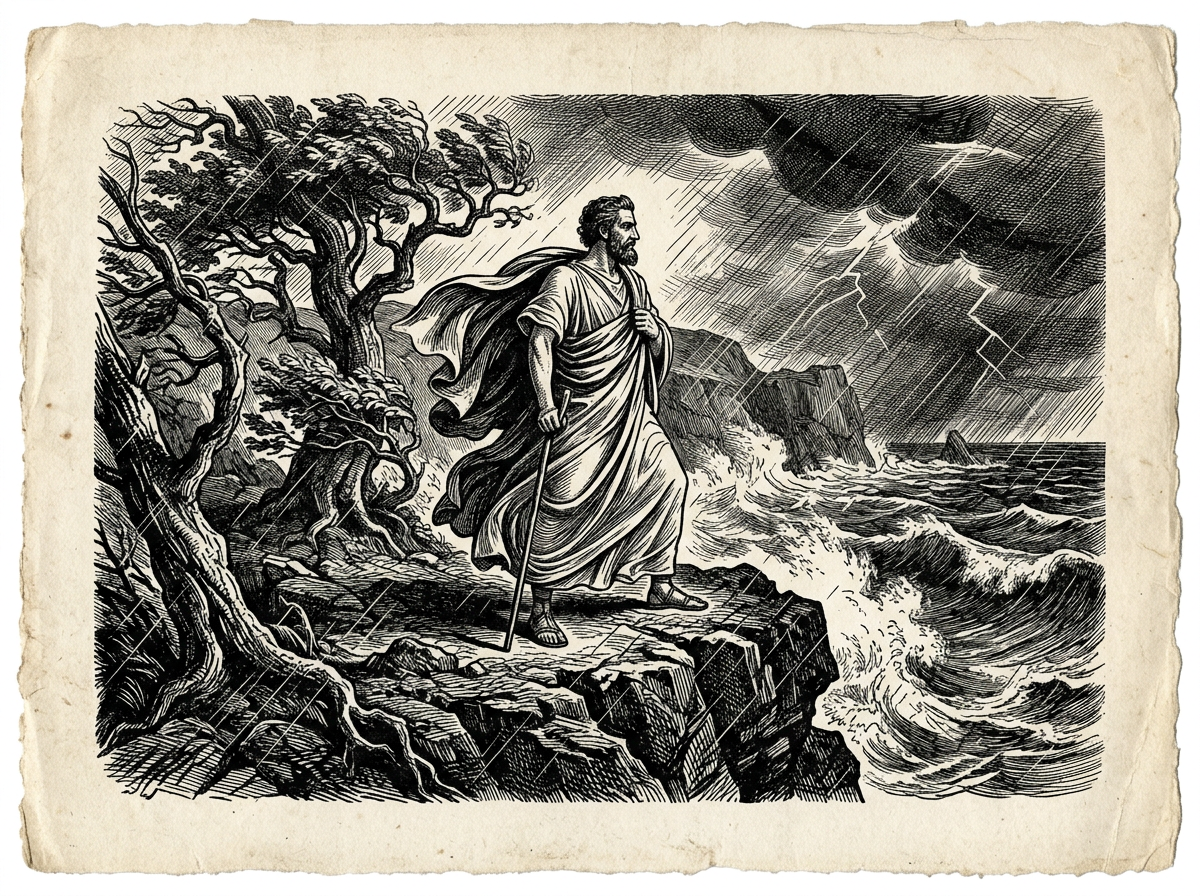
"Why do you wonder that good men are shaken, in order that they may be made strong? No tree becomes firm and rooted unless the wind frequently blows against it; for by the very tossings of the wind its grip is tightened, and it fixes its roots more firmly in the earth." - Seneca, On Providence, 4.6
Related dispatches
MAIN ERROR: EGOIC REDUCTION · A Critique of Modern Stoicism
Modern self-help turns Epictetus’s humbling theology into a cheap life hack.
28 Sept 2026
CRITICAL FLAW: TRIVIALIZED TRAUMA · A Critique of Modern Stoicism
Modern Stoicism turns existential trauma into wealth management anxiety.
28 Sept 2026
LIFESTYLE TRAP: BOURGEOIS LEISURE · A Critique of Modern Stoicism
How modern self-help turned Seneca's warnings into resort etiquette.
28 Sept 2026
CHIEF DISTORTION: LIFESTYLE OPTIMIZATION · A Critique of Modern Stoicism
Cold showers cannot save you from self-imposed moral servitude
28 Sept 2026