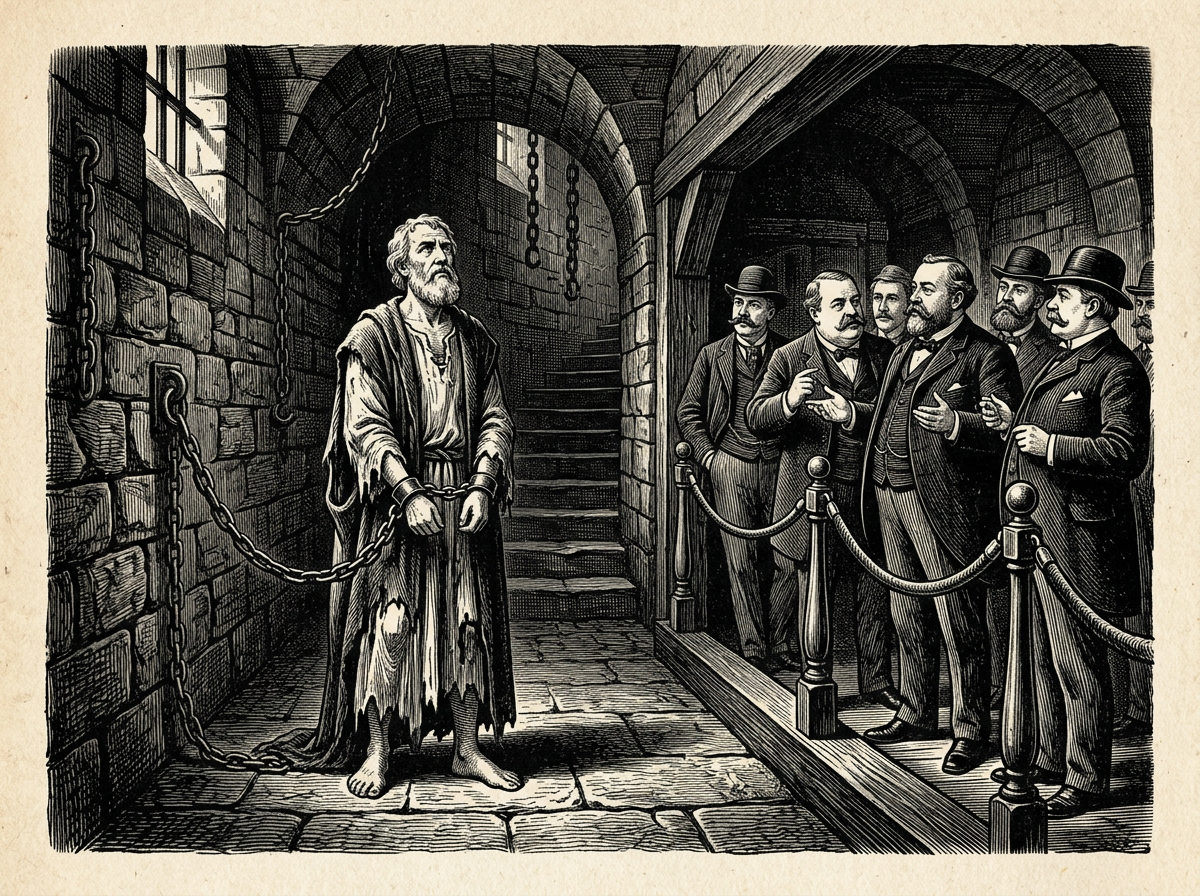
CORE FLAW: COMMODIFIED RESILIENCE
Stop turning ancient moral freedom into a corporate productivity hack
05 Sept 2026
5th September: Focus On What Is Yours Alone | Trivializing Moral Freedom into Survival Tactics for Executive Success
The Text in Question
The Daily Stoic Rendering:
“Remember, then, if you deem what is by nature slavish to be free, and what is not your own to be yours, you will be shackled and miserable, blaming both gods and other people. But if you deem as your own only what is yours, and what belongs to others as truly not yours, then no one will ever be able to coerce or to stop you, you will find no one to blame or accuse, you will do nothing against your will, you will have no enemy, no one will harm you, because no harm can affect you.”
Standard Academic Translation:
“Remember, then, that if you attribute freedom to things that are by nature enslaved, and take what belongs to others for your own, you will be hindered, you will lament, you will be disturbed, you will find fault both with gods and men. But if you take for your own only that which is truly yours, and that which belongs to others as in truth belonging to others, then no one will ever compel you, no one will restrain you, you will find fault with no one, you will accuse no one, you will do nothing against your will, no one will harm you, you will have no enemy, for you will suffer no harm.” - Epictetus, Enchiridion, 1.3 (trans. W.A. Oldfather)
Academic Context & Breakdown
Epictetus was born a slave in Hierapolis and spent his youth disabled and owned by a brutal imperial administrative secretary in Rome. Dictating these words in exile after Emperor Domitian banished all philosophers, he was not pitching productivity hacks to ambitious professionals. He was defining the ontological boundaries of human freedom under total physical subjection.
In the academic translation, Epictetus draws an absolute metaphysical line between the moral sphere (prohairesis) and the external world. True freedom is not an outcome or a coping mechanism; it is the radical realization that your moral soul cannot be chained even if your body is broken in irons.
The Opening Counter-Punch
The Daily Stoic hijacks Epictetus's profound ontological liberation and degrades it into a grit-and-resilience case study for corporate boardrooms. It co-opts real military horror to serve as an extreme motivational parable, selling a philosophy of radical moral independence as a mere tool for self-preservation and goal achievement.
The Breakdown
- Exploiting Trauma for Management Advice — The commentary uses Stockdale's agony to plug "the business classic Good to Great," shamelessly shifting Epictetus's spiritual doctrine of internal freedom into a corporate strategy for market endurance.
- Confusing Moral Freedom with Psychological Grit — The text claims Stockdale "quenched his desires and focused exclusively on what he did control: himself" to survive, reducing Epictetus's cosmic principle of absolute moral immunity to a mere psychological coping strategy for staying alive.
- Diverting the Object of Control — By framing the trial as a story of someone who "persevered and did make it out," the commentary subtly changes the goal from preserving moral virtue at all costs to achieving external survival, directly contradicting Epictetus's insistence that physical outcomes are fundamentally not ours to control.
Lessons from the Academic Text
The academic text teaches that your freedom is defined entirely by where you place your sense of ownership. If you attach your happiness to your body, status, or external outcomes, you guarantee your own mental enslavement.
To practice this, audit your daily frustrations immediately. Whenever you feel anger, hindrance, or anxiety, identify the external element you are mistakenly treating as "yours"—whether it is another person's behavior, a project's timeline, or your physical comfort—and consciously surrender your claim over it.
How the Philosopher Would Respond
Epictetus would sharply rebuke this attempt to turn his doctrine of moral freedom into an achievement metric for survivors and executives. He would remind us that the goal of philosophy is not to endure external hardship so you can escape it, but to realize that your soul remains free even if you die in chains.
“If you regard as your own only what is yours, and what belongs to others as belonging to others, no one will ever compel you, no one will restrain you... But if you desire any of the things which are not in your own power, you must necessarily be disappointed, and if you wish to avoid any of them, you must fall into misfortune.” - Epictetus, Discourses, I.1.22
Related dispatches
MORAL DILUTION: CORPORATE STOICISM · A Critique of Modern Stoicism
Modern self-help flattens Seneca's horror into corporate risk management.
27 Oct 2026
INTELLECTUAL EROSION: MODERN STOICISM · A Critique of Modern Stoicism
Modern Stoicism dilutes Seneca’s vast blueprint into instant comfort.
26 Oct 2026
ETHICAL DRIFT: BOURGEOIS OPTIMIZATION · A Critique of Modern Stoicism
Modern self-help turns Epictetus's radical freedom into careerist optimization.
25 Oct 2026
KEY FLAW: DILUTED DISCIPLINE · A Critique of Modern Stoicism
True moral strength demands laborious excavation, not positive thinking.
24 Oct 2026