CHIEF ERROR: HERO WORSHIP
Pain demands internal discipline, not comforting historical anecdotes
18 Sept 2026
18th September: Dealing With Pain | The Trivialization of Physical Agony into Historical Hero Worship
The Text in Question
The Daily Stoic Rendering:
“Whenever you suffer pain, keep in mind that it’s nothing to be ashamed of and that it can’t degrade your guiding intelligence, nor keep it from acting rationally and for the common good. And in most cases you should be helped by the saying of Epicurus, that pain is never unbearable or unending, so you can remember these limits and not add to them in your imagination. Remember too that many common annoyances are pain in disguise, such as sleepiness, fever and loss of appetite. When they start to get you down, tell yourself you are giving in to pain.” - Marcus Aurelius, Meditations, 7.64
Standard Academic Translation:
"In pain let this thought be present, that it is no disgrace, nor does it make the ruling center worse, for it does not corrupt it either so far as it is rational or so far as it is social. Further, in most pain let the saying of Epicurus succour thee, that 'pain is neither intolerable nor everlasting, if thou rememberest its limits and addest nothing to it in imagination.' Remember this too, that many things which are disagreeable are the same as pain, though we do not observe it, such as drowsiness and heat and loss of appetite. When then thou art discontented with any of these, say to thyself, 'Thou art yielding to pain.'" - Marcus Aurelius, Meditations, 7.64 (trans. A.S.L. Farquharson)
Academic Context & Breakdown
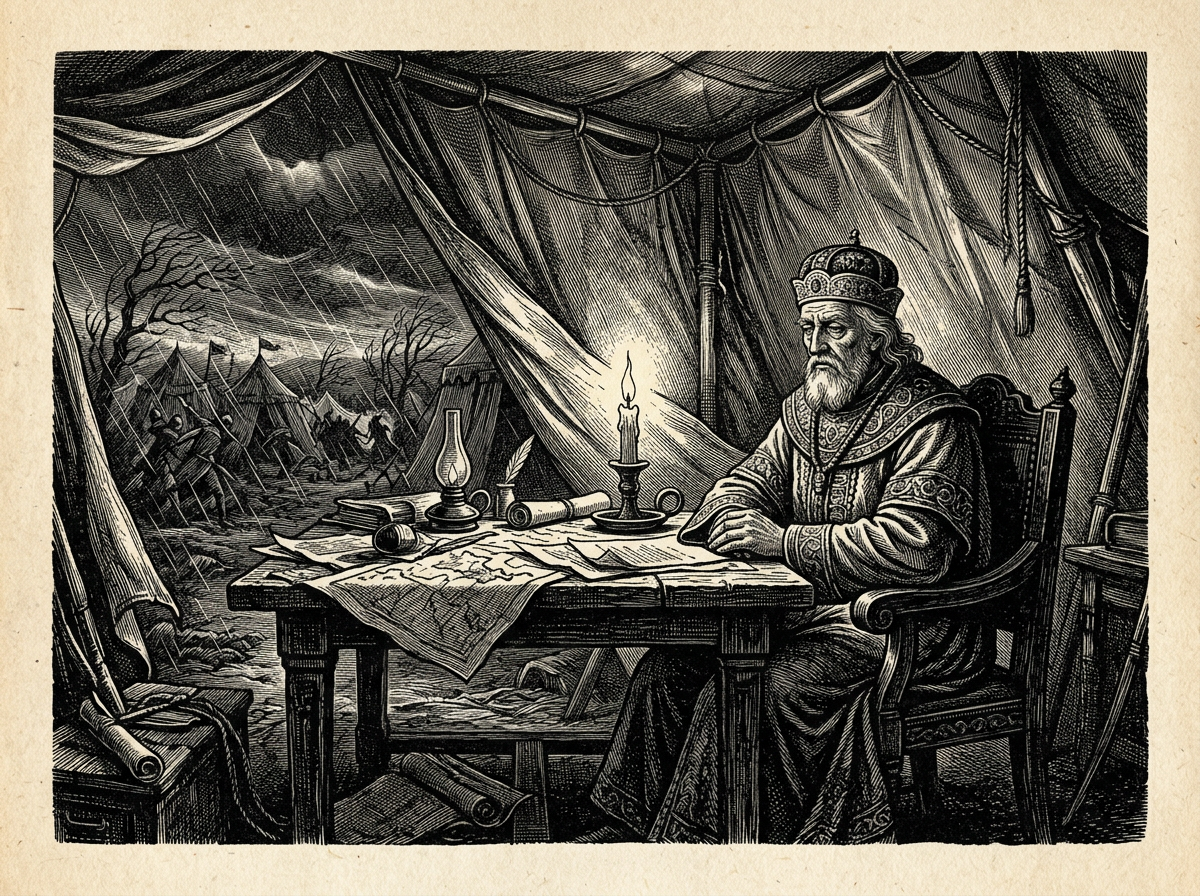
Marcus Aurelius penned Book 7 while suffering from severe, chronic chest and stomach ailments likely exacerbated by the Antonine Plague ravaging his military camps along the Danube. He was an aging emperor enduring extreme physical agony, sleep deprivation, and the constant threat of death, yet he possessed no modern pain relief or anesthetic luxuries. He was not looking for an inspirational celebrity story to cheer himself up. He was performing immediate, emergency surgery on his own consciousness to prevent physical agony from breaking his reason.
In Farquharson's translation, Marcus isolates the "ruling center" (hegemonikon) from the body's raw nervous system. He invokes Epicurus to remind himself that pain is bounded by time and intensity: if severe, it ends quickly in death; if chronic, it becomes tolerable. Marcus commands himself not to pollute his rational mind with imaginative catastrophizing, while explicitly treating petty daily discomforts like heat, fatigue, or illness as test cases of physical pain that threaten to erode his moral duty.
The commentary hijacks an internal protocol for psychological survival and replaces it with a theatrical biography of Winston Churchill. It shifts the entire focus away from immediate mental mastery and reframes Stoicism as admiring historic political figures. By substituting external hero-worship for rigorous internal discipline, the commentary degrades Marcus's spiritual practice into a cozy, cinematic bedtime story.
The Opening Counter-Punch
The commentary guts Marcus Aurelius’s grueling mental discipline and replaces it with an irrelevant historical vignette. It takes a severe manual on detachment from bodily suffering and degrades it into a sentimental tale about Winston Churchill tipping a driver.
The Breakdown
- The commentary replaces Marcus's precise internal mental command with external biographical distraction, dwelling on how "Winston Churchill was struck crossing the street by a car going more than thirty miles an hour." Marcus Aurelius was not telling himself anecdotes about heroic world leaders to feel inspired. By shifting the focus to a dramatic historical event, the commentary distracts the reader from the actual work of guarding their own "ruling center."
- The commentary changes Marcus's cold observation on bodily pain into a romanticized narrative of grand altruism, praising how Churchill "tried to offer him, the man who had nearly killed him some money." Marcus was addressing the raw mechanics of sensation and warning himself not to let physical discomfort corrupt his rationality. The commentary distorts a private psychological strategy for enduring agony into a public spectacle of high-minded nobility.
- The commentary reduces Marcus’s rigorous discipline of the mind to a generic, passive optimism that "eventually all would be well again." In Farquharson's translation, Marcus gives no soft promises that external circumstances will improve; he demands that you actively refuse to add to your suffering through your imagination. The commentary rewires an unyielding mandate for self-mastery into a comforting, cliché guarantee of happy endings.
The Lesson of the Text
The academic translation teaches that pain and physical discomfort belong strictly to the body and cannot touch your moral reason unless you surrender to them in your mind. We apply this by catching ourselves when we amplify physical distress through complaints or mental catastrophizing, actively stripping away our dramatic narrative so only the bare physical sensation remains.
How the Philosopher Would Respond
Marcus Aurelius would flatly reject this attempt to turn a private struggle with physical torment into an entertaining historical parable. He did not write to admire the dramatic lives of famous men, but to keep his own mind uncorrupted by bodily agony until his final breath.
"Pain is either an evil for the body and if so, let the body declare it/or an evil for the soul; but the soul can preserve its own cloudless calm and deem it no evil. For every judgment and impulse and desire and aversion is within, and no evil can penetrate here." - Marcus Aurelius, Meditations, 8.28
Related dispatches
MAIN ERROR: EGOIC REDUCTION · A Critique of Modern Stoicism
Modern self-help turns Epictetus’s humbling theology into a cheap life hack.
28 Sept 2026
CRITICAL FLAW: TRIVIALIZED TRAUMA · A Critique of Modern Stoicism
Modern Stoicism turns existential trauma into wealth management anxiety.
28 Sept 2026
LIFESTYLE TRAP: BOURGEOIS LEISURE · A Critique of Modern Stoicism
How modern self-help turned Seneca's warnings into resort etiquette.
28 Sept 2026
CHIEF DISTORTION: LIFESTYLE OPTIMIZATION · A Critique of Modern Stoicism
Cold showers cannot save you from self-imposed moral servitude
28 Sept 2026