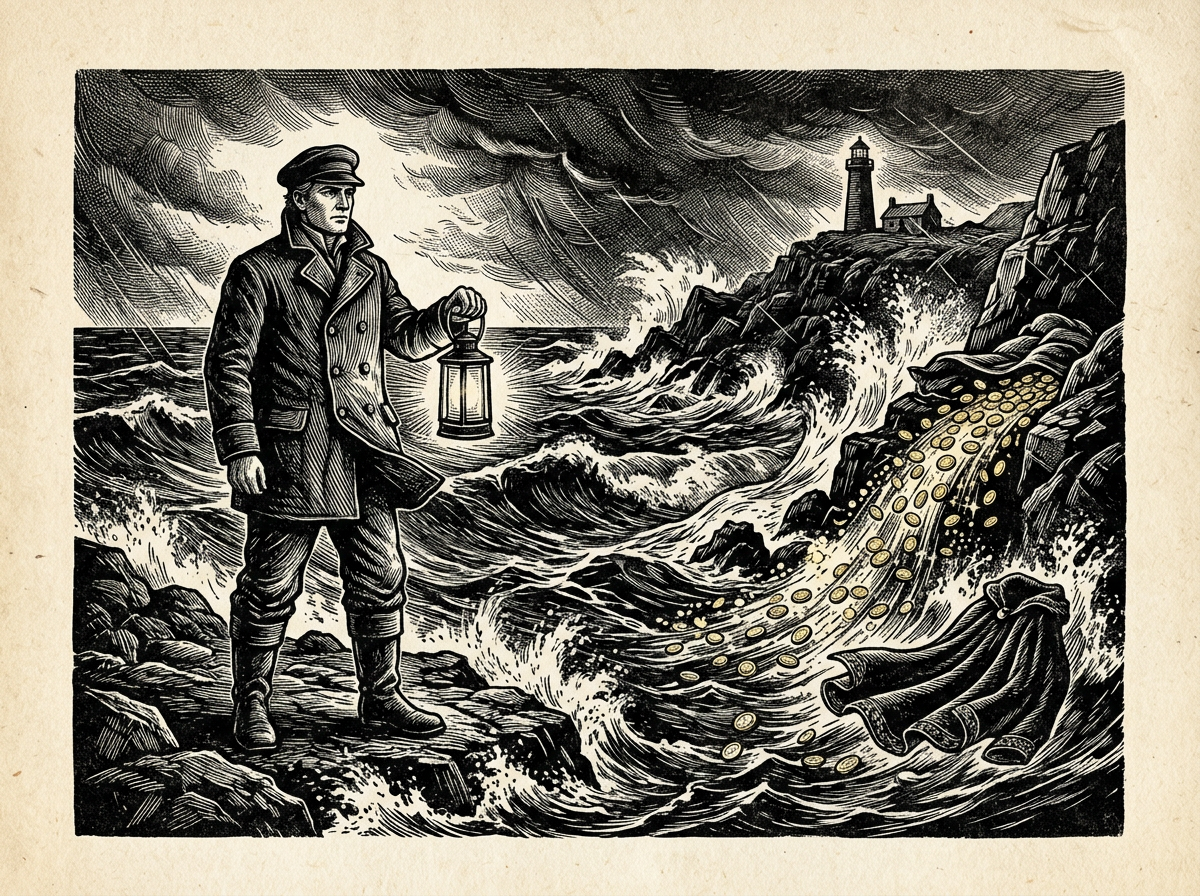
REALITY CHECK: EXTERNAL NEEDS
Stoic virtue offers an anchor, but external needs cannot be ignored.
29 Jul 2026
Virtue Over External Rewards
Indeed, if you find anything in human life better than justice, truth, self-control, courage-in short, anything better than the sufficiency of your own mind, which keeps you acting according to the demands of true reason and accepting what fate gives you outside of your own power of choice, I tell you, if you can see anything better than this, turn to it heart and soul and take full advantage of this greater good you've found."
The commentary:
-MARCUS AURELIUS, MEDITATIONS, 3.6.1
Chaff & Wheat Analyse:
We've all chased things we thought would matter. At some point,
We all thought that money would be the answer, that success was the highest prize, that the undying love of a beautiful person would finally warm us inside. What do we find when we actually attain these sacred objects? Not that they are empty or meaningless, only those who have never had them think that, but what we find is that they are not enough.
Money creates problems. Climbing one mountain exposes another,
higher peak. There is never enough love.
There is something better out there: real virtue. It is its own reward.
Virtue is the one good that reveals itself to be more than we expect and cannot be had in degrees. We simply have it, or we don't. And that is why virtue, made up as it is of justice, honesty, discipline, and courage, is the only thing worth striving for.
Meaning of the Passage
This passage, adapted from Marcus Aurelius's Meditations and interpreted through a modern Stoic lens, explores the ultimate pursuit of human fulfillment.
- The Illusion of External Rewards — It acknowledges a universal human experience: striving for external goals like wealth, achievement, or romantic love, believing they will permanently satisfy us.
- The Reality of Attainment — When we finally reach these goals, we realize they aren't meaningless, but they are ultimately insufficient. Money brings new complications, success leads to endless ambition, and external love cannot fill an internal void.
- The Superiority of Virtue — True contentment comes from internal excellence—specifically virtue, defined here as justice, truth, self-control, courage, and alignment with reason. Unlike external goods, virtue is completely within our control and provides a stable, self-sufficient foundation for life.
The Core Agreement
The central agreement between Marcus Aurelius's ancient quote and the modern commentary is that external success cannot provide ultimate psychological or spiritual peace.
Both viewpoints agree on a shared hierarchy of human value:
- External Goods (Lower Tier) — Money, status, and affection are nice to have, but they are ultimately fleeting, conditionally dependent, and incapable of securing lasting happiness on their own.
- Internal Character (Higher Tier) — Mastery over one's own mind, moral integrity, resilience, and rational action are the highest possible goods because they sustain us regardless of external circumstances.
Is It True?
Whether this perspective is "true" depends on how one defines a meaningful life, though psychological and philosophical evidence offers strong support for both sides:
Why It Is
True (The Case for Virtue and Internal Locus of Control)
- The Hedonic Treadmill — Modern psychology supports the idea that external achievements (wealth, status) offer only a temporary spike in happiness before humans adapt and return to their baseline. This mirrors the passage's warning that climbing one mountain only reveals another.
- Resilience in Crisis — External circumstances can be stripped away by fate, illness, or bad luck in an instant. Character, courage, and self-control remain entirely with the individual, making virtue a far more reliable anchor for peace of mind.
Where It Can Be
Challenged (The Case for External Well-Being)
- The Necessity of Material Security — Critics, including modern philosophers and economists, often point out that basic external goods (money, physical safety, health) are prerequisites for virtue. As Aristotle famously argued, it is very difficult to practice high virtue or clear reasoning if one is starving or freezing.
- The Value of Connection — While the passage diminishes romance and love as "not enough," human beings are fundamentally social creatures. Deep emotional bonds are not just bonus prizes; they are core biological and psychological needs for most people.
Ultimately, the passage is true in a functional sense: internal character is the only shield against an unpredictable world. However, most people find that a balanced life requires both the practical navigation of the external world and the cultivation of internal virtue.
Related dispatches
MAIN ERROR: EGOIC REDUCTION · A Critique of Modern Stoicism
Modern self-help turns Epictetus’s humbling theology into a cheap life hack.
28 Sept 2026
CRITICAL FLAW: TRIVIALIZED TRAUMA · A Critique of Modern Stoicism
Modern Stoicism turns existential trauma into wealth management anxiety.
28 Sept 2026
LIFESTYLE TRAP: BOURGEOIS LEISURE · A Critique of Modern Stoicism
How modern self-help turned Seneca's warnings into resort etiquette.
28 Sept 2026
CHIEF DISTORTION: LIFESTYLE OPTIMIZATION · A Critique of Modern Stoicism
Cold showers cannot save you from self-imposed moral servitude
28 Sept 2026