MORAL DILUTION: HERO COMPLEX
How modern self-help dilutes radical Stoic autonomy into heroic ego
06 Sept 2026
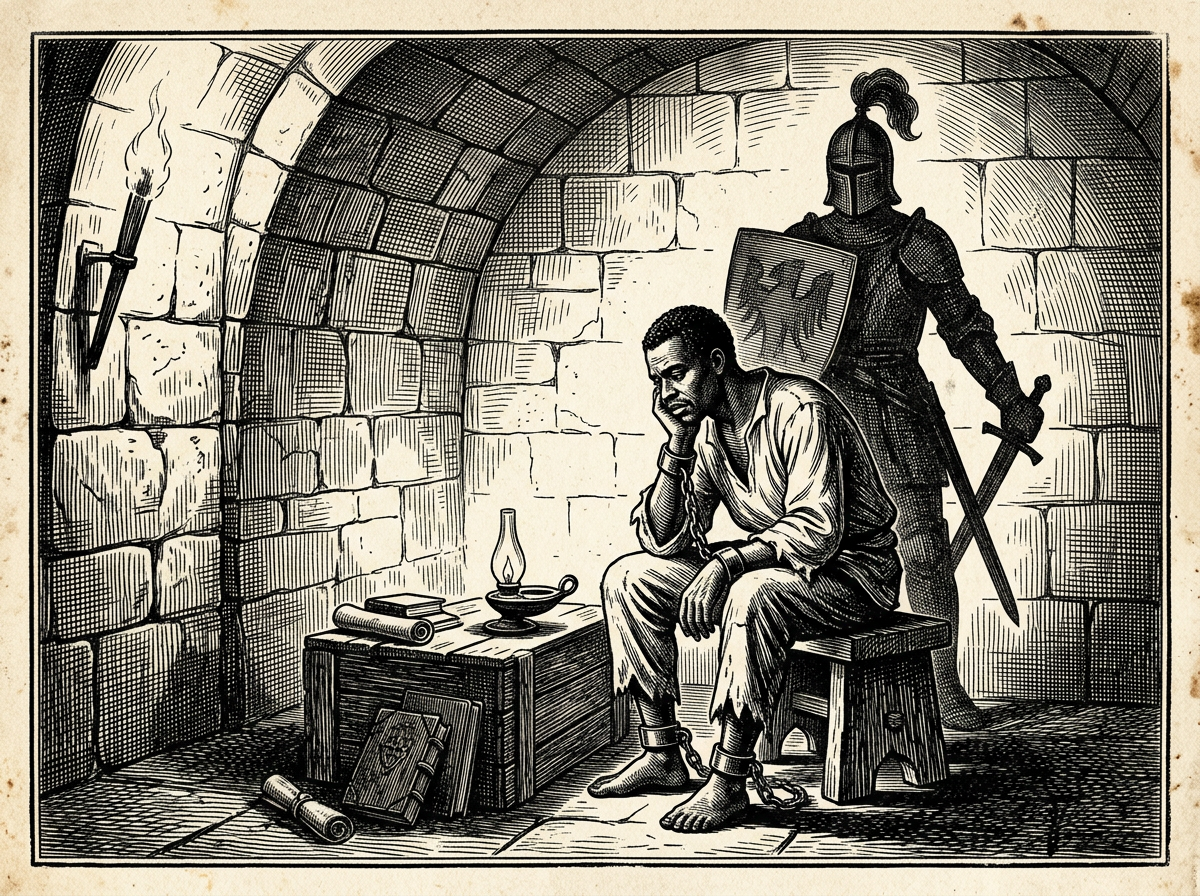
6th September: They Can Throw You in Chains, But . . . | Reducing Radical Moral Autonomy to a Hero-Complex Branding Strategy
The Text in Question
The Daily Stoic Rendering
“You can bind up my leg, but not even Zeus has the power to break my freedom of choice.”
Standard Academic Translation
“‘You will put me in chains.’ What are you saying, man? Put me in chains? You can fetter my leg, but my will not even Zeus can conquer.” - Epictetus, Discourses, 1.1.23 (trans. W.A. Oldfather)
Academic Context & Breakdown
Epictetus spoke these words while teaching in Nicopolis, carrying the physical scars of a lifetime spent as an enslaved human being under the Roman Empire. Epictetus was not giving an inspirational speech to elite athletes or heroic politicians; he was engaged in an aggressive dialectic with a tyrant, demonstrating the fundamental boundaries of human nature.
In the academic translation, Epictetus contrasts the fragile, physical body which can be bound, tortured, or crushed at the whim of any tyrant with the unassailable power of moral choice (prohairesis). The true meaning of the text is not that human willpower makes you physically invincible, but that your physical body is inherently worthless compared to your rational faculty.
The Opening Counter-Punch
The Daily Stoic takes Epictetus’s terrifying realization of physical powerlessness and twists it into a Hollywood tale of unyielding physical heroism. It degrades a profound, universal lesson on the nature of human consciousness into a worshipful celebrity case study meant to flatter the ego of modern strivers.
The Breakdown
- Transforming Cosmic Reality into Celebrity Worship — The commentary fixates on dramatic historical figures who "held tightly to his freedom of choice," converting Epictetus’s quiet, interior truth into a spectacle of extreme physical endurance reserved for legendary war heroes.
- Confusing the Body with the Soul — The text marvels that "someone can throw you in chains, but they don’t have the power to change who you are," missing Epictetus’s far more radical point that the body in chains was never "you" in the first place.
- Erasing the Universal Demands of Virtue — By promising that "our power over our own mind... can't be broken only relinquished," the commentary presents moral autonomy as an inspiring badge of honor rather than Epictetus’s terrifying reality: that you alone are completely responsible for your own moral failure, every single second of the day.
Lessons from the Academic Text
The academic text teaches that your physical person, your status, and your body do not belong to you, and expecting them to remain safe is an invitation to misery. True freedom begins the exact moment you accept that external forces can destroy your flesh, but can never force you to assent to a moral lie.
To practice this, identify an area where you feel trapped by external circumstances today. Remind yourself that your environment only binds your physical body, while your capacity to make a rational, honorable decision right now remains completely untouched.
How the Philosopher Would Respond
Epictetus would scathingly reject this attempt to turn his philosophy into a heroic narrative of stubborn pride. He would remind us that the goal of Stoicism is not to look like an unbreakable tough guy, but to recognize that physical suffering is a matter of complete indifference to a free mind.
“If you consider your body as your own, and what belongs to others as your own, you will be hindered, you will lament, you will be disturbed, you will find fault both with gods and men.” - Epictetus, Discourses, 1.1.12
Related dispatches
MORAL DILUTION: CORPORATE STOICISM · A Critique of Modern Stoicism
Modern self-help flattens Seneca's horror into corporate risk management.
27 Oct 2026
INTELLECTUAL EROSION: MODERN STOICISM · A Critique of Modern Stoicism
Modern Stoicism dilutes Seneca’s vast blueprint into instant comfort.
26 Oct 2026
ETHICAL DRIFT: BOURGEOIS OPTIMIZATION · A Critique of Modern Stoicism
Modern self-help turns Epictetus's radical freedom into careerist optimization.
25 Oct 2026
KEY FLAW: DILUTED DISCIPLINE · A Critique of Modern Stoicism
True moral strength demands laborious excavation, not positive thinking.
24 Oct 2026