CHIEF DEFECT: SENTIMENTAL STOICISM
Stoic duty is an unyielding mandate, not a cozy affirmation.
01 Oct 2026
24th September: Let Virtue Shine Bright | The Flattening of Duty into Sentimentality
The Text in Question
The Daily Stoic Rendering
“Does the light of a lamp shine and keep its glow until its fuel is spent? Why shouldn’t your truth, justice, and self-control shine until you are extinguished?” - MARCUS AURELIUS, MEDITATIONS, 12.15
Standard Academic Translation
“The lamp shines until it is put out, and loses not its rays; shall truth then in thee and justice and temperance be put out before thou art?” - MARCUS AURELIUS, MEDITATIONS, 12.15 (G.M.A. Grube / C.R. Haines)
1.5. Academic Context & Breakdown
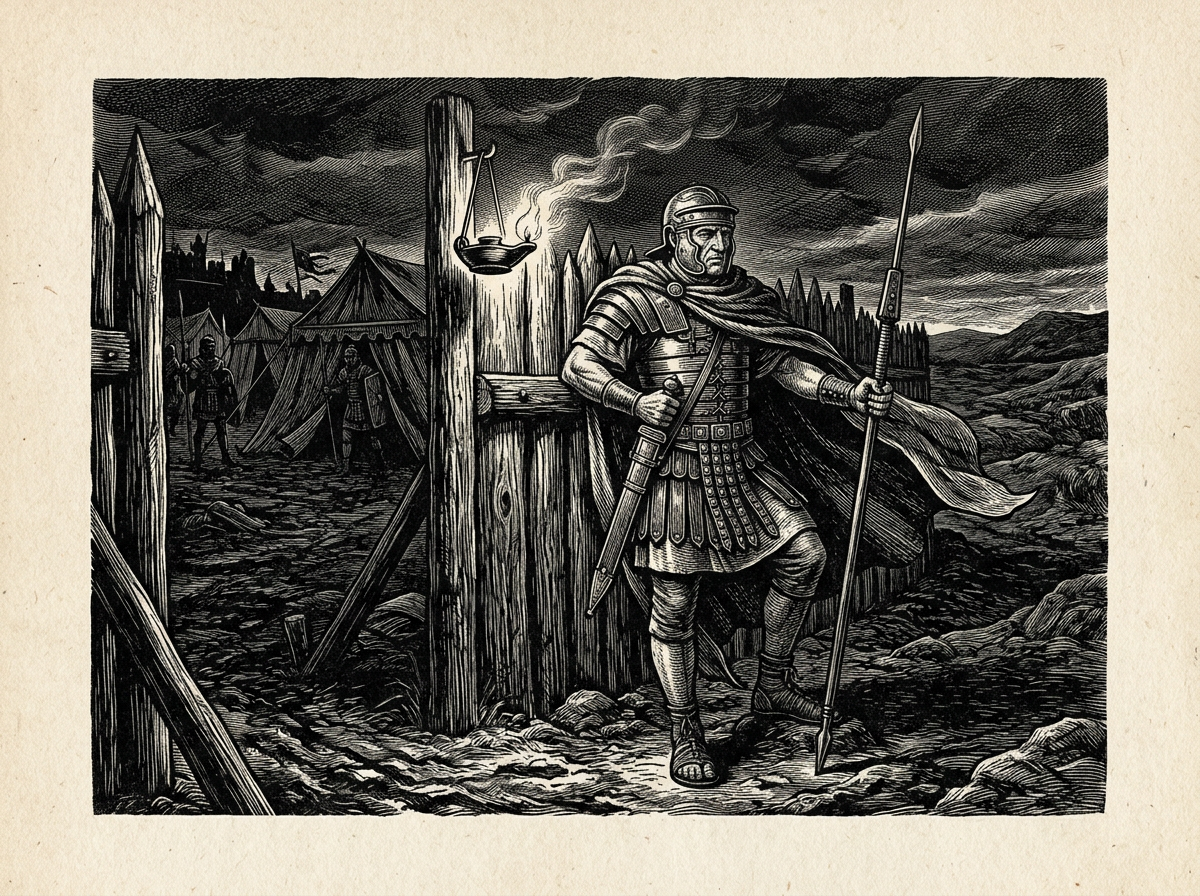
Marcus Aurelius wrote Book 12 of Meditations near the end of his life, exhausted by imperial duty, deteriorating health, and the bleak reality of military campaigns along the Danube frontier. Surrounded by mud, disease, and treason, he was a tired emperor reminding himself in private notebooks that his moral obligations did not expire until his lungs did.
The passage is an uncompromising demand for unyielding duty, comparing moral integrity to a simple physical property: a lamp does not choose when to stop radiating light, so a rational mind has no business surrendering its virtues while life remains.
- The Opening Counter-Punch
The commentary guts an imperative of stoic duty and repurposes it into a cozy, feel-good affirmation for the passive modern reader. It swaps Marcus Aurelius’s relentless demand for moral endurance with a gentle reassurance that whatever late start you’re making is "just fine." Where the emperor demanded total commitment until death, the commentary offers a soft, therapeutic pat on the back.
- The Breakdown
- The commentary asserts that whether your wick is lit "even right before the proverbial big sleep, it makes no difference," turning Marcus’s urgent self-rebuke into a low-stakes blanket amnesty for lifelong moral apathy. The original text asks a sharp, demanding question, why should your justice fail before you do?, rather than comforting those who waited until the final hour to care.
- By claiming that "it’s as good a place as any to let virtue shine," the commentary strips the original quote of its absolute physical necessity and reduces cosmic duty to a relaxed personal option. The Academic translation treats virtue as an intrinsic function that must not be put out, whereas the commentary frames it as an easy policy you can casually adopt whenever you happen to find yourself ready.
- The commentary invokes Seneca to argue that "the light of reason suffuses the universe," shifting the focus from individual moral effort to an abstract, comforting cosmic background radiation. Marcus was not reflecting on how daylight fills the world; he was interrogating his own willingness to hold the line, making the commentary's shift toward passive cosmic comfort entirely unfaithful to the text.
- Application of the True Lesson
The standard academic rendering demands that your core virtues, truth, justice, and self-control, remain non-negotiable until your physical death, regardless of fatigue, cynicism, or circumstance.
To practice this, identify one area where you have allowed your standards to erode simply because you are tired or disillusioned, and restore those standards immediately without expecting praise, comfort, or validation.
- How the Philosopher Would Respond
Marcus Aurelius would reject this gentle, forgiving spin on his private self-discipline, despising any attempt to turn a harsh imperative into a soothing self-help platitude.
“Waste no more time arguing about what a good man should be. Be one.” - MARCUS AURELIUS, MEDITATIONS, 10.16
Related dispatches
CORE FALLACY: DELUSIONAL DENIAL · A Critique of Modern Stoicism
Modern Stoicism trades hard moral courage for cheap mental escape
30 Sept 2026
EXISTENTIAL REDUCTION: BOURGEOIS NOSTALGIA · A Critique of Modern Stoicism
Don't reduce Seneca's political exile to cozy lifestyle downsizing
29 Sept 2026
MAIN ERROR: EGOIC REDUCTION · A Critique of Modern Stoicism
Modern self-help turns Epictetus’s humbling theology into a cheap life hack.
28 Sept 2026
CRITICAL FLAW: TRIVIALIZED TRAUMA · A Critique of Modern Stoicism
Modern Stoicism turns existential trauma into wealth management anxiety.
28 Sept 2026