MORAL DISTORTION: CORPORATE PIVOTING
How modern Stoicism reduced imperial humility to corporate flexibility.
19 Sept 2026
19th September: Flexibility Of The Will | The Reduction of Cosmic Duty to Corporate Agility
The Text in Question
The Daily Stoic Rendering:
“Remember that to change your mind and to follow someone’s correction are consistent with a free will. For the action is yours alone to fulfill its purpose in keeping with your impulse and judgment, and yes, with your intelligence.” - Marcus Aurelius, Meditations, 8.16
Standard Academic Translation:
"Remember that to change thy mind and to follow him who sets thee right is none the less the act of a free agent. For it is thy own activity which is carried out according to thy own impulse and judgment, and indeed according to thy own mind." - Marcus Aurelius, Meditations, 8.16 (trans. A.S.L. Farquharson)
Academic Context & Breakdown
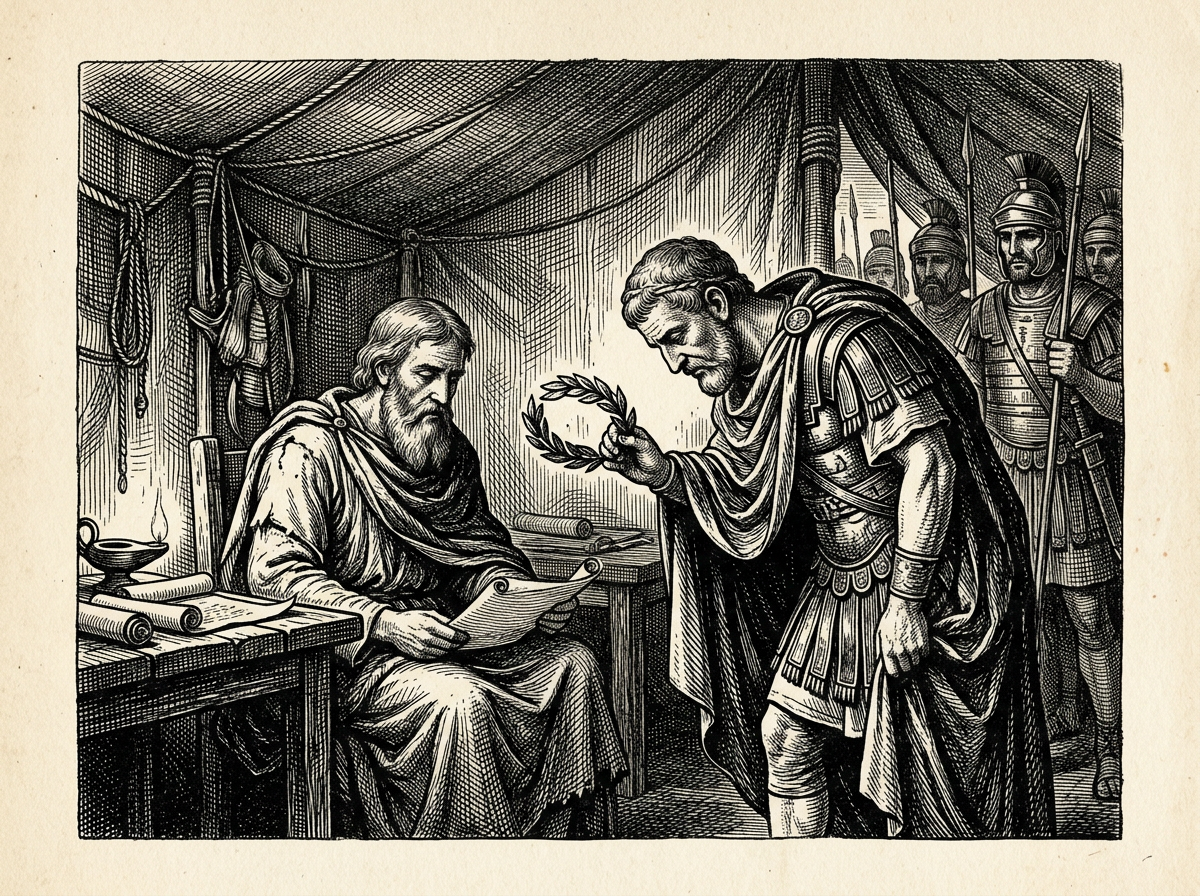
Marcus Aurelius recorded Book 8 while encamped along the cold northern frontiers of the Roman Empire, bearing the burden of supreme command during the grueling Marcomannic Wars. He was an absolute monarch accustomed to issuing unquestioned imperial decrees, surrounded by court flatterers and advisors terrified to challenge his authority. He wrote this passage not to streamline project workflows, but to perform a severe, humbling audit on his own imperial ego.
In Farquharson's translation, Marcus reminds himself that yielding to a wiser counsel or accepting legitimate correction does not compromise his autonomy as a "free agent" (eleutheros). Within the Stoic cosmos, true freedom is not stubborn self-assertion, but the rational alignment of one's mind with universal truth and the common good (logos). To stubbornly refuse correction out of pride is to submit to the slavery of vanity; to change one's mind in pursuit of virtue is the ultimate exercise of rational agency.
The commentary guts this spiritual assault on royal arrogance and rebuilds it as a modern productivity manifesto on strategic pivoting. It transforms Marcus’s deep moral humility into an operational self-help technique designed to optimize performance. By replacing moral alignment with worldly success, the commentary degrades an imperial confession of fallibility into a blueprint for corporate agility.
The Opening Counter-Punch
The commentary hijacks Marcus Aurelius's radical call for moral surrender and converts it into a corporate lesson on tactical flexibility. It takes an Emperor's private warning against intellectual pride and degrades it into a Silicon Valley pep talk about remaining "resilient and unstoppable."
The Breakdown
- The commentary shifts Marcus's focus on moral truth to task execution, asking "when you set your mind to a task, do you always follow through?" Marcus Aurelius was not discussing how to complete a project or stick to a personal goal. By reframing the passage around task completion, the commentary swaps out the pursuit of moral correctness for mundane project management.
- The commentary replaces spiritual submission to truth with opportunistic data processing, claiming that you must adjust when "new facts come in." In Farquharson's translation, Marcus is explicitly talking about accepting moral correction from another human being ("follow him who sets thee right"). The commentary sanitizes the humbling interpersonal act of admitting you were morally wrong, turning it into a bloodless metric adjustment based on incoming information.
- The commentary turns Stoic virtue into an instrument for self-aggrandizement, promising that flexibility will "make us resilient and unstoppable." Marcus Aurelius never sought flexibility to make himself an conqueror of external circumstances or an "unstoppable" force in the world. He sought truth so that his soul would remain uncorrupted by vanity, making the commentary's promise of worldly dominance a complete inversion of Stoic modesty.
The Lesson of the Text
The academic translation teaches that submitting to correction is an act of supreme moral freedom, not a defeat of the will. We apply this by actively dismantling our pride when proven wrong, treating the person who corrects our errors as a benefactor to our rational character rather than a threat to our ego.
How the Philosopher Would Respond
Marcus Aurelius would flatly reject this attempt to turn moral self-correction into a tool for worldly success. He did not seek flexibility to win at life or optimize his plans, but to ensure his mind remained aligned with justice whenever his ego led him astray.
"If anyone can refute me and show me that I think or act wrongly, I will gladly change; for I seek the truth, by which no one was ever harmed. But he is harmed who abides in his own deceit and ignorance." - Marcus Aurelius, Meditations, 6.21
Related dispatches
MAIN ERROR: EGOIC REDUCTION · A Critique of Modern Stoicism
Modern self-help turns Epictetus’s humbling theology into a cheap life hack.
28 Sept 2026
CRITICAL FLAW: TRIVIALIZED TRAUMA · A Critique of Modern Stoicism
Modern Stoicism turns existential trauma into wealth management anxiety.
28 Sept 2026
LIFESTYLE TRAP: BOURGEOIS LEISURE · A Critique of Modern Stoicism
How modern self-help turned Seneca's warnings into resort etiquette.
28 Sept 2026
CHIEF DISTORTION: LIFESTYLE OPTIMIZATION · A Critique of Modern Stoicism
Cold showers cannot save you from self-imposed moral servitude
28 Sept 2026