MORAL DRIFT: THERAPEUTIC STOICISM
Reducing Stoic cosmic unity to soft therapeutic interdependence dilutes civic duty.
28 Oct 2026
28th October: We Were Made For Each Other | The Reduction of Cosmic Unity into Sentimental Social Dependence
The Text in Question
The Daily Stoic Rendering
“You’ll more quickly find an earthly thing kept from the earth than you will a person cut off from other human beings.”
- Marcus Aurelius, Meditations, 9.9.3
Standard Academic Translation
“Earlier you will find a terrestrial thing having no contact with any terrestrial thing than a human being completely detached from human being.”
- Marcus Aurelius, Meditations, 9.9.3 (Farquharson adapted)
Academic Context & Breakdown
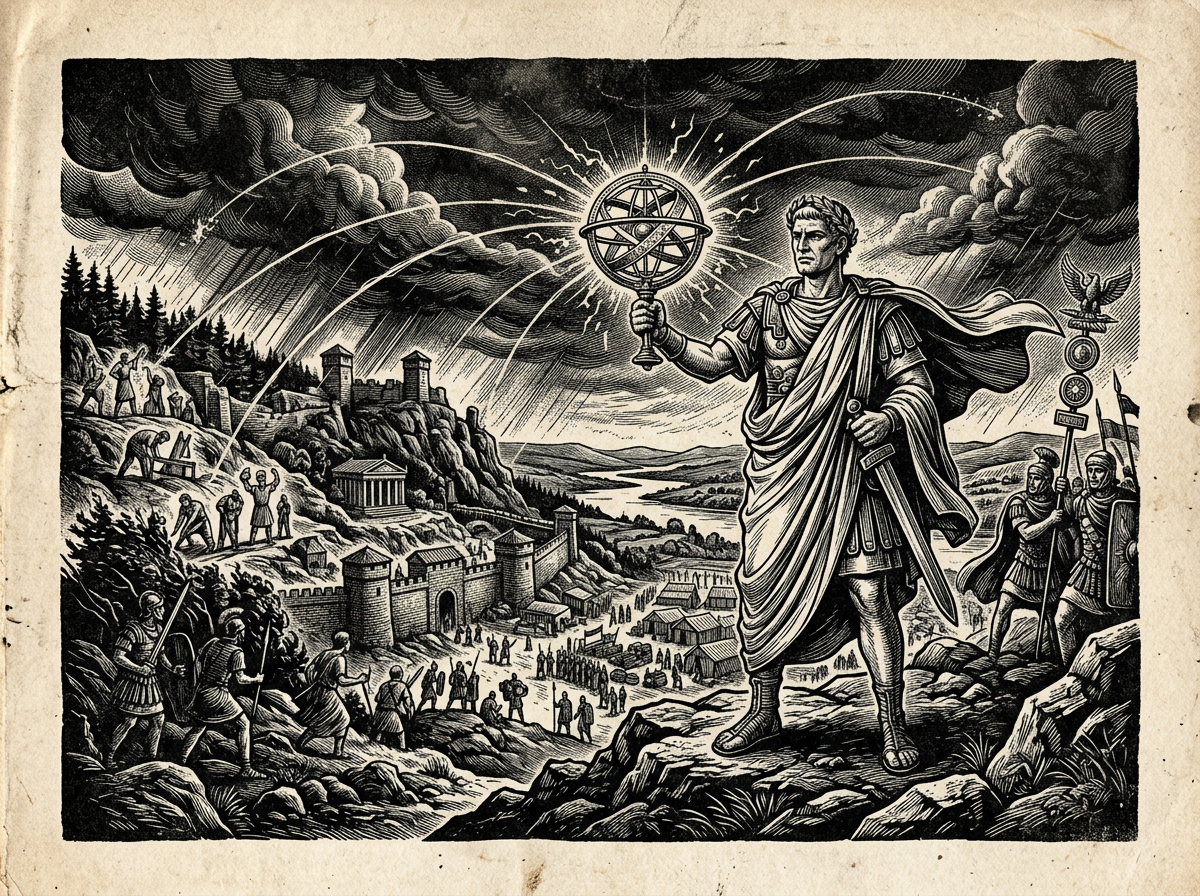
Marcus Aurelius wrote this entry in his private notebook while commanding Roman troops during the grueling Marcomannic Wars along the northern frontier. Surrounded by treason, plague, and the relentless pressure of imperial rule, he was privately reinforcing his own commitment to Stoic physics and cosmology.
In Stoic physics, the universe is a single, interconnected living organism bound together by a shared rational spirit (pneuma). Marcus uses a physical analogy, the magnetic-like pull that binds all earthy elements to the earth, to demonstrate that human beings are gravitationally bound to one another through a shared rational nature. He was not making a cozy observation about needing friends, but stating an unyielding law of cosmic architecture: cut yourself off from the human community, and you commit an unnatural act of self-mutilation.
The Opening Counter-Punch
The commentary hijacks Marcus’s cosmic, ontological law of rational unity and degrades it into a sentimental support-group slogan. It takes an Emperor's rigorous physics-based command to serve the common good and twists it into a soft plea for emotional interdependence. By swapping an unyielding duty to the global polis for comfortable social hand-holding, the text sanitizes Marcus’s uncompromising worldview to feed modern emotional needs.
The Breakdown
- The commentary takes Marcus's cosmic physical law and flattens it into a personality quiz, asserting that "philosophy attracts introverts." Marcus was describing a universal, inescapable law of human nature binding every living soul, but the commentary changes an absolute cosmic obligation into a niche therapeutic remedy for introverted personality types.
- The text trivializes the profound Stoic duty of civic obligation, reducing it to the warm slogan "we must take care of each other (and to allow others to care for us in return)." The academic text demands total alignment with the rational whole regardless of personal comfort, whereas the commentary alters this hard objective duty into a soft, reciprocal exercise in mutual emotional care.
- The commentary uses pop-psychology framing to excuse human alienation, observing that "struggle and difficulty, they isolate us from the world." Marcus treated isolating oneself from other humans as a unnatural betrayal of reason akin to severing a limb from the body, but the commentary reframes moral failure as an understandable, relatable coping mechanism.
What Is the Lesson?
The authentic lesson of Meditations 9.9.3 is that human beings are fundamentally designed by nature for mutual cooperation and social duty. You practice this by treating every other person not as an optional social contact, but as an indispensable part of the same rational body. Refuse to let anger, exhaustion, or cynicism isolate you from serving the common good.
How The Philosopher Would Respond
Marcus Aurelius would flatly reject the idea that human unity is a cozy emotional support system, viewing any attempt to retreat from civic duty as a monstrous, self-inflicted amputation from the cosmic body.
"Have you ever seen a severed hand or foot, or a head cut off, lying apart from the rest of the body? Such does a man make himself, as far as he can, when he will not accept what happens and isolates himself, or does an unsocial act."
- Marcus Aurelius, Meditations, 8.34
Related dispatches
MORAL DILUTION: CORPORATE STOICISM · A Critique of Modern Stoicism
Modern self-help flattens Seneca's horror into corporate risk management.
27 Oct 2026
INTELLECTUAL EROSION: MODERN STOICISM · A Critique of Modern Stoicism
Modern Stoicism dilutes Seneca’s vast blueprint into instant comfort.
26 Oct 2026
ETHICAL DRIFT: BOURGEOIS OPTIMIZATION · A Critique of Modern Stoicism
Modern self-help turns Epictetus's radical freedom into careerist optimization.
25 Oct 2026
KEY FLAW: DILUTED DISCIPLINE · A Critique of Modern Stoicism
True moral strength demands laborious excavation, not positive thinking.
24 Oct 2026