EXECUTIVE BURNOUT: VOLITIONAL AGENCY
Stoic self-governance transforms executive turmoil into operational clarity
13 Sept 2026
Imperial Introspection: The Governance of Self and State in the Meditations of Marcus Aurelius
Academic Abstract & Executive Overview
This analysis investigates the structural intersection between late Roman Stoic philosophy and executive statecraft as documented in the private journals of Emperor Marcus Aurelius. By synthesizing classical texts with modern cognitive behavioral paradigms, the study demonstrates how ancient introspective frameworks systematically mitigate systemic leadership distress. Ultimately, the research establishes that psychological resilience under high-consequence operational conditions depends entirely on the rigorous separation of internal volitional agency from external systemic volatility.
Theoretical Background & Literature Framework
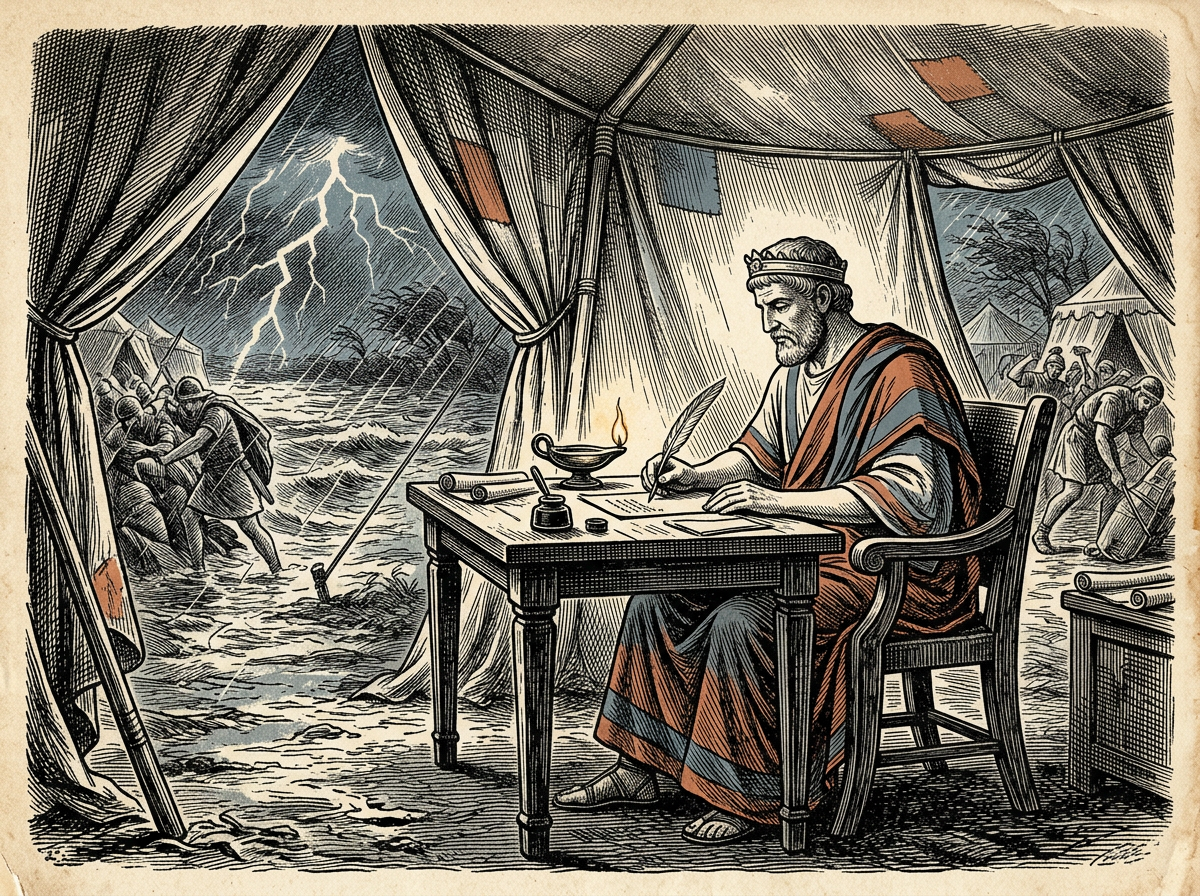
The historical trajectory of Roman Stoicism transitions markedly from the public proclamations of Seneca and the freedman status of Epictetus to the imperial tent of Marcus Aurelius. Writing during the Marcomannic Wars along the Danubian frontier, the emperor composed his Greek reflections, known posthumously as the Meditations, not as a systematic treatise for publication, but as a therapeutic exercise in self-direction (Hadot, 1998). As Pierre Hadot observed, these writings represent spiritual exercises designed to transform the practitioner's inner state rather than construct abstract ontological systems.
From a contemporary psychological perspective, the mechanisms operating within the Meditations anticipate modern cognitive behavioral therapy and rational emotive behavior therapy. According to research published in the Journal of Rational-Emotive and Cognitive-Behavior Therapy (Robertson, 2018), the core Stoic doctrine asserts that human disturbance does not stem from external events, but from the subjective judgments individuals apply to those events. Marcus Aurelius routinely reinforced this framework by employing the discipline of assent, a cognitive filter that halts automatic emotional reactivity and subjects initial impressions to rigorous logical scrutiny (Sellars, 2006).
In the context of executive leadership, this philosophical architecture provides a vital buffer against burnout and decision fatigue. Modern organizational psychology indicates that leaders operating in high-stakes environments frequently suffer from reduced executive function due to chronic perceived loss of control (Brief & Motowidlo, 1986). The Stoic framework addresses this vulnerability by redefining leadership success. Instead of measuring efficacy by external geopolitical or financial outcomes, the Stoic executive evaluates performance strictly through the ethical integrity of the decision-making process. Consequently, the historical text transitions from an isolated philosophical curiosity into a viable blueprint for administrative resilience.
Methodological Application & Practical Recommendations
Translating the introspective protocols of Marcus Aurelius into contemporary executive routines requires a structured, empirical methodology. Leaders can operationalize these ancient philosophical tenets through three distinct operational steps.
STEP 01: Morning Premeditatio Malorum
Establish a daily journaling protocol to anticipate psychological friction and outline rational responses before encountering external stressors. Drawing upon the Stoic practice of negative visualization, the executive writes down potential organizational failures, interpersonal conflicts, and operational bottlenecks before the workday commences. By confronting worst-case scenarios in a controlled cognitive environment, the leader desensitizes the neural pathways associated with acute stress responses, thereby preserving analytical clarity when real-world crises materialize.
STEP 02: Dichotomy of Control Audit
Categorize daily leadership decisions strictly into internal volitional agency and external outcomes to eliminate counterproductive anxiety. Executives must systematically audit their project portfolios, separating variables they can directly control, such as preparation, ethical conduct, and strategic focus, from variables outside their domain, such as market fluctuations, stakeholder whims, and macroeconomic shifts. Directing cognitive resources exclusively toward internal volition eliminates the energy drain associated with attempting to manipulate uncontrollable external phenomena.
STEP 03: Evening Moral Accounting
Conduct a nightly review of personal conduct against the Stoic virtues of wisdom, courage, justice, and temperance. Before resting, the leader reviews the day's actions without self-deception or destructive guilt, assessing where they successfully applied virtue and where they succumbed to passion or reactivity. This systematic accounting builds metacognitive awareness, ensuring continuous behavioral calibration over extended periods of organizational leadership.
Key Empirical Takeaways
- Cognitive reframing derived from classical Stoic exercises significantly reduces physiological markers of executive stress by interrupting automatic emotional reactivity before decision execution occurs.
- Separating volitional agency from external outcomes optimizes cognitive resource allocation, preventing the burnout commonly associated with high-stakes managerial environments.
- Systematic nightly behavioral audits enhance long-term strategic consistency by embedding virtue ethics directly into routine operational evaluations.
References & Further Reading
- Brief, A. P., & Motowidlo, S. J. (1986). Prosocial organizational behaviors. Academy of Management Review, 11(4), 710-725.
- Hadot, P. (1998). The Inner Citadel: The "Meditations" of Marcus Aurelius. Harvard University Press.
- Robertson, D. (2018). Stoicism and the Art of Happiness. Hodder & Stoughton.
- Sellars, J. (2006). Stoicism. University of California Press.
---
SOCIAL MEDIA SNIPPETS (For Distribution)
LinkedIn Thought Leadership Post
Ancient Roman philosophy offers a rigorous blueprint for modern executive resilience. In our latest study at Chaff & Wheat, we examine how the private journals of Marcus Aurelius provide actionable frameworks for managing high-stakes leadership stress. By integrating classical introspection with modern cognitive strategies, leaders can significantly enhance their operational efficacy.
- Discover how morning negative visualization desensitizes neural pathways to acute workplace stress.
- Learn to execute a strict dichotomy of control audit to eliminate wasted cognitive energy on external market volatility.
- Implement a structured evening moral review to align daily managerial decisions with core virtues.
#Leadership #Psychology #Research
X (Twitter) Post
How did a Roman emperor maintain mental clarity during relentless warfare? Discover how the private journals of Marcus Aurelius offer modern executives a proven cognitive framework for conquering workplace stress and decision fatigue. Read the full analysis today.
Newsletter Teaser
Unlock the executive strategies of antiquity by examining how Marcus Aurelius used structured journaling to govern both self and state. Read our complete academic analysis to transform ancient philosophy into modern leadership resilience.
Related dispatches
SYSTEMIC FAILURE: WORKPLACE BURNOUT · The Bend Index
Workplace burnout requires systemic boundaries rather than superficial self-care
13 Sept 2026
CORE HAZARD: ADMINISTRATIVE FRICTION · The Bend Index
The thermodynamics of exhaustion require structural cooling, not personal resilience.
13 Sept 2026
CORE COMPETENCY: EMOTIONAL REGULATION · The Bend Index
The true discipline of leadership begins with governing the nervous system.
13 Sept 2026
CORE PRACTICE: COGNITIVE RESILIENCE · The Bend Index
Epictetus offered a discipline for moral agency, not mere coping
13 Sept 2026