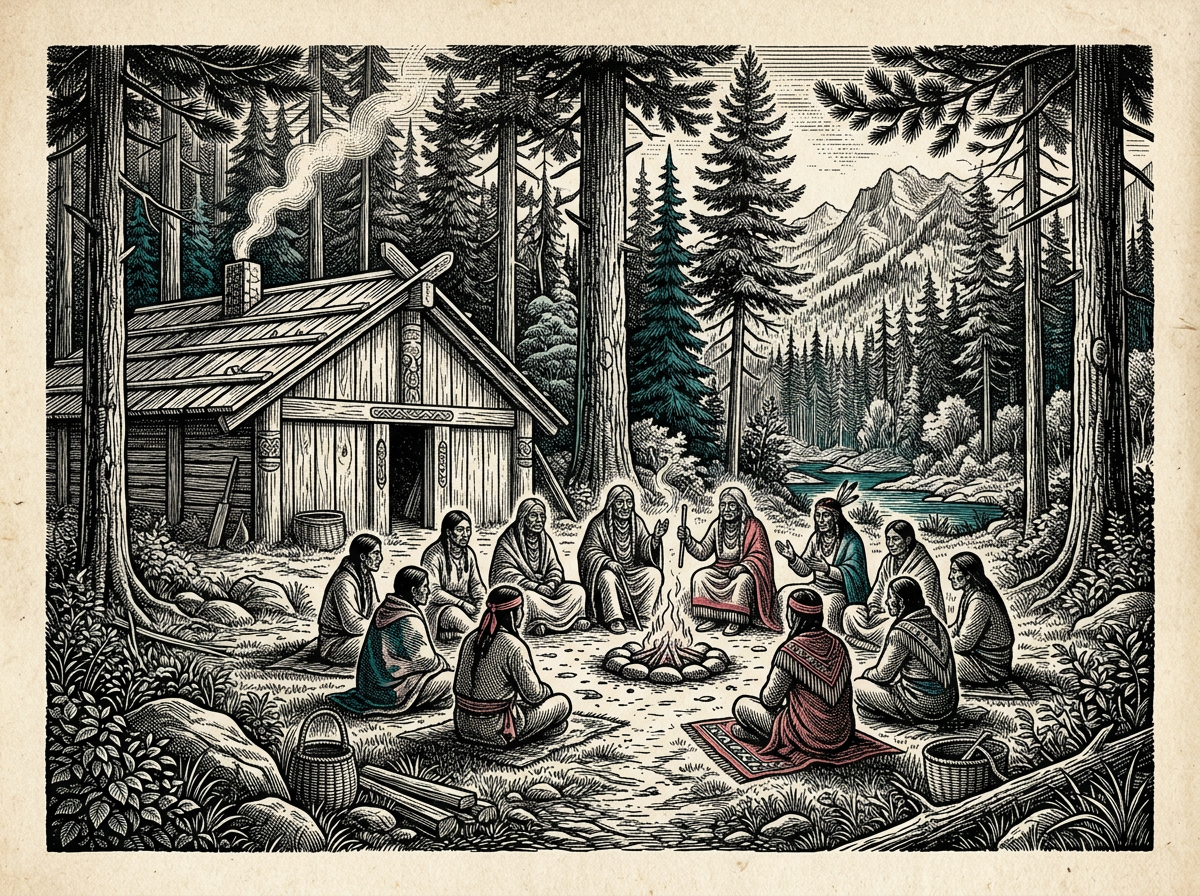
KEY LESSON: INDIGENOUS SOVEREIGNTY
Ancient indigenous governance holds essential lessons for modern sovereignty
12 Sept 2026
Sovereignty, Culture, and History: An Anthropological Study of the Seneca Nation
Academic Abstract & Executive Overview
This investigation examines the historical trajectory, governance structures, and contemporary sovereignty of the Seneca Nation, a principal constituent of the Haudenosaunee Confederacy. Through an integration of ethnohistorical records and contemporary legal analysis, this study evaluates how the Seneca people preserve their cultural autonomy amidst modern jurisdictional pressures. Ultimately, the paper provides a methodological framework for ethical indigenous research and highlights the enduring resilience of Seneca political institutions.
Theoretical Background & Literature Framework
The Seneca Nation, historically known as the Onödowága, or the Great Hill People, occupies the westernmost territory within the traditional homelands of the Haudenosaunee Confederacy (Tooker, 1978). Within the tripartite political structure of the confederacy, the Seneca hold the designation of the Keeper of the Western Door. This geopolitical and ceremonial position charged them with defending the confederacy from western incursions while maintaining diplomatic relations with neighboring nations (Johansen, 1999).
Central to Seneca society is the Great Law of Peace (Gayanashagowa), the oral constitution that established the Haudenosaunee Confederacy. As documented by Fenton (1998), the Great Law integrates principles of participatory democracy, matrilineal clan governance, and the separation of civil and military leadership. Anthropological and political science literature emphasizes that these structures were not merely internal governing mechanisms, but sophisticated frameworks of international law that profoundly influenced modern democratic thought, including the formation of the United States federal system (Grinde, 1992).
Despite centuries of colonial disruption, displacement, and forced assimilation policies, the Seneca Nation has maintained distinct sociopolitical institutions. Contemporary scholarship focuses heavily on the mechanics of indigenous sovereignty, examining how the Seneca Nation exercises jurisdiction over its territories, manages economic enterprises, and protects sacred cultural heritage in the face of ongoing federal and state encroachment (Deloria & Lytle, 1984).
Methodological Application & Practical Recommendations
Translating empirical insights into rigorous academic and community practices requires adherence to specific protocols regarding indigenous studies.
Step 01: Ethnohistorical Review. Researchers must study the oral histories and constitutional frameworks of the Haudenosaunee Confederacy, specifically the Great Law of Peace. This requires examining primary oral accounts alongside peer reviewed ethnohistorical monographs to understand political philosophy from an indigenous perspective rather than relying exclusively on colonial archives (Fenton, 1998).
Step 02: Sovereignty Analysis. Investigators must examine the contemporary legal, political, and economic challenges faced by the Seneca Nation. This involves analyzing landmark federal Indian law cases, treaty obligations, and modern economic sovereignty initiatives, ensuring that research accurately reflects the nation's status as a self-governing entity (Deloria & Lytle, 1984).
Step 03: Cultural Respect Protocols. Academic inquiries must establish ethical standards for engaging with indigenous histories, artifacts, and community stakeholders. Researchers are required to implement participatory research models, secure institutional review board approval from tribal governance structures where applicable, and respect intellectual property rights concerning sacred knowledge (Smith, 2021).
Key Empirical Takeaways
- The political organization of the Seneca Nation is rooted in the Great Law of Peace, an oral constitution that balances matrilineal clan governance with confederated diplomacy.
- Contemporary sovereignty for the Seneca Nation involves active jurisdictional maintenance, legal defense of treaty rights, and independent economic development.
- Ethical research methodologies in indigenous studies mandate direct community collaboration, respect for sacred epistemologies, and adherence to tribal protocols.
References & Further Reading
- Deloria, V., & Lytle, C. (1984). The nations within: The past and future of American Indian sovereignty. University of Oklahoma Press.
- Fenton, W. N. (1998). The great law and the longhouse: A political history of the Iroquois Confederacy. University of Oklahoma Press.
- Grinde, D. A. (1992). Exemplar of liberty: Native America and the evolution of democracy. American Indian Studies Center.
- Smith, L. T. (2021). Decolonizing methodologies: Research and indigenous peoples (3rd ed.). Zed Books.
- Tooker, E. (1978). The League of the Iroquois: Its history, politics, and ritual. Handbook of North American Indians (Vol. 15). Smithsonian Institution.
---
SOCIAL MEDIA SNIPPETS (For Distribution)
LinkedIn Thought Leadership Post
This new academic analysis from Chaff & Wheat explores the sovereignty, culture, and history of the Seneca Nation within the Haudenosaunee Confederacy.
- Examine the foundational governance principles of the Great Law of Peace.
- Analyze contemporary legal and economic challenges facing indigenous sovereignty.
- Discover ethical research protocols for engaging with indigenous histories and stakeholders.
#IndigenousStudies #Sovereignty #Anthropology
X (Twitter) Post
How do historical indigenous governance models inform modern sovereignty? Explore our new study on the Seneca Nation, the Great Law of Peace, and ethical research frameworks in Native American studies. Read the full analysis today!
Newsletter Teaser
Discover how the Seneca Nation maintains its rich cultural heritage and political autonomy through the principles of the Great Law of Peace. Read our latest peer reviewed analysis to explore the intersection of indigenous sovereignty, history, and ethical research methodologies.
Related dispatches
MORAL DILUTION: CORPORATE STOICISM · A Critique of Modern Stoicism
Modern self-help flattens Seneca's horror into corporate risk management.
27 Oct 2026
INTELLECTUAL EROSION: MODERN STOICISM · A Critique of Modern Stoicism
Modern Stoicism dilutes Seneca’s vast blueprint into instant comfort.
26 Oct 2026
ETHICAL DRIFT: BOURGEOIS OPTIMIZATION · A Critique of Modern Stoicism
Modern self-help turns Epictetus's radical freedom into careerist optimization.
25 Oct 2026
KEY FLAW: DILUTED DISCIPLINE · A Critique of Modern Stoicism
True moral strength demands laborious excavation, not positive thinking.
24 Oct 2026