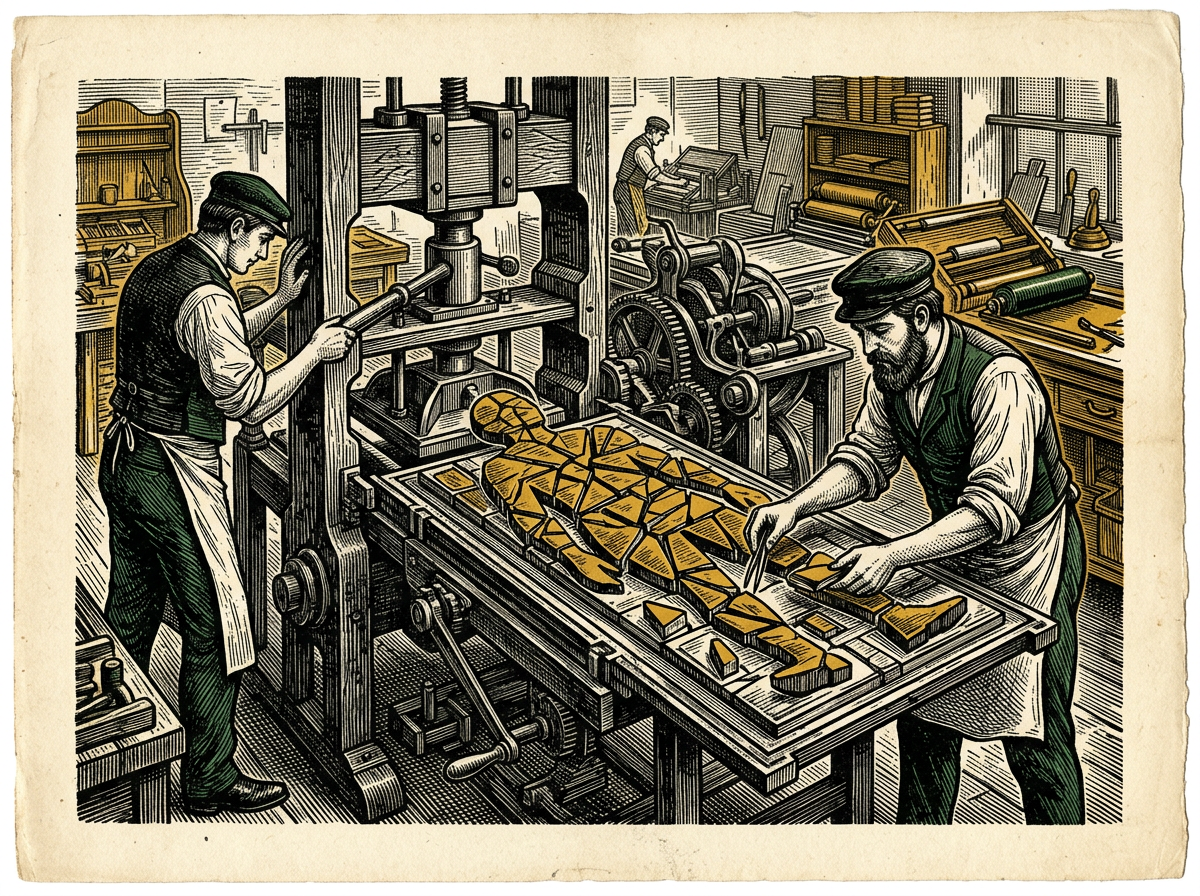
VISUAL GRAMMAR: TRAUMA RECOVERY
Visual storytelling rebuilds what traumatic memory breaks into silent fragments.
12 Sept 2026
Graphic Narratives of Acute Stress: Deconstructing Trauma in Contemporary Comic Art
Academic Abstract & Executive Overview
This study examines the intersection of visual sequential art and psychological trauma representation, evaluating how graphic narratives function as both a medium for processing acute stress responses and an artifact of cultural trauma expression. By synthesizing principles from graphic medicine and trauma theory, the research demonstrates that the formal properties of comic art provide a unique structural equivalent for the fragmented nature of traumatic memory. Ultimately, the analysis establishes that graphic memoirs serve as vital clinical and sociological instruments capable of bridging the gap between internal psychological distress and intersubjective comprehension.
Theoretical Background & Literature Framework
The representation of psychological trauma within literature and art has historically wrestled with the inherent ineffability of extreme stress events. According to foundational trauma theory articulated by Cathy Caruth (1996), trauma is characterized not by the immediate experience of an event, but by its delayed, recurring intrusion into the psyche. This temporal disruption creates a fundamental crisis of representation, wherein traditional linear prose often fails to capture the disjointed phenomenology of acute stress disorders. Expanding upon these literary frameworks, Judith Herman (1992) emphasized that the recovery from trauma necessitates the reconstruction of the trauma story, moving the individual from a state of unspeakable silence to meaningful articulation.
In contemporary scholarship, the graphic novel has emerged as a privileged site for this reconstructive labor. Grounded in the interdisciplinary field of graphic medicine, researchers such as Ian Williams (2012) and MK Czerwiec et al. (2015) have demonstrated how the dual-coding of text and image allows creators to externalize complex clinical phenomena. Within the specific subgenre frequently categorized as alpha trauma comix, creators deploy visceral visual grammars to depict hyperarousal, dissociation, and intrusive flashbacks. As Scott McCloud (1993) theorized in his foundational work on visual closure, the gutter between comic panels requires the reader to actively participate in bridging spatial and temporal breaks. This formal mechanism mirrors the cognitive fragmentation and subsequent integration required in trauma processing, rendering comics an exceptionally potent medium for both artistic expression and psychological inquiry.
Methodological Application & Practical Recommendations
Translating these theoretical paradigms into rigorous academic and clinical applications requires structured protocols. The following evidence-based steps outline how to analyze, construct, and evaluate graphic narratives of acute stress.
STEP 01: Visual Semiotic Analysis
Examine the structural and chromatic techniques utilized in graphic narratives to depict psychological distress. Researchers and clinicians must systematically audit page layouts, gutter widths, line weights, and color palettes. Acute stress is frequently manifested through panel destabilization, such as tilted panels, overlapping frames, or the complete absence of borders, which visually signifies a breakdown in ego boundaries. Furthermore, chromatic shifts from muted, desaturated tones to high-contrast, saturated primaries can be mapped directly onto physiological markers of hypervigilance and panic responses.
STEP 02: Narrative Structuring
Construct pedagogical or therapeutic storyboards that safely externalize complex trauma experiences. Practitioners should guide creators to utilize metaphorical distancing techniques, translating literal traumatic memories into accessible visual symbols. Storyboarding exercises must prioritize pacing and containment, ensuring that intense emotional content is anchored by stable panel structures. This process facilitates controlled exposure, allowing the author or patient to regulate their engagement with the traumatic material without triggering overwhelming retraumatization.
STEP 03: Critical Reception Evaluation
Assess the societal impact and clinical utility of graphic memoirs within modern mental health discourse. Scholars should employ empirical reception studies and qualitative thematic analyses to gauge how these texts reduce stigma and enhance empathy among healthcare providers and the general public. Evaluating clinical utility involves measuring changes in patient affect regulation and narrative coherence before and after engaging with graphic narrative interventions.
Key Empirical Takeaways
- The formal mechanics of comic art, particularly panel gutters and visual closure, provide a structural analogue to the fragmented encoding and delayed processing of traumatic memory.
- The dual-coding of sequential images and text allows creators to externalize somatic and emotional states that frequently defy traditional linguistic articulation.
- Graphic narratives function effectively as both clinical therapeutic tools and cultural artifacts that foster intersubjective empathy and reduce mental health stigma.
References & Further Reading
- Caruth, C. (1996). Unclaimed experience: Trauma, narrative, and history. Johns Hopkins University Press.
- Czerwiec, M. K., Williams, I., Squier, S. M., Green, M. J., Myers, K. R., & Smith, S. T. (2015). Graphic medicine manifesto. Pennsylvania State University Press.
- Herman, J. L. (1992). Trauma and recovery: The aftermath of violence from domestic abuse to political terror. Basic Books.
- McCloud, S. (1993). Understanding comics: The invisible art. HarperCollins.
- Williams, I. (2012). Graphic medicine: Coming to term with the speaking flesh. The Lancet, 379(9815), 504-505.
---
SOCIAL MEDIA SNIPPETS (For Distribution)
LinkedIn Thought Leadership Post
How can sequential art help us understand and process acute psychological trauma? Our latest research at Chaff & Wheat investigates the intersection of graphic medicine and trauma theory, revealing how visual narratives bridge the gap between internal distress and public empathy.
- Discover how visual semiotics like panel destabilization and chromatic shifts map directly onto physiological markers of acute stress.
- Explore evidence-based storyboarding protocols that allow for the safe externalization and processing of complex trauma.
- Understand the growing clinical utility of graphic memoirs in modern mental health discourse and stigma reduction.
Read the full academic analysis today. #GraphicMedicine #PsychologyResearch #TraumaTheory
X (Twitter) Post
Can the visual grammar of comics help process acute stress? Explore our new study on graphic narratives, trauma theory, and the clinical utility of sequential art. Discover how panel structures mirror fragmented memory. Read now! #GraphicMedicine #Psychology
Newsletter Teaser
Discover how contemporary graphic narratives function as vital instruments for processing acute stress and trauma. Read our complete scholarly analysis on the formal mechanics of comic art and its growing role in clinical recovery.
Related dispatches
MORAL DILUTION: CORPORATE STOICISM · A Critique of Modern Stoicism
Modern self-help flattens Seneca's horror into corporate risk management.
27 Oct 2026
INTELLECTUAL EROSION: MODERN STOICISM · A Critique of Modern Stoicism
Modern Stoicism dilutes Seneca’s vast blueprint into instant comfort.
26 Oct 2026
ETHICAL DRIFT: BOURGEOIS OPTIMIZATION · A Critique of Modern Stoicism
Modern self-help turns Epictetus's radical freedom into careerist optimization.
25 Oct 2026
KEY FLAW: DILUTED DISCIPLINE · A Critique of Modern Stoicism
True moral strength demands laborious excavation, not positive thinking.
24 Oct 2026