MORAL SURVIVAL: SYSTEMIC CORRUPTION
The art of preserving moral integrity inside compromised institutions
11 Sept 2026
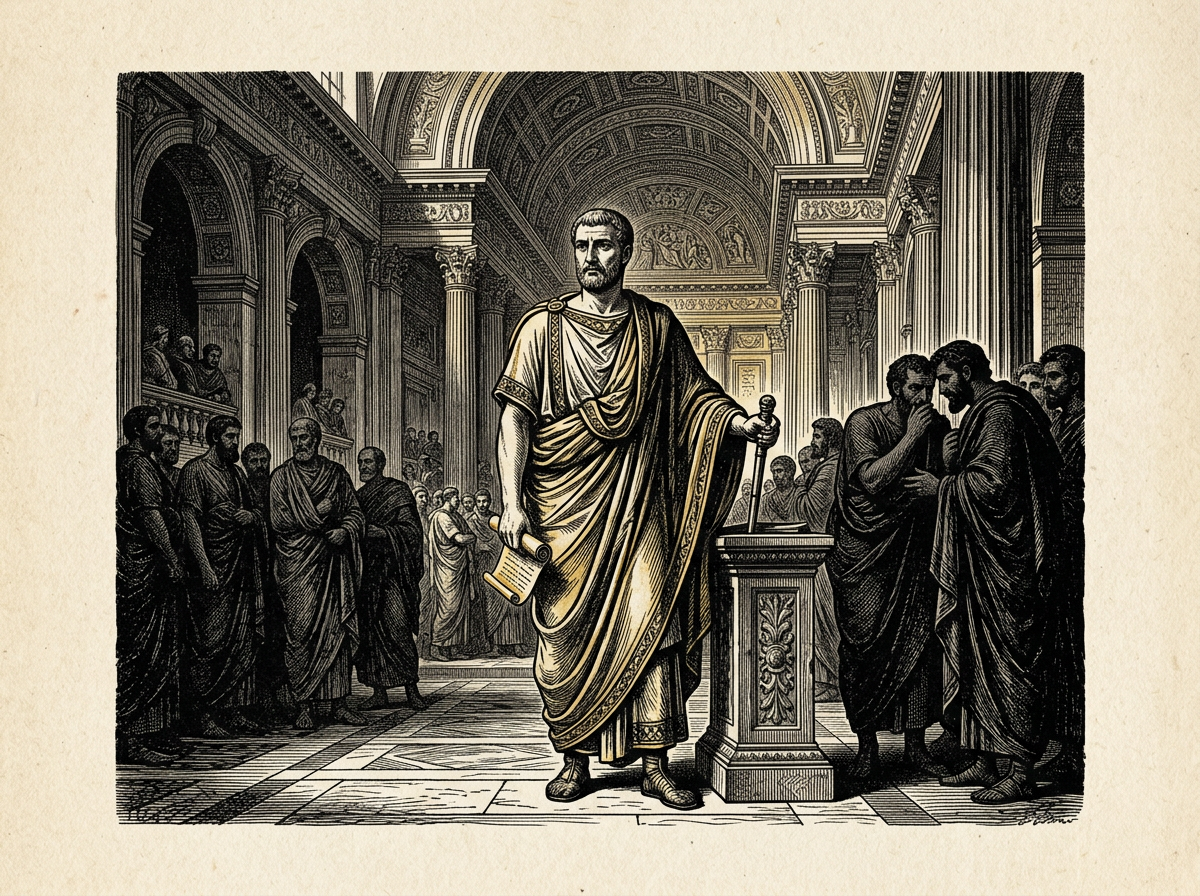
The Statesman and the Sage: Political Compromise and Moral Integrity in the Life of Seneca
Academic Abstract & Executive Overview
This biographical and philosophical study examines the tensions between Lucius Annaeus Seneca's political ambitions within the Julio-Claudian imperial court and his enduring advocacy for Stoic asceticism and inner freedom. Utilizing classical historiography, specifically the accounts recorded in Tacitus's Annals alongside modern Cambridge University Press historical biographies, this paper analyzes how the Roman statesman navigated deep systemic corruption while attempting to preserve his moral philosophy. The findings contribute to contemporary organizational discourse on navigating compromised institutional environments without sacrificing ethical autonomy.
Theoretical Background & Literature Framework
The life of Lucius Annaeus Seneca presents one of the most enduring paradoxes in intellectual history, namely the reconciliation of absolute philosophical ideals with the messy realities of imperial administration. According to classical historians (Griffin, 1976), Seneca operated as a chief advisor and speechwriter during the early years of the reign of Nero. This position required him to participate in a political apparatus defined by intrigue, violence, and systematic oppression. Stoic philosophy, as articulated in Seneca's own epistles and essays, demands a life lived in accordance with nature, reason, and virtue (Inwood, 2005). The central tension of his biography lies in the apparent contradiction between his denunciations of wealth, luxury, and political ambition, and his accumulation of a massive personal fortune alongside his active participation in an autocratic government.
Modern historiography evaluates this duality not merely as rank hypocrisy, but rather as a complex negotiation between the Stoic doctrine of cosmopolitan duty and the practical demands of political survival (Hadot, 1998). In the framework of Roman political theory, the wise person (sapiens) has an obligation to serve the state if circumstances permit. However, when the institutional environment becomes irredeemably corrupt, the Stoic must balance active participation against the preservation of psychological integrity. Tacitus, in his Annals, portrays Seneca with a degree of skepticism, highlighting the difficulty of maintaining clean hands while managing the affairs of a tyrant. This historical record serves as an empirical case study in organizational sociology and moral philosophy, illustrating the limits of individual virtue within totalizing institutions.
Methodological Application & Practical Recommendations
To translate the historical lessons of Seneca into modern professional contexts, individuals navigating complex bureaucratic or corporate structures must employ deliberate operational frameworks.
Contextual Navigation
Professionals must systematically identify institutional pressures and align their professional actions with core ethical principles wherever feasible (Step 01). In practice, this requires conducting a rigorous audit of organizational directives, identifying areas where compliance risks moral transgression, and establishing clear boundaries for acceptable participation. Just as Seneca attempted to steer imperial policy toward moderation during the quinquennium Neronis, contemporary actors must leverage their influence within institutional hierarchies to mitigate harm.
Detached Engagement
Scholars of classical philosophy emphasize the necessity of maintaining psychological sovereignty while participating in complex bureaucratic or corporate systems (Step 02). This involves the Stoic practice of the dichotomy of control, separating one's internal judgments and ethical intentions from external outcomes and institutional politics. By cultivating mental detachment, the professional can execute necessary administrative functions without internalizing the corrupt values of the surrounding institutional culture.
Legacy Evaluation
Actors must periodically assess their long-term actions against universal moral standards rather than short-term institutional approval (Step 03). Institutional metrics often reward compliance and expediency at the expense of ethical rigor. Regular retrospective evaluation, modeled on Seneca's evening self-examination practices documented in his essays on anger and tranquility, ensures that cumulative compromises do not result in total moral erosion.
Key Empirical Takeaways
- Institutional corruption inevitably creates friction for the ethically minded agent, requiring a conscious strategy to balance systemic engagement with personal moral preservation.
- The maintenance of psychological sovereignty allows individuals to navigate hierarchical bureaucracies without compromising their core philosophical or ethical convictions.
- Long-term legacy and ethical coherence depend upon frequent self-assessment against universal standards, superseding the immediate validation of corrupt institutional authorities.
References & Further Reading
- Griffin, M. T. (1976). Seneca: A philosopher in politics. Oxford University Press.
- Hadot, P. (1998). The inner citadel: The Meditations of Marcus Aurelius. Harvard University Press.
- Inwood, B. (2005). Reading Seneca: Stoic philosophy at Rome. Oxford University Press.
- Tacitus, P. C. (1996). The annals (A. J. Woodman, Trans.). Hackett Publishing.
---
SOCIAL MEDIA SNIPPETS (For Distribution)
LinkedIn Thought Leadership Post
Navigating a corrupt or highly bureaucratic institutional environment without losing your ethical compass is one of the oldest challenges in leadership. Our latest academic research examines the life of the Roman statesman Seneca, exploring how he balanced imperial politics with Stoic philosophy. Discover how classical history provides actionable frameworks for modern professionals.
- Conduct a rigorous audit of organizational directives to align your daily actions with core ethical principles.
- Cultivate psychological sovereignty to protect your inner integrity while operating within complex bureaucratic systems.
- Perform regular self-assessments against universal moral standards rather than seeking short-term institutional approval.
#Leadership #Philosophy #OrganizationalBehavior
X (Twitter) Post
How did Seneca survive the brutal court of Nero while writing timeless philosophy? Our new study on political compromise and moral integrity reveals how modern leaders can master detached engagement and ethical navigation. Read the full analysis today!
Newsletter Teaser
Can a person maintain moral integrity while operating inside a corrupt political or corporate machine? Explore the fascinating historical and philosophical lessons of Seneca to learn how to navigate bureaucratic systems without losing your soul.
Related dispatches
MORAL DILUTION: CORPORATE STOICISM · A Critique of Modern Stoicism
Modern self-help flattens Seneca's horror into corporate risk management.
27 Oct 2026
INTELLECTUAL EROSION: MODERN STOICISM · A Critique of Modern Stoicism
Modern Stoicism dilutes Seneca’s vast blueprint into instant comfort.
26 Oct 2026
ETHICAL DRIFT: BOURGEOIS OPTIMIZATION · A Critique of Modern Stoicism
Modern self-help turns Epictetus's radical freedom into careerist optimization.
25 Oct 2026
KEY FLAW: DILUTED DISCIPLINE · A Critique of Modern Stoicism
True moral strength demands laborious excavation, not positive thinking.
24 Oct 2026