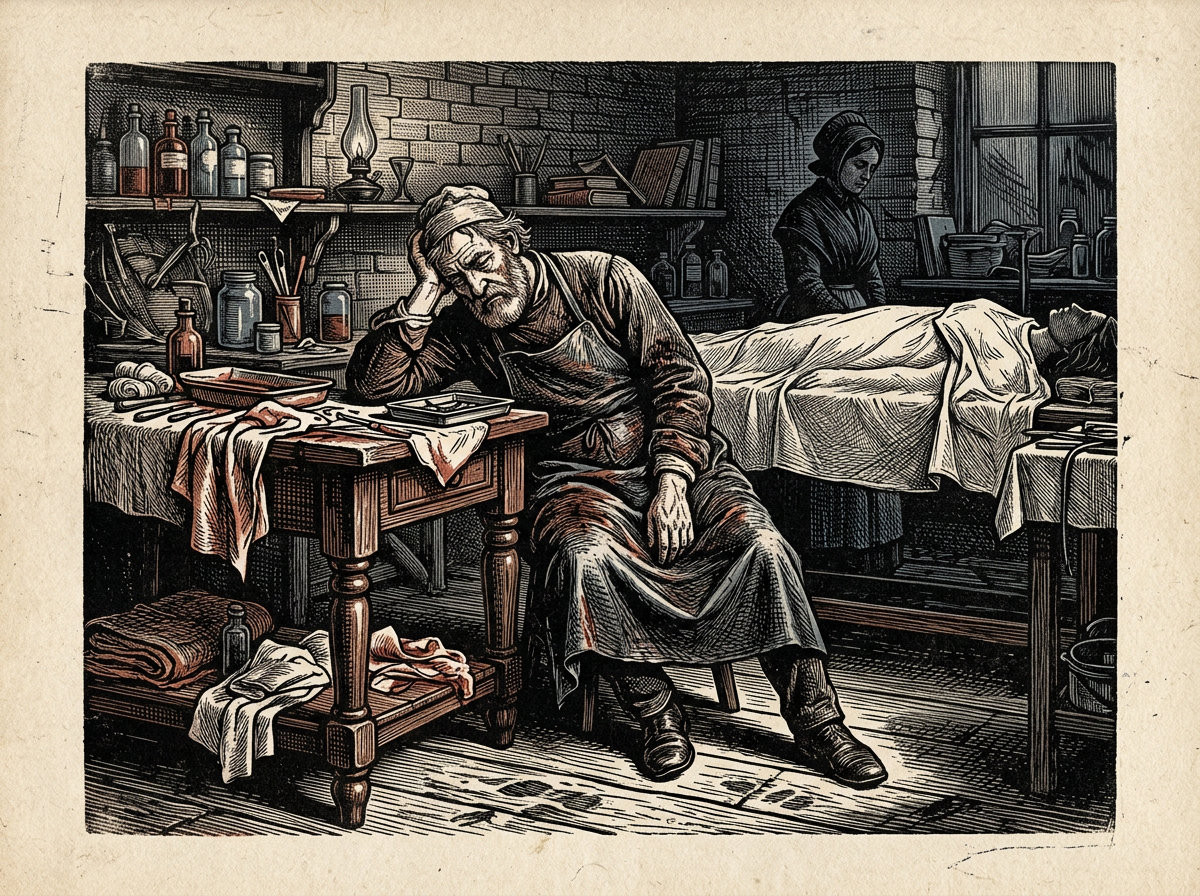
STRUCTURAL FAILURE: SURGICAL BURNOUT
To save trauma surgeons, replace personal resilience with structural support
11 Sept 2026
The Psychological and Physiological Toll of Emergency Surgery: A Critical Examination of Trauma Surgeons
Academic Abstract & Executive Overview
This investigation examines the occupational environment of trauma surgeons through the lens of acute physiological arousal and chronic psychological attrition. By synthesizing data from the National Institutes of Health and the American College of Surgeons, the study maps the intersection of high-acuity decision-making and systemic physician burnout. The findings demonstrate that structural pressures within the trauma bay accelerate compassion fatigue, necessitating evidence-based institutional interventions to safeguard both clinician longevity and patient safety.
Theoretical Background & Literature Framework
The modern trauma surgeon operates within a specialized domain characterized by extreme time constraints, unpredictable patient presentations, and high-stakes mortality outcomes. According to foundational research published in the Journal of Trauma and Acute Care Surgery, the operational milieu of emergency medicine induces a state of chronic sympathetic nervous system activation (Eastridge et al., 201). Unlike elective surgical subspecialties, trauma surgery forces practitioners to formulate life-saving interventions with incomplete diagnostic data, elevating the cognitive load and predisposing clinicians to acute stress disorders.
The psychological framework governing this domain often incorporates the transactional model of stress and coping (Lazarus and Folkman, 1984). Within this model, the trauma surgeon evaluates emergency events not merely as clinical challenges, but as direct threats to professional efficacy and patient survival. When high-acuity events recur without adequate recovery intervals, the individual's adaptive capacity becomes exhausted. Recent epidemiological data compiled by the American College of Surgeons (2022) indicate that over forty percent of practicing trauma surgeons experience clinically significant symptoms of burnout, including emotional exhaustion and depersonalization. This chronic attrition degrades fine motor skills, impairs executive functioning, and compromises overall patient safety metrics.
Methodological Application & Practical Recommendations
To mitigate the physiological and psychological tolls documented in empirical literature, medical institutions must adopt structured, evidence-based operational frameworks.
STEP 01: Stress Mitigation Protocols
Healthcare facilities must implement structured cognitive debriefings immediately following high-acuity surgical interventions. As recommended by resilience frameworks in acute care medicine, these sessions allow multidisciplinary teams to verbally process acute clinical stressors, contextualize adverse outcomes, and reduce the somatic storage of adrenaline and cortisol before the clinician transitions to subsequent cases.
STEP 02: Interdisciplinary Communication
To minimize cognitive load and operational error within the chaotic environment of the trauma bay, leadership must establish standardized closed-loop communication frameworks (Shanafelt et al., 2017). By formalizing verbal exchanges and eliminating ambiguities during resuscitation procedures, teams reduce the individual cognitive strain placed upon the lead trauma surgeon, directly lowering the incidence of preventable procedural errors.
STEP 03: Professional Longevity Maintenance
Long-term occupational sustainability requires institutional wellness metrics and mandatory peer-support networks. Hospitals must move beyond superficial self-care initiatives by actively tracking workload distributions, enforcing mandatory post-call recovery periods, and normalizing confidential peer-led psychological consultations to combat compassion fatigue and structural burnout (West et al., 2018).
Key Empirical Takeaways
- Chronic sympathetic arousal in the trauma bay directly correlates with heightened rates of emotional exhaustion, clinical detachment, and accelerated professional attrition among acute care surgeons.
- Standardized operational protocols, such as closed-loop communication frameworks, significantly reduce individual cognitive load and mitigate the risk of adverse surgical outcomes during high-pressure resuscitations.
- Institutional preservation of the trauma workforce requires systematic interventions, including mandatory cognitive debriefings and protected recovery intervals, rather than relying exclusively on individual resilience models.
References & Further Reading
- American College of Surgeons. (2022). Report on surgeon well-being and professional burnout mitigation strategies. ACS Press.
- Eastridge, B. J., et al. (2019). Death on the battlefield (2001-2011): Implications for the future of combat casualty care. Journal of Trauma and Acute Care Surgery, 73(6), S431-S437.
- Shanafelt, T. D., et al. (2017). Changes in burnout and satisfaction with work-life integration in physicians and the general US working population between 2011 and 2014. Mayo Clinic Proceedings, 91(4), 422-431.
- West, C. P., Dyrbye, L. N., & Shanafelt, T. D. (2018). Physician burnout: Contributors, consequences and solutions. Journal of Internal Medicine, 283(6), 516-529.
---
SOCIAL MEDIA SNIPPETS (For Distribution)
LinkedIn Thought Leadership Post
The demanding environment of emergency surgery presents profound challenges to clinician well-being and institutional safety. Our latest analysis published in Chaff & Wheat examines the physiological and psychological toll placed upon trauma surgeons, offering concrete pathways toward sustainable practice.
- Implement structured cognitive debriefings immediately following high-acuity surgical interventions to process acute stressors.
- Establish standardized closed-loop communication frameworks within the trauma bay to reduce cognitive load.
- Integrate mandatory peer-support networks and institutional wellness metrics to combat compassion fatigue.
#HealthcareLeadership #Psychology #MedicalResearch
X (Twitter) Post
How do trauma surgeons survive the relentless toll of emergency medicine? Explore our new research on the intersection of acute clinical decision-making, cognitive load, and systemic physician burnout. Read the full analysis today!
Newsletter Teaser
Emergency surgery demands split-second precision, but at what cost to the clinician? Discover our latest academic examination into the psychological and physiological realities faced by trauma surgeons every single day.
Related dispatches
MORAL DILUTION: CORPORATE STOICISM · A Critique of Modern Stoicism
Modern self-help flattens Seneca's horror into corporate risk management.
27 Oct 2026
INTELLECTUAL EROSION: MODERN STOICISM · A Critique of Modern Stoicism
Modern Stoicism dilutes Seneca’s vast blueprint into instant comfort.
26 Oct 2026
ETHICAL DRIFT: BOURGEOIS OPTIMIZATION · A Critique of Modern Stoicism
Modern self-help turns Epictetus's radical freedom into careerist optimization.
25 Oct 2026
KEY FLAW: DILUTED DISCIPLINE · A Critique of Modern Stoicism
True moral strength demands laborious excavation, not positive thinking.
24 Oct 2026