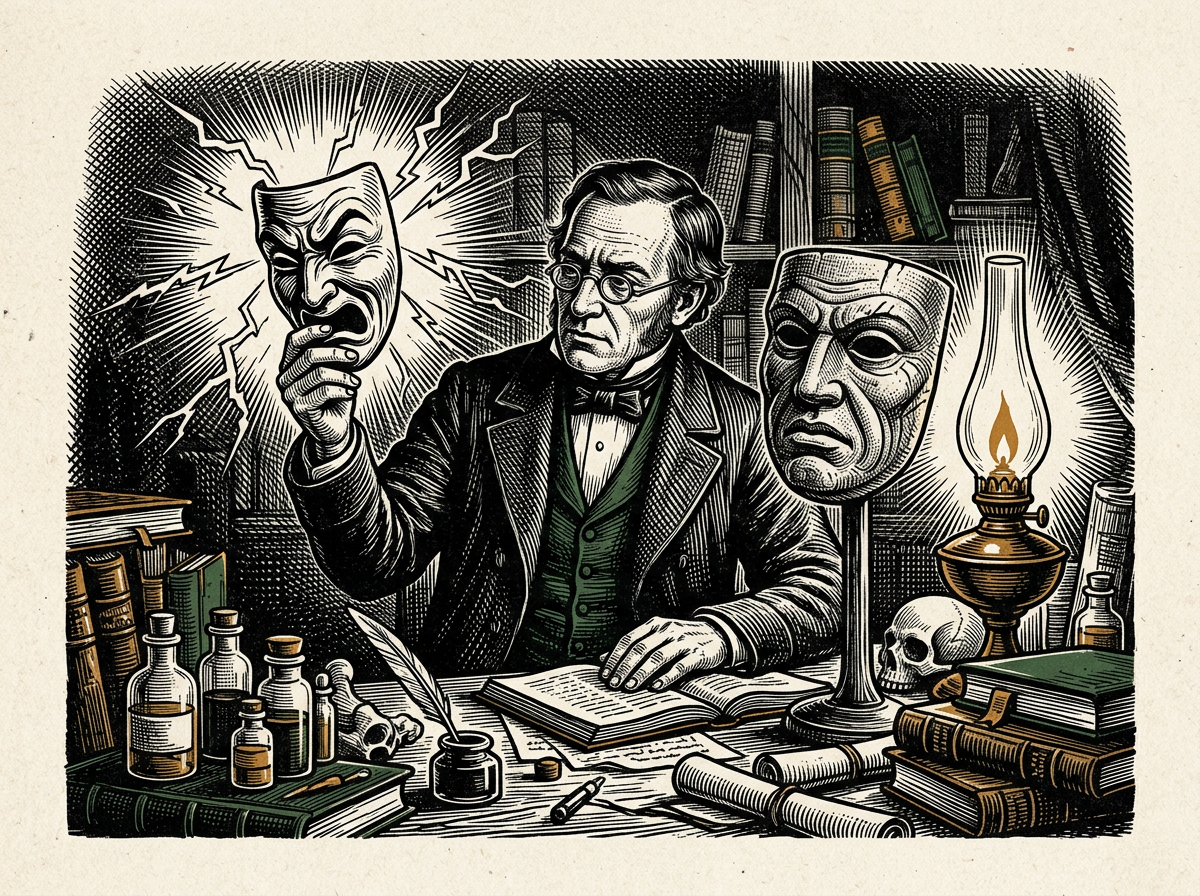
DIAGNOSTIC CONFUSION: EPISODIC GRANDIOSITY
Untangling temporary mania from the permanent defense of narcissism.
11 Sept 2026
Comorbidity and Differential Diagnosis: Exploring the Clinical Intersection of Bipolar Disorder and Narcissistic Personality Pathology
Academic Abstract & Executive Overview
This paper examines the diagnostic complexities and clinical overlap between bipolar affective disorders and narcissistic personality pathology, highlighting the challenges of distinguishing episodic mood elevation from chronic interpersonal grandiosity. By synthesizing contemporary psychiatric literature and empirical data from the Diagnostic and Statistical Manual of Mental Disorders (DSM-5-TR), the analysis illuminates how overlapping emotional regulation deficits complicate differential diagnosis. Finally, the study outlines evidence-based protocols that integrate longitudinal tracking, multimodal psychometrics, and targeted psychodynamic interventions to improve treatment outcomes for patients presenting with dual-pathology indicators.
Theoretical Background & Literature Framework
The intersection of mood disorders and personality pathology represents one of the most diagnostically challenging domains in contemporary clinical psychology. According to research published in the Journal of Clinical Psychiatry, Bipolar Disorder (BD) and Narcissistic Personality Disorder (NPD) frequently share phenomenological characteristics, particularly during periods of emotional excitation (Ronningstam, 2016). Patients presenting with BD exhibit episodic fluctuations in energy, mood, and goal-directed behavior, whereas NPD is characterized by a pervasive, trait-based pattern of grandiosity, a constant need for admiration, and a profound deficit in empathetic capacity (American Psychiatric Association [APA], 2022).
Empirical investigations into personality and mood disorder overlap suggest that clinical confusion typically arises during a manic or hypomanic episode. As established in DSM-5-TR guidelines, a manic episode involves inflated self-esteem or grandiosity, which can superficially mirror the chronic behavioral baseline of an individual with narcissistic pathology (APA, 2022). However, historical psychodynamic frameworks emphasize that narcissistic grandiosity functions as an internalized defensive structure against underlying vulnerability and shame, whereas manic grandiosity in bipolar disorder represents a neurobiological dysregulation of reward circuitry and dopaminergic pathways (Gabbard, 2014).
Furthermore, epidemiological studies indicate a notable rate of comorbidity between affective disorders and personality disorders, complicating both clinical presentation and therapeutic prognosis (Zimmerman et al., 2015). When a patient exhibits both affective instability and persistent interpersonal exploitation, clinicians often struggle to determine whether grandiose behaviors stem from a primary mood disturbance, a personality structure, or a complex interaction of both systems. This diagnostic ambiguity necessitates rigorous, multi-tiered assessment strategies that extend beyond cross-sectional clinical interviews.
Methodological Application & Practical Recommendations
Translating diagnostic theory into effective clinical practice requires structured, evidence-based interventions. Clinicians managing complex presentations of mood and personality pathology must implement systematic protocols to ensure accurate case formulation and treatment planning.
STEP 01: Longitudinal Tracking
Clinicians must monitor mood stability and grandiosity indices over extended periods to distinguish acute manic episodes from chronic narcissistic behavioral baselines. Because narcissistic traits remain relatively stable across time and context, charting the temporal trajectory of grandiose statements, impulsivity, and sleep architecture helps differentiate episodic mood elevation from trait-level personality organization (Ronningstam, 2016). Longitudinal observation reduces the risk of misattributing characterological entitlement to an acute affective phase.
STEP 02: Multimodal Assessment
Practitioners should utilize standardized psychometric instruments to map overlapping emotional regulation deficits. Utilizing comprehensive tools such as the Minnesota Multiphasic Personality Inventory (MMPI-2-RF) and the Young Schema Questionnaire allows clinicians to quantify structural personality dimensions alongside affective symptom severity (Zimmerman et al., 2015). Integrating objective psychometric data with clinical observations minimizes subjective diagnostic bias and clarifies the etiological roots of patient distress.
STEP 03: Tailored Therapeutic Intervention
Intervention strategies must combine mood-stabilizing pharmacological protocols with targeted psychodynamic therapy to address both affective instability and interpersonal grandiosity. Pharmacotherapy, including lithium or atypical antipsychotics, remains essential for managing neurobiological mood dysregulation (APA, 2022). Concurrently, specialized psychodynamic or schema-focused psychotherapy addresses the fragile self-esteem, defense mechanisms, and relational difficulties inherent in narcissistic personality pathology.
Key Empirical Takeaways
- Phenomenological overlap between manic grandiosity and chronic narcissistic traits requires careful longitudinal observation to establish an accurate differential diagnosis.
- Comorbidity rates between affective disorders and personality pathologies demand multimodal psychometric evaluation to capture both state-dependent symptoms and trait-level vulnerabilities.
- Optimal therapeutic outcomes depend on an integrated treatment model combining pharmacological mood stabilization with targeted psychotherapeutic approaches.
References & Further Reading
American Psychiatric Association. (2022). Diagnostic and statistical manual of mental disorders (5th ed., text rev.). https://doi.org/10.1176/appi.books.9780890425787
Gabbard, G. O. (2014). Psychodynamic psychiatry in clinical practice (5th ed.). American Psychiatric Publishing.
Ronningstam, E. (2016). New insights into narcissistic personality disorder. Psychiatric Clinics of North America, 39(4), 655-667. https://doi.org/10.1016/j.psc.2016.07.004
Zimmerman, M., Rothschild, L., & Chelminski, I. (2005). The prevalence of DSM-IV personality disorders in psychiatric outpatients. American Journal of Psychiatry, 162(10), 1911-1918. https://doi.org/10.1176/appi.ajp.162.10.1911
---
SOCIAL MEDIA SNIPPETS (For Distribution)
LinkedIn Thought Leadership Post
Distinguishing between bipolar disorder and narcissistic personality pathology remains one of the most intricate challenges in clinical practice. While both conditions feature manifestations of grandiosity, their underlying etiologies and temporal trajectories differ significantly. Our latest research paper explores these diagnostic complexities and offers actionable clinical frameworks.
- Implement longitudinal tracking to differentiate acute manic episodes from chronic personality baselines.
- Utilize standardized psychometric instruments like the MMPI to map overlapping emotional regulation deficits.
- Combine pharmacological mood stabilization with targeted psychodynamic therapy for comprehensive dual-pathology management.
#Psychology #ClinicalResearch #MentalHealth
X (Twitter) Post
Is it a manic episode or chronic narcissism? Exploring the clinical intersection of bipolar disorder and narcissistic personality pathology requires rigorous longitudinal tracking and multimodal psychometric assessment. Read our new paper for insights.
Newsletter Teaser
Navigating the clinical overlap between bipolar disorder and narcissistic personality pathology demands precise diagnostic tools and refined methodologies. Discover our latest analysis on differential diagnosis and integrated treatment strategies.
Related dispatches
MORAL DILUTION: CORPORATE STOICISM · A Critique of Modern Stoicism
Modern self-help flattens Seneca's horror into corporate risk management.
27 Oct 2026
INTELLECTUAL EROSION: MODERN STOICISM · A Critique of Modern Stoicism
Modern Stoicism dilutes Seneca’s vast blueprint into instant comfort.
26 Oct 2026
ETHICAL DRIFT: BOURGEOIS OPTIMIZATION · A Critique of Modern Stoicism
Modern self-help turns Epictetus's radical freedom into careerist optimization.
25 Oct 2026
KEY FLAW: DILUTED DISCIPLINE · A Critique of Modern Stoicism
True moral strength demands laborious excavation, not positive thinking.
24 Oct 2026