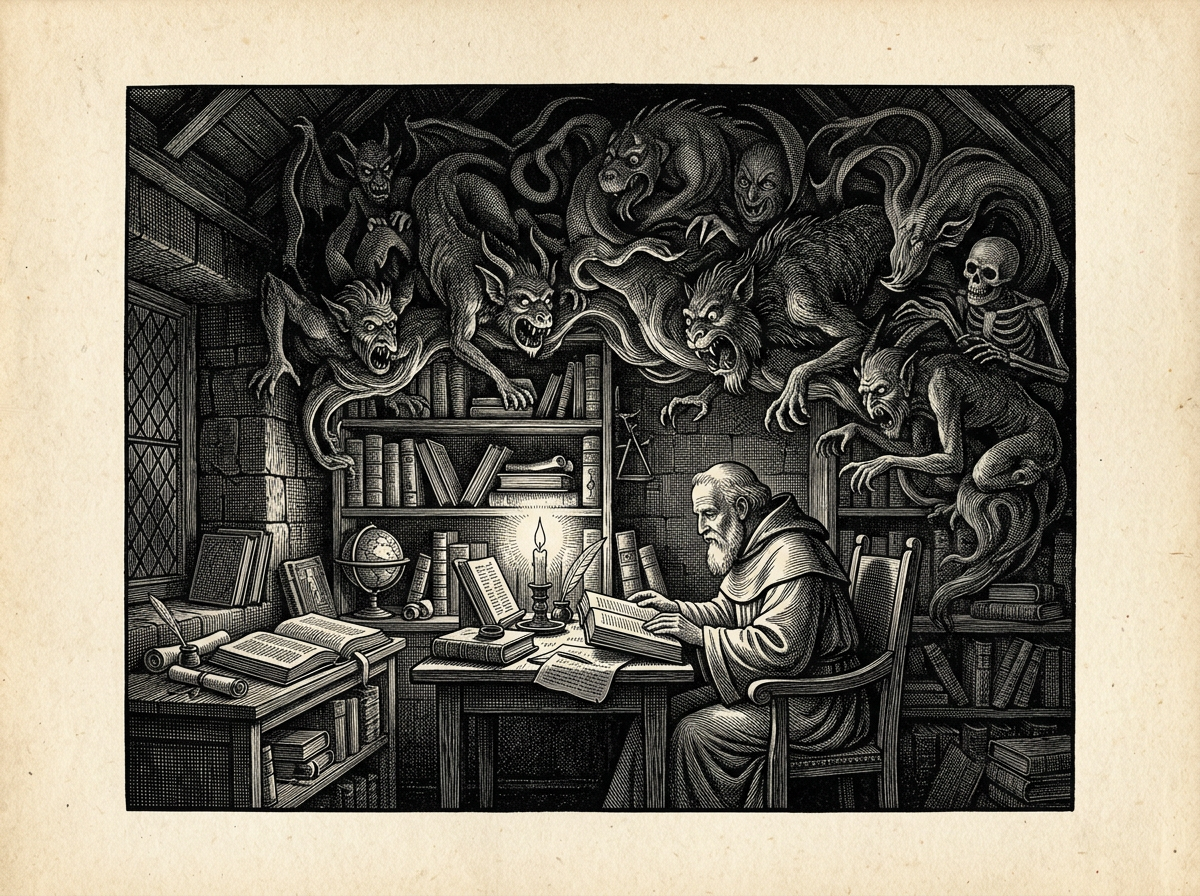
MAIN REDUCTION: CORPORATE STOICISM
Why modern self-help flattens Seneca's spiritual warnings into market management
09 Sept 2026
9th September - Nothing To Fear But Fear Itself | Commercializing Existential Terror into Political Management Tactics
The Text in Question
The Daily Stoic Rendering:
“But there is no reason to live and no limit to our miseries if we let our fears predominate.”
Standard Academic Translation:
“There is no limit to our miseries if we allow ourselves to be terrified by everything, and no reason to live if we live only to fear. Let prudence temper your fear, and let courage overcome it; even when you are in doubt, lean toward hope.” - Seneca, Epistulae Morales ad Lucilium, 13.12b (trans. Richard M. Gummere)
Academic Context & Breakdown
Seneca wrote his thirteenth letter to Lucilius while facing constant political instability under Nero, well aware that a single imperial paranoid whim could mean forced suicide or immediate exile. He was writing to a friend tormented by anxiety over impending lawsuits, political ruin, and physical destruction.
In the academic translation, Seneca frames anxiety as an existential disease that hollows out human existence from within. He is not offering a motivational pep rally for managing national crises, but warning that living in perpetual dread surrenders your rational capacity, making life itself entirely meaningless.
The Opening Counter-Punch
The Daily Stoic strips Seneca’s deep existential warning about the human soul and turns it into a high-school history civics lesson on crisis management. It degrades a profound spiritual medicine into a corporate-friendly productivity slogan about turning retreat into economic advance.
The Breakdown
- Polishing Political Rhetoric into Philosophy — The commentary leans heavily on FDR’s inaugurals to claim that "the Stoics knew that fear was to be feared because of the miseries it creates," conflating state political maneuvering with Seneca's inward, spiritual purification of the individual soul.
- Downgrading Spiritual Ruin to Economic Metrics — By asserting that "an economic depression is bad; a panic is worse," the commentary shifts Seneca’s terrifying focus on internal spiritual death toward the management of market fluctuations and commercial balance sheets.
- Subverting Courage into Modern Problem-Solving — The text claims we must reject fear "if we wish to turn this situation around," replacing Seneca’s absolute requirement for moral virtue with a utilitarian demand for worldly success and situational recovery.
Lessons from the Academic Text
The academic text teaches that allowing imaginary futures to dictate your present peace invalidates the value of being alive. True courage is not a technique to salvage a bad situation, but the deliberate choice to choose hope and reason over catastrophic imagination.
To practice this, take the specific fear that is currently paralyzing your mind and strip away all speculative "what-ifs." Focus strictly on what is actual and present right now, refusing to let potential future miseries rob you of your rational agency today.
How the Philosopher Would Respond
Seneca would despise seeing his urgent warnings on existential dread reduced to a historical anecdote about presidential speeches and economic panics. He would remind us that the target of philosophy is not the management of national recessions, but the liberation of the individual mind from imaginary terrors.
“We are in the habit of exaggerating, or imagining, or anticipating sorrow. There are more things, Lucilius, likely to frighten us than there are to crush us; we suffer more often in imagination than in reality.” - Seneca, Epistulae Morales ad Lucilium, 13.4-5
Related dispatches
MORAL DILUTION: CORPORATE STOICISM · A Critique of Modern Stoicism
Modern self-help flattens Seneca's horror into corporate risk management.
27 Oct 2026
INTELLECTUAL EROSION: MODERN STOICISM · A Critique of Modern Stoicism
Modern Stoicism dilutes Seneca’s vast blueprint into instant comfort.
26 Oct 2026
ETHICAL DRIFT: BOURGEOIS OPTIMIZATION · A Critique of Modern Stoicism
Modern self-help turns Epictetus's radical freedom into careerist optimization.
25 Oct 2026
KEY FLAW: DILUTED DISCIPLINE · A Critique of Modern Stoicism
True moral strength demands laborious excavation, not positive thinking.
24 Oct 2026