COGNITIVE REFRAMING: CHRONIC ANXIETY
True mental quiet comes from changing your relationship to thought
09 Sept 2026
How to Use Meditation Techniques to Calm an Anxious Mind
Quick Summary: What You Need to Know
Anxiety often traps the mind in a relentless loop of "what-ifs," flooding the body with stress hormones and draining your daily energy. Fortunately, evidence-based meditation techniques—ranging from targeted breath anchoring to systematic body scans—offer a proven way to decrease cortisol levels and anchor your awareness firmly in the present. By practicing these simple mindfulness tools consistently, you can train your brain to respond to everyday stress with calm resilience rather than automatic panic.
---
Background & Essential Facts
We have all experienced it: that sudden, tight squeeze in the chest, the shallow breathing, and the frantic reel of worst-case scenarios playing on an endless loop in our minds. In our modern world, anxiety has become an unwelcome default setting for millions. Whether it stems from career pressure, financial strain, or the general unpredictability of daily life, chronic anxiety keeps our nervous system locked in a perpetual state of "fight or flight."
For generations, society treated anxiety strictly with external remedies, often overlooking the profound healing power of our own internal architecture. But in recent decades, modern neuroscience has caught up with ancient wisdom. Extensive clinical research now confirms what contemplative traditions have known for centuries: meditation physically alters the brain.
When we experience anxiety, our amygdala—the brain’s emotional processing center—goes into overdrive, pumping out cortisol and adrenaline. Meditation techniques act as a biological brake for this cycle. Neuroimaging studies reveal that regular mindfulness practices actually shrink the gray matter in a hyper-reactive amygdala while simultaneously strengthening the prefrontal cortex, the area responsible for executive function, emotional regulation, and rational decision-making.
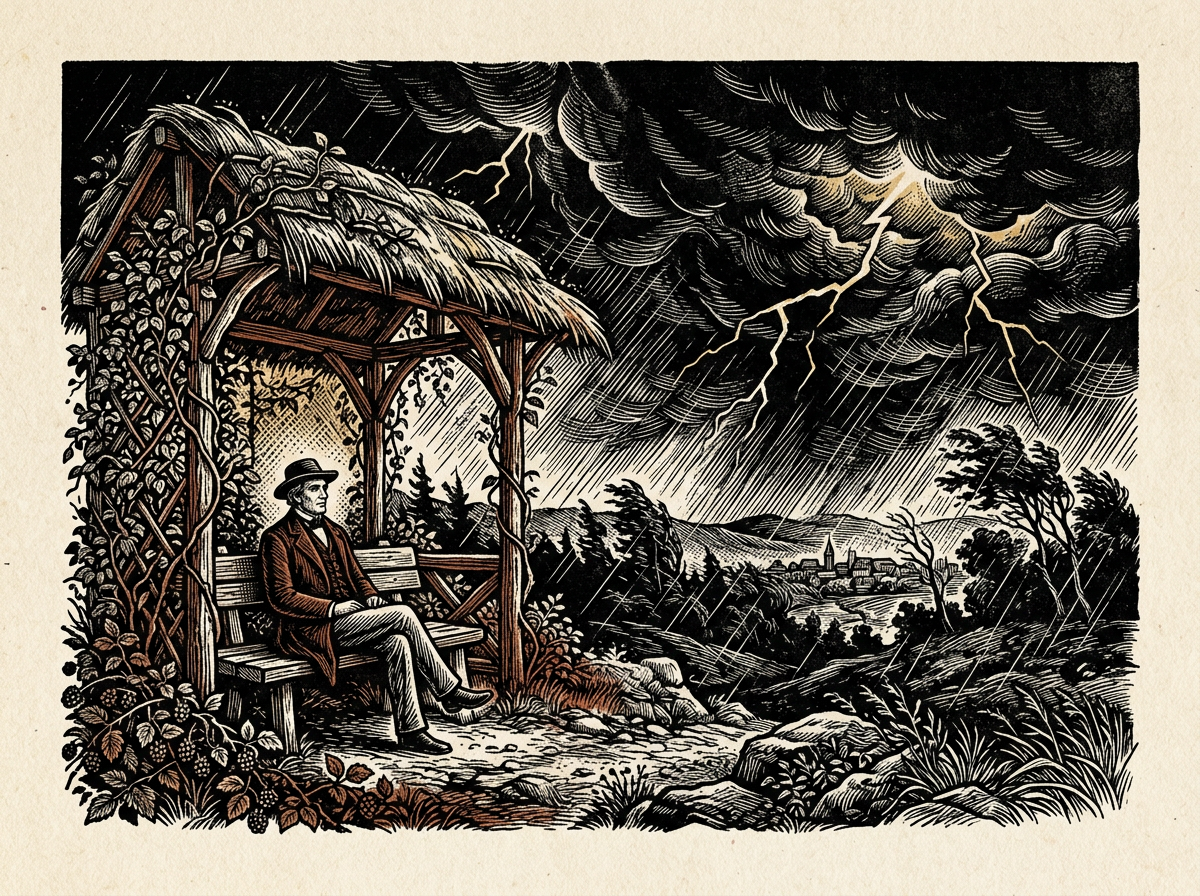
Crucially, learning to use meditation for anxiety does not require you to clear your mind of all thoughts—an impossible feat that usually leads to more frustration. Instead, meditation is about changing your relationship to your thoughts. By practicing focused awareness, you learn to observe the mental storm from a place of shelter, realizing that you are the sky, not the weather passing through it.
---
How To Take Action / What To Do
You do not need to sit cross-legged on a mountain peak or meditate for hours a day to reap these benefits. Just ten minutes of daily, focused practice can dramatically shift your nervous system. Here are three research-backed meditation techniques you can use right now to calm an anxious mind.
STEP 01: Body Scan Meditation
Anxiety is rarely just in our heads; it lives heavily in our physical bodies. When we are stressed, our shoulders hike up toward our ears, our jaws clench, and our stomachs tie in knots. A body scan meditation helps you short-circuit this physical feedback loop by systematically releasing stored tension.
- Find a comfortable posture: — Sit upright in a supportive chair with your feet flat on the floor, or lie down comfortably on your back.
- Begin at the extremities: — Close your eyes and bring your awareness down to your toes. Notice whatever sensations are present—warmth, coolness, tingling, or even numbness—without trying to change them.
- Move upward slowly: — Gradually sweep your attention up through your feet, ankles, calves, and knees. As you bring your focus to each body part, take a slow, deep breath in, and as you exhale, consciously imagine releasing any tightness, gripping, or heaviness.
- Complete the scan: — Continue moving your awareness up through your thighs, hips, abdomen, chest, back, shoulders, arms, hands, neck, and finally to your scalp. By the time you reach the top of your head, your body should feel noticeably heavier, looser, and more grounded.
STEP 02: Breath Anchoring
When an anxious mind starts spinning out of control, the breath is your ultimate anchor. Because the breath is intimately connected to the autonomic nervous system, controlling your focus on it can instantly signal to your brain that you are safe.
- Settle in and find your anchor: — Sit comfortably, close your eyes, and let your breathing fall into its natural rhythm. Do not try to force deep breaths yet; just let it be. Now, choose a physical anchor point: the tip of your nose, the back of your throat, or the rise and fall of your abdomen.
- Observe the physical sensations: — Direct 100% of your mental spotlight onto that single point. Notice the coolness of the air as you inhale, the slight friction against your skin, and the warmth of the air as you exhale.
- Gently return when the mind wanders: — Within seconds, your mind will inevitably wander off to a worry about work or a to-do list. This is not a failure; it is simply what minds do. The exact moment you realize you have drifted is the moment of mindfulness. Without self-judgment, gently take your attention by the hand and guide it back to the physical sensation of the breath. Repeat this as many times as necessary.
STEP 03: Labeling Thoughts
One of the primary fuels for anxiety is identification: we believe every fearful thought that pops into our head. If a thought says, "Everything is going to fall apart," we panic as if it is an absolute fact. Labeling thoughts is a cognitive technique designed to create a healthy gap between you and your inner narrative.
- Observe the mental stream: — Sit quietly and watch your thoughts as if you are sitting on a park bench watching cars drive by.
- Apply a simple label: — When a wave of anxiety, a worrisome prediction, or a critical self-judgment arises, do not fight it or dive down the rabbit hole. Instead, mentally tag it with a simple, neutral label. Use words like "thinking," "worrying," "planning," or "remembering."
- Watch them pass like clouds: — By slapping a simple linguistic label on the thought, you demystify it. You strip away its emotional urgency. Visualize the thought as a fluffy white cloud drifting across a vast blue sky. Acknowledge its presence, watch it move across your mental horizon, and let it float on by without grabbing onto it.
---
Key Takeaways
- Biological Reset: — Meditation actively reduces cortisol and adrenaline levels while shrinking the brain's fear center (the amygdala), training your nervous system to respond to stress with calm instead of reactivity.
- Somatic Release: — The Body Scan technique helps locate and consciously release the physical tension that chronic anxiety traps in your muscles, joints, and posture.
- Cognitive Distance: — Breath anchoring and thought labeling do not stop thoughts from happening; instead, they teach you to observe worries without judgment, letting them pass safely like clouds in the sky.
Related dispatches
MORAL DILUTION: CORPORATE STOICISM · A Critique of Modern Stoicism
Modern self-help flattens Seneca's horror into corporate risk management.
27 Oct 2026
INTELLECTUAL EROSION: MODERN STOICISM · A Critique of Modern Stoicism
Modern Stoicism dilutes Seneca’s vast blueprint into instant comfort.
26 Oct 2026
ETHICAL DRIFT: BOURGEOIS OPTIMIZATION · A Critique of Modern Stoicism
Modern self-help turns Epictetus's radical freedom into careerist optimization.
25 Oct 2026
KEY FLAW: DILUTED DISCIPLINE · A Critique of Modern Stoicism
True moral strength demands laborious excavation, not positive thinking.
24 Oct 2026