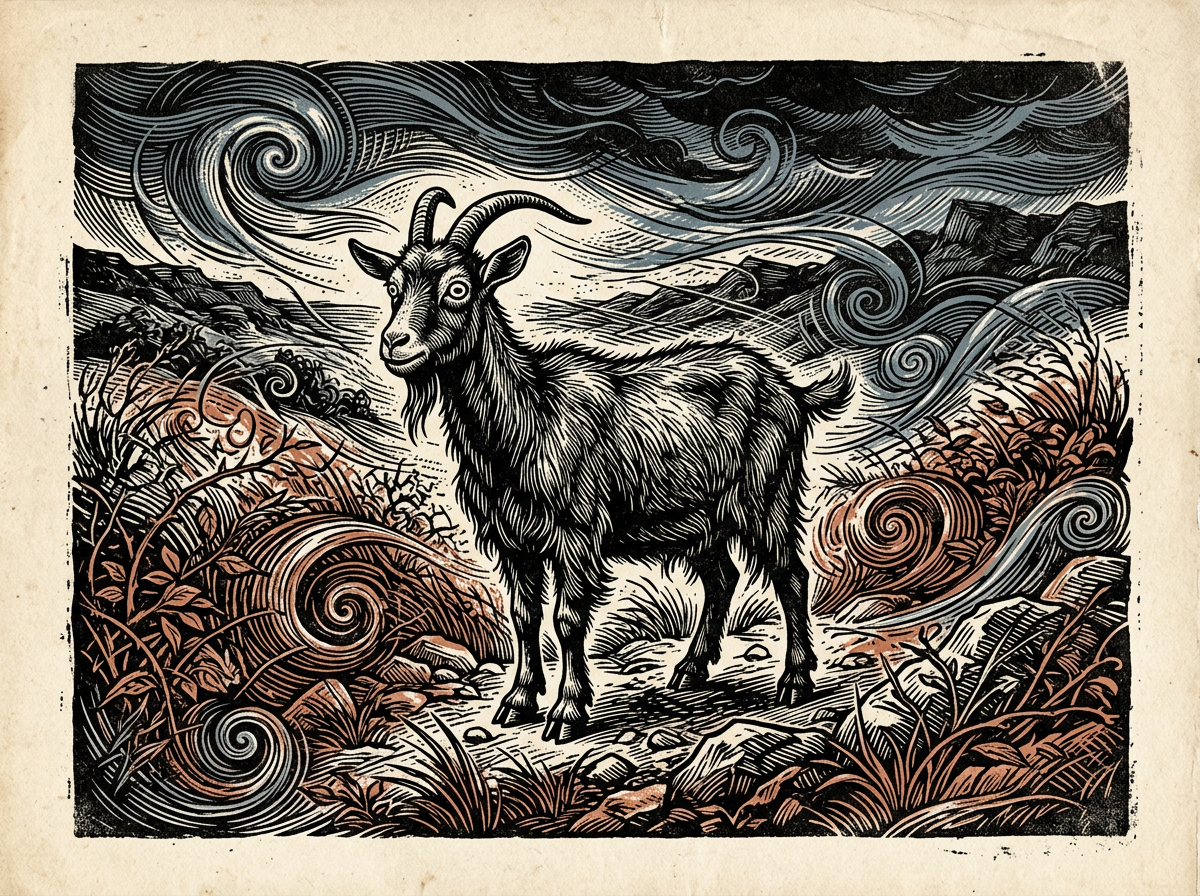
VIRAL COPING: MENTAL PARALYSIS
Why a frozen goat offers an ideal mirror for modern anxiety
07 Sept 2026
What is the "Overthinking Goat" Viral Phenomenon?
Quick Summary: What You Need to Know
The "Overthinking Goat" is a viral social media phenomenon featuring short, looping video clips of goats captured in moments of intense, wide-eyed stillness or erratic twitching. These clips have become a universal shorthand for chronic overthinking and anxiety, serving as a hilarious, relatable visual metaphor for the modern experience of mental paralysis. By projecting human psychological overwhelm onto these quirky animals, the meme has turned awkward animal behavior into a legitimate coping mechanism for millions of stressed-out internet users.
Background & Essential Facts
If you’ve spent any time on TikTok or Instagram Reels lately, you’ve likely encountered them: goats that look like they’ve just realized they forgot to turn the oven off—three days ago.
Goats are naturally expressive creatures with rectangular pupils that give them an inherently “unhinged” look. When a goat freezes, tilts its head, or stares blankly into the middle distance while the world moves around it, the internet does what it does best: it anthropomorphizes the situation. The “Overthinking Goat” meme gained traction because it perfectly captures that specific feeling of "brain fog" or "analysis paralysis"—where you’re physically present, but mentally, you’re stuck in a loop of replaying an embarrassing conversation from 2014 or spiraling over a vague email from your boss.
There isn't a single "originator" of the meme; rather, it’s a collective cultural observation. Content creators began pairing footage of these frozen goats with text overlays like, "Me at 3:00 AM wondering if I should have said 'you too' to the waiter," or "My brain when I have one minor task to complete." The comedy works because it’s inherently self-deprecating. It reminds us that our complex, human anxieties—which feel heavy and isolating—can be distilled into the absurd, blank stare of a farm animal. It’s a way of saying, "I am not okay, but I am laughing at how not okay I am."
How To Take Action: Escaping the Overthinking Loop
While the "Overthinking Goat" is funny, we all know the feeling of being trapped in a mental loop isn’t exactly a walk in the park. If you find yourself channeling your inner goat—frozen, panicking, and stuck—here is how to regain control.
Step 01: Identify the Trigger
The first step to stopping a downward spiral is calling it out by name. Overthinking rarely starts with a massive problem; it usually begins with a small "trigger." Maybe it was a slightly curt text message, a minor mistake in a report, or simply the daunting sight of a messy living room.
When you feel that familiar tension rising—the tightening of the chest, the rapid-fire internal monologue—stop and label it. Say to yourself, "I am beginning to overthink this." By shifting from experiencing the thought to observing the thought, you create a microscopic gap between your brain and your reaction. That gap is where your power lies.
Step 02: Break the Loop with the 5-4-3-2-1 Method
Once you’ve identified that you’re "going full goat," you need to get out of your head and back into your body. Physical grounding is the fastest way to derail a mental spiral. The 5-4-3-2-1 sensory method is the gold standard for this:
- Acknowledge 5 things you see: — Look around the room. A lamp, a crack in the wall, your own hand, a plant, a coffee mug.
- Acknowledge 4 things you can touch: — Feel the fabric of your chair, the cool surface of your desk, your hair, the floor under your feet.
- Acknowledge 3 things you hear: — The hum of the fridge, a car outside, the sound of your own breath.
- Acknowledge 2 things you can smell: — Coffee, fresh air, or perhaps the scent of your laundry detergent.
- Acknowledge 1 thing you can taste: — A sip of water or even just the lingering taste of your last meal.
This forces your prefrontal cortex to take over from the emotional, anxiety-prone parts of your brain, effectively "rebooting" your system.
Step 03: Laugh it Off
Never underestimate the de-escalation power of humor. When we overthink, we tend to take our internal monologue very seriously, treating every hypothetical scenario as a pending catastrophe. Sharing a meme, sending an "Overthinking Goat" video to a friend, or simply acknowledging the absurdity of your stress is a powerful tool.
Humor provides perspective. It reminds you that everyone—literally everyone—has a "goat moment." When you laugh at the meme, you are essentially laughing at your own humanity. It’s a release valve for pressure. So, the next time you feel the panic set in, lean into the irony. Don't fight the feeling so hard that you become a permanent statue; acknowledge the ridiculousness of the situation, take a breath, and move on.
Key Takeaways
- Relatability is Key: — The "Overthinking Goat" is a viral hit because it validates the universal human struggle of being trapped in one’s own head.
- Mindfulness Matters: — Recognizing the physical sensation of a trigger is the first step in stopping the spiral before it gathers momentum.
- Humor is a Reset Button: — Use memes and laughter to break the tension; if you can find the humor in your anxiety, you’ve already begun to take away its power.
Related dispatches
MORAL DILUTION: CORPORATE STOICISM · A Critique of Modern Stoicism
Modern self-help flattens Seneca's horror into corporate risk management.
27 Oct 2026
INTELLECTUAL EROSION: MODERN STOICISM · A Critique of Modern Stoicism
Modern Stoicism dilutes Seneca’s vast blueprint into instant comfort.
26 Oct 2026
ETHICAL DRIFT: BOURGEOIS OPTIMIZATION · A Critique of Modern Stoicism
Modern self-help turns Epictetus's radical freedom into careerist optimization.
25 Oct 2026
KEY FLAW: DILUTED DISCIPLINE · A Critique of Modern Stoicism
True moral strength demands laborious excavation, not positive thinking.
24 Oct 2026