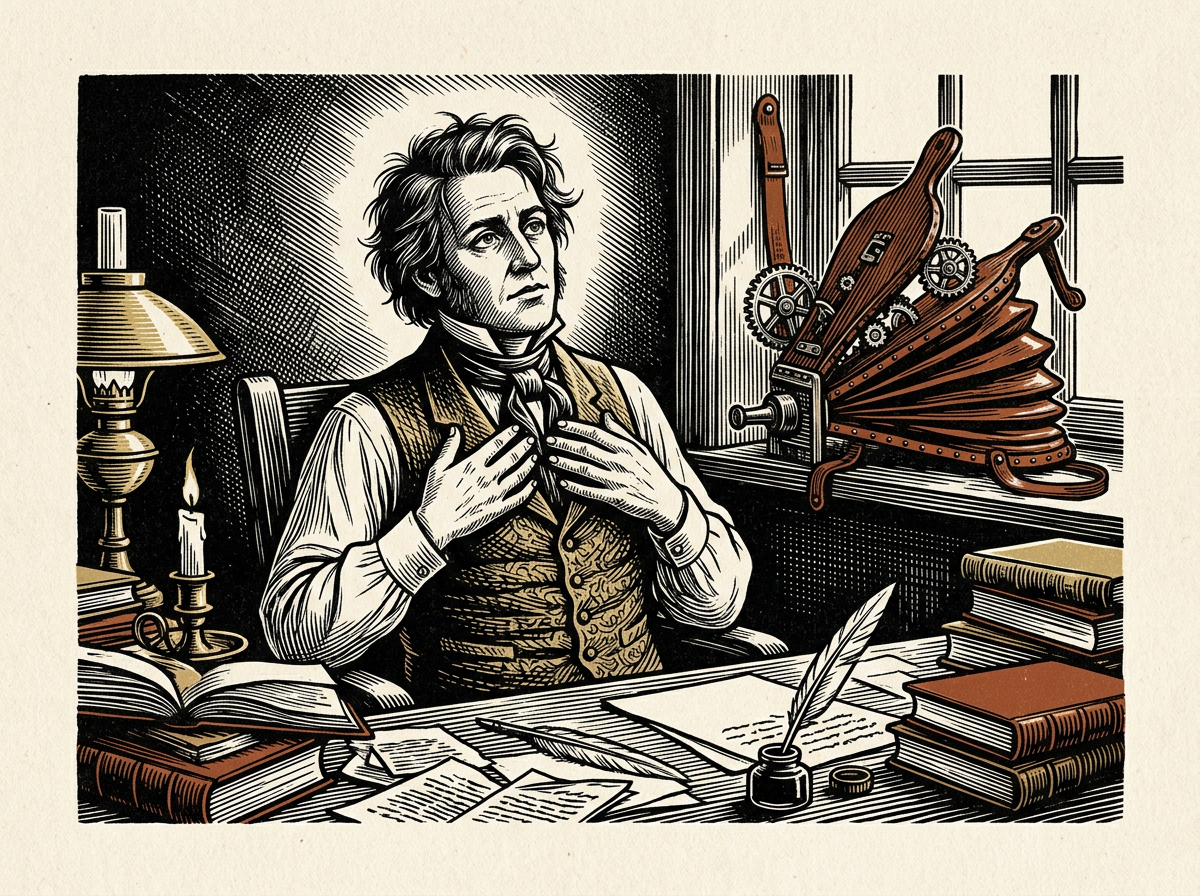
NERVOUS REGULATION: SYSTEMIC OVERWHELM
Managing modern anxiety requires biological tactics before cognitive reframing.
07 Sept 2026
What Are the Best Anxiety Coping Strategies?
Quick Summary: What You Need to Know
Anxiety coping strategies are practical behavioral and cognitive tools used to reduce the intensity of anxious feelings and help you regain emotional regulation. They range from immediate, in-the-moment physical grounding exercises that calm your nervous system to long-term lifestyle adjustments that build lasting psychological resilience. By utilizing evidence-based techniques rooted in clinical psychology, anyone can learn to manage both generalized worry and acute panic effectively.
---
Background & Essential Facts
Let’s face it: anxiety is a universal human experience, but when it shifts from a helpful evolutionary alarm system into a constant, overwhelming hum, it starts running your life. Whether you are dealing with a sudden wave of acute panic before a major presentation or the persistent, grinding weight of generalized anxiety, your brain and body are reacting to perceived threats.
For decades, clinical psychologists, neuroscientists, and mental health organizations have studied how the human nervous system processes stress. What they’ve found is empowering: you are not entirely at the mercy of your racing thoughts.
Historically, treatment for anxiety leaned heavily toward either long-term talking therapies or heavy pharmacological interventions. While both have their place, modern evidence-based practices emphasize a two-pronged approach. You need acute tools to short-circuit a stress response right when it happens, and chronic lifestyle strategies to lower your baseline reactivity over time.
Understanding anxiety isn't about eliminating it entirely—that's impossible and biologically counterproductive. Instead, it’s about expanding your "window of tolerance." When you have a toolkit of reliable coping strategies, your brain learns that even when anxiety shows up, you have the power to navigate it without falling apart.
---
How To Take Action / What To Do
You don't need a psychology degree to start managing your anxiety. You just need the right tools deployed at the right time. Here are three actionable steps you can take today to regain control, ranging from immediate physiological relief to deep mental decluttering and boundary-setting.
Step 1: Use Physiological Sighs
When anxiety spikes, your breathing naturally becomes shallow and rapid. This signals to your brain that you are in physical danger, triggering a cascade of stress hormones like cortisol and adrenaline. To short-circuit this loop instantly, you need to trick your autonomic nervous system into relaxation.
Enter the physiological sigh—a breathing pattern discovered by neuroscientists that is actually hardwired into our biology to offload carbon dioxide and calm the heart.
- How to do it: — Take two quick inhales through your nose. The first inhale should be deep, filling your lungs, and the second inhale should be a sharp "top-off" breath to fill them to maximum capacity.
- The exhale: — Follow this with one long, slow, controlled exhale through your mouth, as if you are blowing through a tiny straw.
- Why it works: — Doing this just two or three times mechanically forces your tiny air sacs (alveoli) to reopen and offload trapped carbon dioxide, immediately lowering your heart rate and bringing your nervous system back down to baseline.
Step 2: Write a Brain Dump
Racing thoughts feed on internal real estate. The more you try to mentally juggle a to-do list, a worst-case scenario, and a lingering social awkwardness from three years ago, the more overwhelmed you will feel. Your brain is trying to solve problems that it doesn't have the bandwidth to hold all at once.
- How to do it: — Grab a physical piece of paper and a pen—avoid your phone or laptop to keep digital distractions at bay. Set a timer for five minutes and write continuously. Do not edit, do not worry about handwriting, and definitely don't worry about sounding coherent.
- What to write: — Transcribe every single worry, task, annoyance, and random thought onto the page. If your brain says, "I have too much to do and I'm going to fail," write that down. If it says, "I need to buy milk," write that down right next to it.
- Why it works: — Externalizing your worries moves them from the emotional, reactive parts of your brain (the amygdala) to the logical, processing parts (the prefrontal cortex). Once your thoughts are physically on the page, your brain stops screaming about them because it trusts that they won't be forgotten.
Step 3: Set Actionable Boundaries
Sometimes, anxiety isn't a chemical imbalance or a failure of mindset—it's a very logical reaction to an unsustainable life. If your calendar is packed to the brim, your sleep is compromised, and you are constantly absorbing the stress of toxic environments or demanding people, your nervous system is going to sound the alarm.
- How to do it: — Conduct an honest energy audit of your week. Identify the specific external stressors, commitments, people, or media habits that consistently drain your emotional battery. Once you spot them, systematically limit your exposure.
- Implement the change: — Practice saying "no" without over-explaining. Mute group chats that spike your cortisol. Block out uninterrupted rest time in your calendar just as you would a high-priority work meeting.
- Why it works: — Boundaries aren't walls designed to keep people out; they are doors that regulate what is allowed into your mental space. By protecting your energy, you prevent your baseline anxiety from hitting critical mass in the first place.
---
Key Takeaways
- Target the body first: — Use physiological sighs (two quick inhales through the nose, one long exhale through the mouth) to instantly lower your heart rate and disrupt acute stress responses.
- Externalize mental clutter: — Perform a five-minute "brain dump" on paper to move racing thoughts out of your head and into physical reality, reducing cognitive overload.
- Protect your peace: — Audit your external environment and set firm, actionable boundaries to systematically limit exposure to people, commitments, and habits that drain your energy.
Related dispatches
MORAL DILUTION: CORPORATE STOICISM · A Critique of Modern Stoicism
Modern self-help flattens Seneca's horror into corporate risk management.
27 Oct 2026
INTELLECTUAL EROSION: MODERN STOICISM · A Critique of Modern Stoicism
Modern Stoicism dilutes Seneca’s vast blueprint into instant comfort.
26 Oct 2026
ETHICAL DRIFT: BOURGEOIS OPTIMIZATION · A Critique of Modern Stoicism
Modern self-help turns Epictetus's radical freedom into careerist optimization.
25 Oct 2026
KEY FLAW: DILUTED DISCIPLINE · A Critique of Modern Stoicism
True moral strength demands laborious excavation, not positive thinking.
24 Oct 2026