MYTHIC ORDER: SACRED DUTY
How ancient genealogies anchor modern civic duty
06 Sept 2026
Who Is the Daughter of Saturn in Mythology? Classical Roman Legends Explained
Quick Summary: What You Need to Know
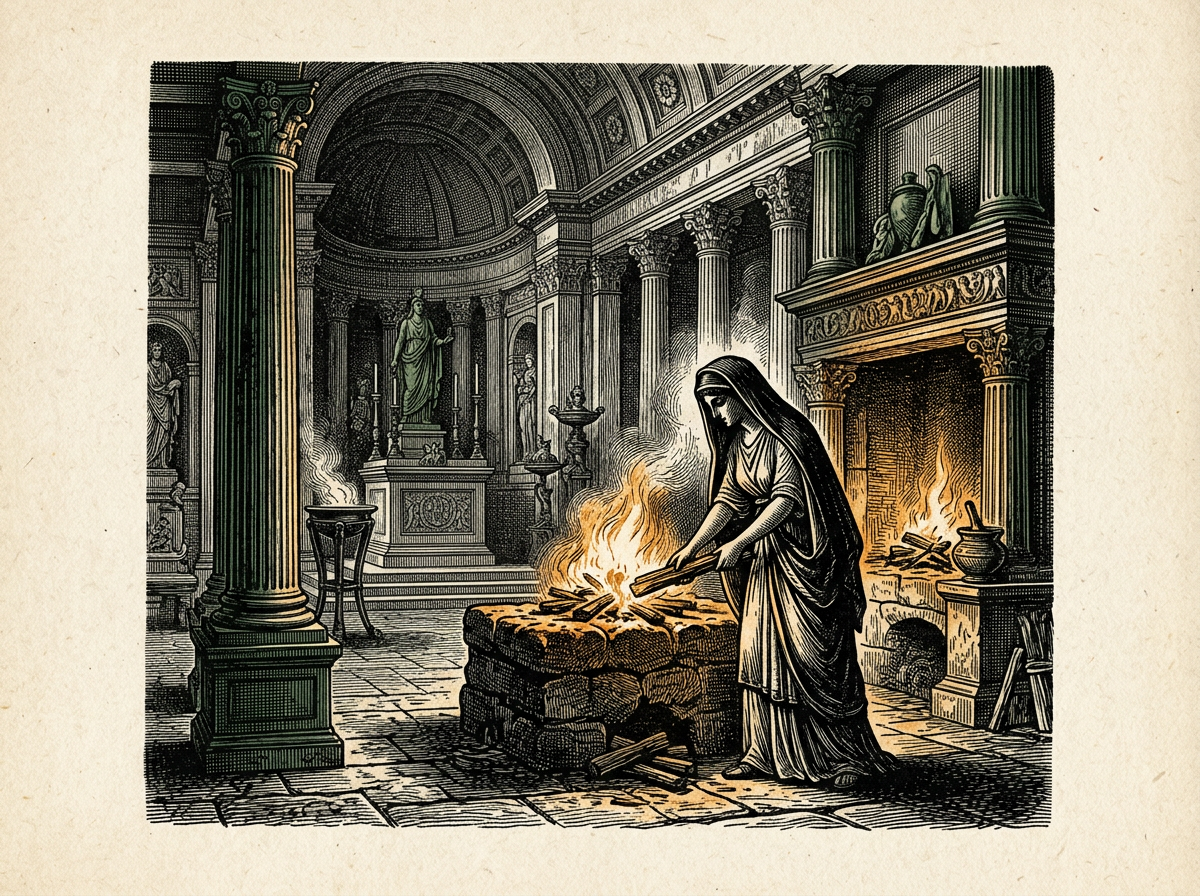
In Roman mythology, the phrase "daughter of Saturn" does not point to just one single goddess, but most frequently refers to Vesta, the revered goddess of the hearth, or Juno, the queen of the gods. Because Saturn was the ancient ruler of the universe and father of the Olympian pantheon, his female offspring held immense power over Rome's domestic stability, religious rites, and cosmic order. Understanding these classical legends requires looking past a single genealogical line to explore how ancient Romans viewed family, sacred duty, and divine power through these influential goddesses.
---
Background & Essential Facts
To understand the daughters of Saturn, we first have to look at Saturn himself. In Roman mythology, Saturn was the primordial titan who ruled during the legendary "Golden Age"—a time of peace, abundance, and agricultural prosperity. As a central figure in Roman cosmology, Saturn sired several children with his consort Ops (the earth goddess).
While Greek mythology equivalents like Cronus and Rhea are widely recognized (featuring daughters like Hestia, Demeter, and Hera), the Roman iterations evolved distinct cultural traits and civic responsibilities. The daughters of Saturn were not mere background characters in grand epics; they were the active architectural pillars of Roman daily life and state religion.
- Vesta: — As the goddess of the hearth, home, and family, Vesta received daily prayers and maintained the sacred eternal flame of Rome. Her temple in the Roman Forum was the beating heart of the city's spiritual life.
- Juno: — As the queen of heaven and wife of Jupiter (Saturn’s overthrower and son), Juno presided over marriage, women, and the governance of the Roman state.
Exploring these figures reveals how ancient Romans mapped their own societal values—such as loyalty, domestic order, and civic duty—onto the divine family tree.
---
How To Take Action / What To Do
If you want to dive deeper into classical mythology or accurately research these ancient figures, you can follow a structured approach to uncover the true roots of these legends. Here is how to navigate the primary sources, identify the specific goddesses, and analyze their symbolic meanings like a classical scholar.
Step 01: Research Classical Sources
To truly understand the myths surrounding the children of Saturn, start by consulting primary classical texts. Avoid relying solely on modern summaries; instead, read the original poetry and historical accounts written by ancient Romans.
- Ovid’s *Fasti*: — This brilliant poetic calendar explores Roman festivals, astronomy, and mythology, offering rich details about Vesta, Saturn, and the rituals dedicated to them.
- Virgil’s *Aeneid*: — Virgil weaves deep ancestral reverence for Saturn and his lineage into the founding myth of Rome, linking Trojan heroes directly to the divine heritage of the Italian peninsula.
- Livy and Ovid: — Look into Roman historians and poets who cataloged the religious laws, temple dedications, and festival dates associated with Saturn's offspring.
Step 02: Identify Specific Deities
Because ancient genealogies can be fluid and vary by region or poet, you must learn to distinguish between the various Roman goddesses linked to Saturn.
- Map out the familial relationships — Remember that Saturn fathered Vesta, Juno, and Ceres, making them sisters to Jupiter, Neptune, and Pluto.
- Differentiate by domain — If a text focuses on domestic sanctuary, the sacred fire, and perpetual virginity, it refers to Vesta. If the text emphasizes statecraft, lawful marriage, and queenly authority, it points to Juno.
- Look for alternate traditions — Occasionally, minor goddesses or abstractions like Ops (who is sometimes styled as both his wife and a maternal figure in the lineage) blur the lines of classic genealogy. Keeping a clear chart of attributes will help you stay grounded.
Step 03: Explore Symbolic Meanings
Myths are rarely just stories; they are cultural blueprints. Analyze how these figures represented foundational societal values in ancient Rome.
- Examine the **symbolism of the hearth** — Vesta’s eternal flame represented the continuity and survival of the Roman state. If the flame went out, it was viewed as a catastrophic omen for the entire civilization.
- Analyze **familial duty (*pietas*)** — Juno represented the sanctity of marriage and the legal bonds holding Roman society together.
- Connect mythology to sociology — Ask yourself how the worship of Saturn's daughters reinforced patriarchal structures, political loyalty, and religious devotion in the ancient world. By viewing these goddesses through a sociological lens, you transform distant legends into living history.
---
Key Takeaways
- Multiple Identities: — The title "daughter of Saturn" most frequently refers to major Roman goddesses like Vesta (hearth) or Juno (marriage and statehood) rather than a single specific figure.
- Primary Source Research: — Unlocking the true history requires reading classical texts like Ovid's Fasti and Virgil's Aeneid rather than relying on modern adaptations.
- Foundational Values: — These goddesses were not just divine characters; they symbolized vital societal pillars for ancient Rome, including domestic sanctity, civic duty, and the eternal continuity of the state.
Related dispatches
MORAL DILUTION: CORPORATE STOICISM · A Critique of Modern Stoicism
Modern self-help flattens Seneca's horror into corporate risk management.
27 Oct 2026
INTELLECTUAL EROSION: MODERN STOICISM · A Critique of Modern Stoicism
Modern Stoicism dilutes Seneca’s vast blueprint into instant comfort.
26 Oct 2026
ETHICAL DRIFT: BOURGEOIS OPTIMIZATION · A Critique of Modern Stoicism
Modern self-help turns Epictetus's radical freedom into careerist optimization.
25 Oct 2026
KEY FLAW: DILUTED DISCIPLINE · A Critique of Modern Stoicism
True moral strength demands laborious excavation, not positive thinking.
24 Oct 2026