HIDDEN DEPTHS: UNCONSCIOUS MOTIVATION
Freud’s true legacy lies in admitting we are not entirely rational
06 Sept 2026
Who Is Sigmund Freud? The Father of Psychoanalysis Explained
Quick Summary: What You Need to Know
Sigmund Freud was an Austrian neurologist (1856–1939) who revolutionized our understanding of the human mind by founding psychoanalysis—a clinical method for treating psychological distress through deep, exploratory dialogue between patient and analyst. Best known for popularizing the concept of the unconscious mind, dream analysis, and defense mechanisms, Freud permanently altered how humanity views desire, trauma, and identity.
***
Background & Essential Facts
To understand modern psychology, you have to start in late 19th-century Vienna, where a medical doctor named Sigmund Freud began noticing something peculiar. Many of his patients suffered from physical symptoms—like temporary paralysis, blindness, or chronic coughing—that had no detectable organic or biological cause. Medical science at the time was baffled.
Freud, working alongside colleague Josef Breuer, began using hypnosis and a new technique called "free association," encouraging patients to speak whatever came to their minds without censorship. What he discovered changed history: these physical ailments were often physical manifestations of repressed emotional trauma. The mind, it turned out, had a vast, hidden basement.
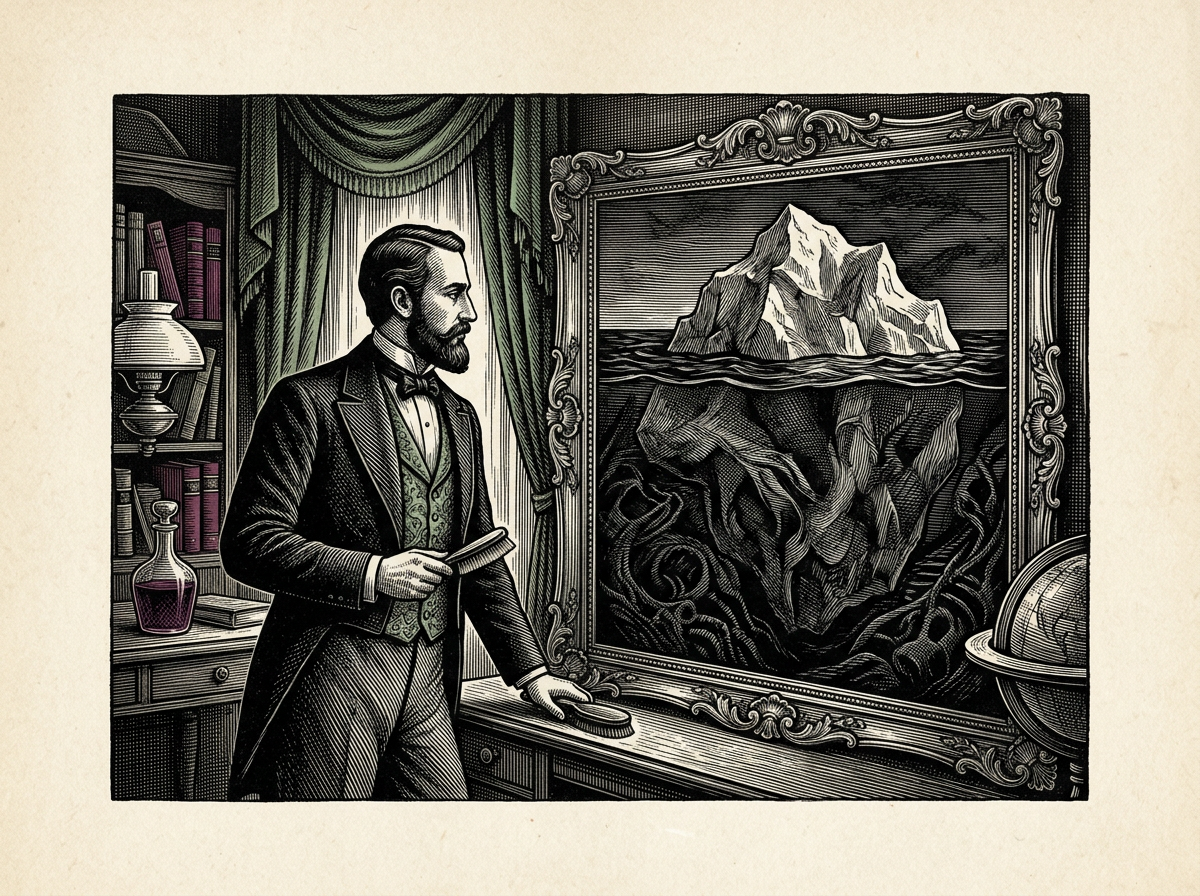
Before Freud, Western science largely viewed human beings as rational agents in total control of their thoughts and behaviors. Freud shattered that illusion. He proposed that our day-to-day consciousness is merely the tip of an iceberg. Beneath the surface lies the dynamic, turbulent realm of the unconscious mind—a reservoir of repressed memories, forbidden desires, and primal fears that constantly dictate how we act, love, and suffer.
Over a prolific career spanning decades, Freud introduced radical frameworks that bled out of the clinical office and into art, literature, philosophy, and popular culture. Even when modern science challenges or refutes specific Freudian mechanisms, our cultural vocabulary—from "Freudian slips" and "repression" to "denial" and "the Oedipus complex"—remains entirely indebted to him.
***
How To Understand and Explore Psychoanalysis
Whether you are a curious student, a writer wanting to craft deeper characters, or simply someone fascinated by the human psyche, engaging with Freud’s work requires a structured approach. Here is how to dive into the world of psychoanalysis step by step.
Step 01: Study Core Concepts
Before cracking open a 500-page book written in Victorian prose, familiarize yourself with Freud’s foundational building blocks. Psychoanalysis rests on a few key pillars:
- The Iceberg Model of the Mind: — Freud divided the mind into the conscious (what you are aware of right now), the preconscious (memories and information you can easily retrieve), and the unconscious (deeply buried thoughts and desires you cannot consciously access).
- The Id, Ego, and Superego: — Freud proposed that our personality is a perpetual wrestling match between three forces. The Id is our primal, pleasure-seeking, impulsive core ("I want it now"). The Superego is our moral compass or internalized societal rules ("That is wrong"). The Ego is the realistic mediator trying to balance the demands of the Id, the Superego, and reality.
- Defense Mechanisms: — To protect the conscious mind from anxiety, the ego employs psychological shields—such as repression (pushing bad memories away), projection (attributing your own unacceptable traits to someone else), and rationalization (inventing logical excuses for emotional behaviors).
Step 02: Read His Key Works
Once you grasp the terminology, go straight to the primary sources to see how Freud developed his theories. You don’t need a degree in philosophy to read them; Freud was a brilliant, highly engaging writer.
- *The Interpretation of Dreams* (1900): — Freud considered this his masterpiece. In it, he argues that dreams are not random nighttime noise, but the "royal road to the unconscious." By analyzing dream symbols and hidden wishes, we can decode our deepest psychological states.
- *Civilization and Its Discontents* (1930): — A shorter, more philosophical work written later in life, this book explores the eternal tension between individual freedom and the demands of civilized society. Freud examines why human beings find it so difficult to be happy, even when material needs are met.
Step 03: Understand His Legacy
To truly appreciate Freud, you must look at how his ideas evolved. Freud didn't invent a static system; he sparked a massive intellectual movement that continues to shift today.
- The Psychoanalytic Evolution: — Following Freud, thinkers like Carl Jung (who broke away to form analytical psychology) and Anna Freud (Sigmund's daughter, who pioneered child psychoanalysis) expanded his frameworks.
- Modern Psychotherapy: — Today, classical Freudian psychoanalysis—where a patient lies on a couch several times a week—is less common. However, it directly birthed modern psychodynamic therapy, which still focuses on uncovering unconscious patterns and understanding how past relationships shape present behaviors.
- The Skeptical Lens: — As you study his legacy, maintain a balanced view. Modern psychology often criticizes Freud for relying on small, non-representative sample sizes, overemphasizing sexual drives, and creating theories that are difficult to scientifically falsify. Recognizing his flaws helps contextualize him not as an infallible prophet, but as a brilliant pioneer who mapped the wild frontier of the mind for the very first time.
***
Key Takeaways
- The Pioneer of the Unconscious: — Sigmund Freud founded psychoanalysis, proving that human behavior is largely driven by hidden, unconscious desires and repressed traumas rather than purely rational thought.
- The Tripartite Mind: — Freud conceptualized the human psyche as a dynamic interplay between the primal Id, the moral Superego, and the realistic Ego.
- A Lasting Cultural Footprint: — While modern psychology has evolved beyond classical psychoanalysis, Freud’s concepts—such as defense mechanisms, dream analysis, and talk therapy—remain foundational to how we understand mental health today.
Related dispatches
MORAL DILUTION: CORPORATE STOICISM · A Critique of Modern Stoicism
Modern self-help flattens Seneca's horror into corporate risk management.
27 Oct 2026
INTELLECTUAL EROSION: MODERN STOICISM · A Critique of Modern Stoicism
Modern Stoicism dilutes Seneca’s vast blueprint into instant comfort.
26 Oct 2026
ETHICAL DRIFT: BOURGEOIS OPTIMIZATION · A Critique of Modern Stoicism
Modern self-help turns Epictetus's radical freedom into careerist optimization.
25 Oct 2026
KEY FLAW: DILUTED DISCIPLINE · A Critique of Modern Stoicism
True moral strength demands laborious excavation, not positive thinking.
24 Oct 2026