DIVINE LINEAGE: CIVIC ORDER
How ancient family trees grounded the real calendar of Rome
06 Sept 2026
Who is the Daughter of Saturn in Roman Mythology?
Quick Summary: What You Need to Know
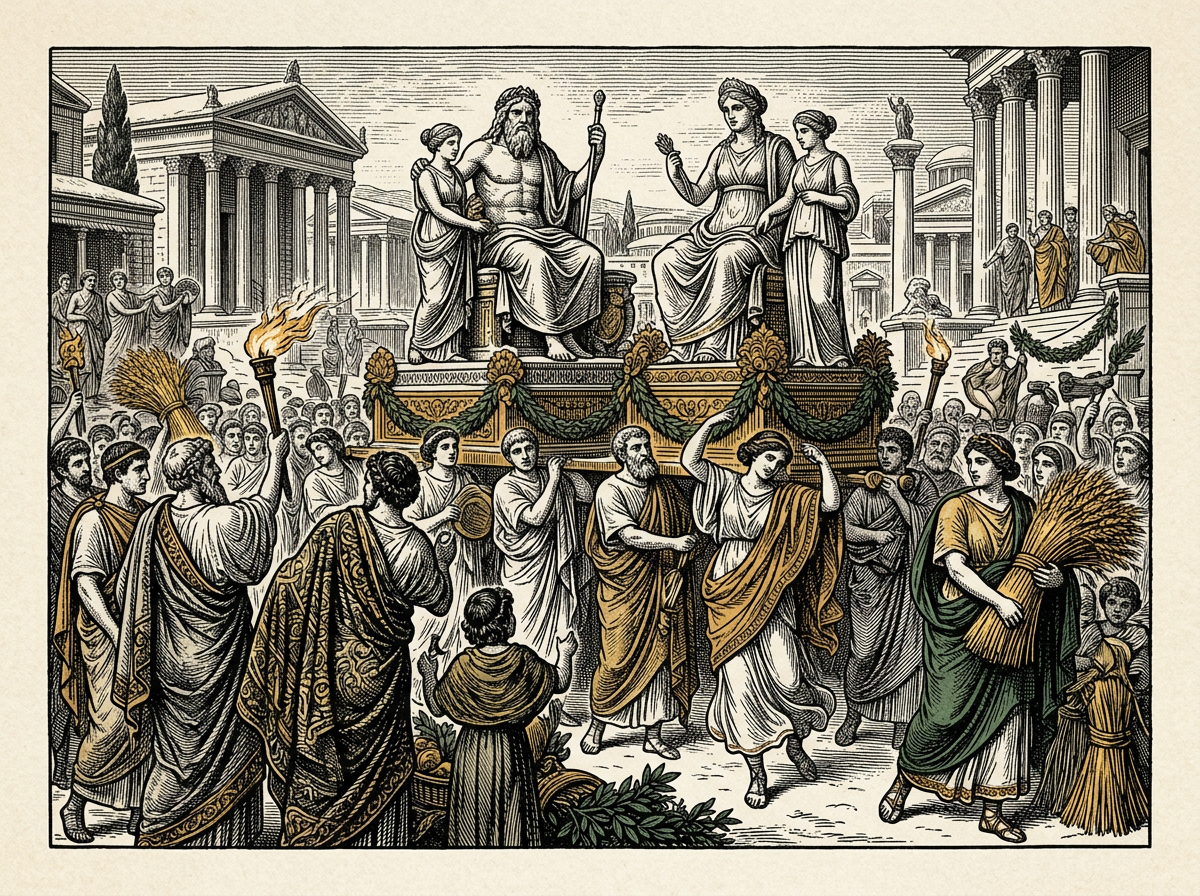
In Roman mythology, there is no single, universally recognized "daughter of Saturn" who dominates classical literature, but rather a fascinating circle of powerful goddesses tied to his lineage. Most notably, Saturn—the ancient god of agriculture, wealth, and time—fathered major deities of the Roman pantheon, including the goddess of harvest and fertility, Ops (who was also his consort), and powerhouse goddesses like Juno, Vesta, and Ceres. Exploring this mythological family tree reveals how ancient Romans explained the cycles of the seasons, the passage of time, and the very foundation of their society.
---
Background & Essential Facts
To understand the daughters and descendants of Saturn, we first have to look at Saturn himself. In Roman mythology, Saturn (identified early on with the Greek titan Cronus) ruled over a mythical Golden Age of peace, harmony, and abundance. People didn't need to labor for food because the earth produced everything naturally.
When it comes to his offspring, Roman mythology intersects heavily with Greek traditions, but with a uniquely Roman administrative and agricultural twist. Saturn’s children are the heavy hitters of the Roman pantheon. Among them, goddesses like Juno (queen of the gods and protector of marriage), Vesta (virgin goddess of the hearth and home), and Ceres (goddess of agriculture and grain) represent the continuation of Saturn’s domain over earth, home, and human survival.
Furthermore, Saturn was frequently paired with Ops (or Cybele in later syncretism), the goddess of abundance and earthly wealth. While Ops is most famously known as his wife, older mythological variants sometimes blur the lines of divine generation, making her part of the same primordial generation of earth-shaping titans.
Why does this matter? Because the Romans didn't just tell these stories for entertainment; they used them to anchor their religious festivals, societal structures, and agricultural calendars. The most famous of these, the Saturnalia, was a wild, week-long December festival dedicated to Saturn. During this time, social norms were flipped upside down, masters served slaves, and everyone exchanged gifts to commemorate the egalitarian Golden Age of Saturn—a legacy directly tied to the divine family he presided over.
---
How to Explore and Understand Saturn’s Lineage
Unraveling ancient Roman mythology doesn't require a degree in classics. If you want to dive deeper into who Saturn’s daughters and family members were, you can follow a straightforward, step-by-step approach used by historians and mythologists.
Step 01: Consult Classical Sources
The best way to understand Saturn and his lineage is to go straight to the ancient texts that survived the test of time. You don't have to read everything in Latin; modern translations of key classical works provide incredible insight. Start with *Ovid’s Metamorphoses*, which offers vivid, dramatic retellings of Greco-Roman myths, including the reigns of the old gods. Next, look into Virgil’s Aeneid, particularly Book VIII, where Evander gives Aeneas a tour of Rome and explains how Saturn came to Italy and founded the Golden Age. Finally, consult Ovid’s Fasti**, a poetic calendar that walks through Roman festivals month by month, giving you the exact historical and cultural context for how Saturn and his family were worshipped.
Step 02: Identify Key Figures and Distinguish Lineage
When researching the "daughter of Saturn," you will quickly notice that Roman mythology can be slippery. Unlike Greek myths, which often had strict, standardized family trees, Roman deities frequently absorbed local Italian gods, changing their names, parents, and domains over centuries. To keep things straight, distinguish between literal offspring and associated deities.
- The Core Sisters: — Focus on Juno, Vesta, and Ceres as the primary daughters born to Saturn and Ops. Map out their domains (Marriage, Hearth, Agriculture) to see how they inherited aspects of Saturn's golden legacy.
- The Consort Connection: — Be aware that Ops is often referred to interchangeably as a sister-wife or a distinct earth goddess.
- Minor Nymphs and Abstractions: — Look out for minor local deities or abstractions (like Lua, a goddess associated with Saturn who received spoils of war) that sometimes pop up in scholarly texts regarding Saturn’s immediate circle.
Step 03: Explore Cultural Context and Festivals
Myths are best understood within the culture that birthed them. To truly grasp what Saturn's lineage meant to the average Roman, investigate the religious calendar, specifically the Saturnalia. Read about how ancient Romans celebrated this December festival to honor Saturn and reflect on the abundance represented by his family. Look into how societal hierarchies were temporarily suspended, candles (cerealia) were lit, and small gift-giving traditions took place. By connecting the genealogy of Saturn to actual cultural practices, you move away from dry names on a family tree and start seeing how these stories shaped the daily lives, laws, and psychological worldview of ancient Rome.
---
Key Takeaways
- No Single Daughter: — There is no single, isolated "daughter of Saturn" in Roman myth; rather, his lineage includes powerful core goddesses like Juno, Vesta, and Ceres.
- Primary Sources Are Key: — You can easily explore these myths by reading classical texts like *Ovid’s Metamorphoses* and Fasti, along with Virgil’s Aeneid**.
- Cultural Legacy: — Saturn’s divine family directly influenced major Roman celebrations like the Saturnalia, cementing his legacy as the ruler of the Golden Age of abundance and equality.
Related dispatches
MORAL DILUTION: CORPORATE STOICISM · A Critique of Modern Stoicism
Modern self-help flattens Seneca's horror into corporate risk management.
27 Oct 2026
INTELLECTUAL EROSION: MODERN STOICISM · A Critique of Modern Stoicism
Modern Stoicism dilutes Seneca’s vast blueprint into instant comfort.
26 Oct 2026
ETHICAL DRIFT: BOURGEOIS OPTIMIZATION · A Critique of Modern Stoicism
Modern self-help turns Epictetus's radical freedom into careerist optimization.
25 Oct 2026
KEY FLAW: DILUTED DISCIPLINE · A Critique of Modern Stoicism
True moral strength demands laborious excavation, not positive thinking.
24 Oct 2026