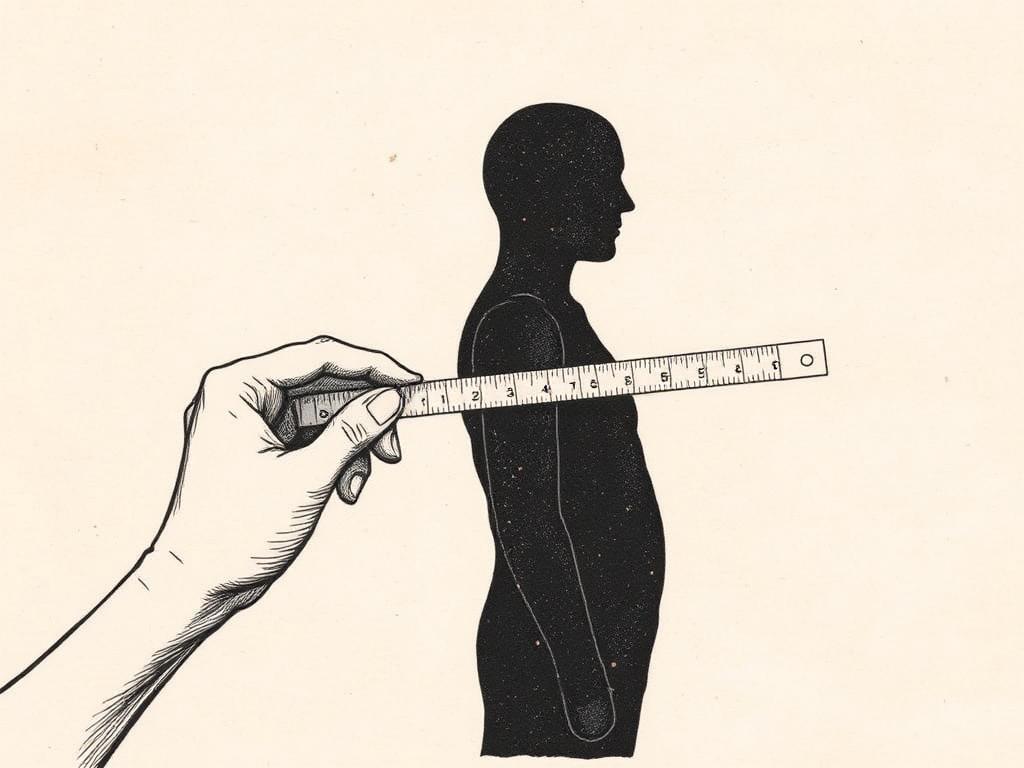
THE BEND INDEX: 74 / 100
The quantified self, measured against a bent ruler
22 Mar 2026
The Bend
Index measures how far a piece of advice must be twisted before it becomes true. A score of 0 means the advice survives contact with an ordinary life unmodified. A score of 100 means the advice is only true in a sentence that no longer resembles it.
The commentary:
Quantified self-improvement scores 74.
The Core Claim
— that measurement produces improvement — is defensible and well evidenced in narrow domains. Weight, distance run, hours slept: these are real quantities with real instruments, and tracking them reliably changes behaviour.
The bend begins when the method is exported. Measurement selects for the measurable, and the measurable is not a random sample of what matters. A tracker will count the pages you read and not the sentence that changed your mind. It will count minutes of meditation and not whether you were kinder afterwards. Over months, the unmeasured category doesn't merely go unrecorded — it goes unfelt, because attention has been trained to look at the dashboard.
There is a second-order effect that the literature calls surrogation: the measure replaces the goal in the mind of the person holding it. The runner training for health optimises for the streak. The reader building a habit optimises for finishing. When the two diverge, the number wins, because the number is the only thing that reports back.
What survives: instrumented feedback beats intuition for anything with a clean unit and a short loop. What bends: the assumption that a life is such a thing.
The correction is not to abandon the tracker. It is to keep, alongside it, an unquantified account — a sentence a week, written by hand, about what the numbers missed.
Related dispatches
FALSE TRAP: RIGID AUTHENTICITY · The Bend Index
Do not mistake the discomfort of growth for professional fraudulence.
28 Sept 2026
MENTAL RESTRUCTURING: PROSPERITY LITERATURE · The Bend Index
How classic prosperity literature functions as early cognitive science
28 Sept 2026
CORE DILEMMA: ABSTRACT PERFECTION · The Bend Index
The unreachable Stoic sage works best as an internal compass
28 Sept 2026
PHYSIOLOGICAL PRIORITY: TRAUMA RECOVERY · The Bend Index
Soothe the body before you rewrite the mind's trauma narrative.
28 Sept 2026